 On April 10th at the Coliseum, Lakewood’s own Amaiya Washington was inducted into the Take Stock in Children scholarship program in a ceremony attended by the Mayor and the Superintendent for Pinellas county schools. She will be provided college tuition funds when the time comes, but this comprehensive program offers much more including mentors and enrichment activities designed to prepare her to succeed in College. We’re all very proud of you Amaiya, keep up the good work!
Author: lakewooducc
Sermon 50th Anniversary – Rev. Angela V. Wells
Scripture Lesson: Colossians 3:12-17
Sermon: A Third Way
Pastor: Rev. Angela V. Wells
I went to Union Theological Seminary in New York City for graduate school from 2009-2012. My entering class had probably 150 or so people in it. The first-year Master of Divinity students took a lot of classes together, including Introduction to the Old Testament, Introduction to the New Testament, Systematic Theology, Church History, and so on and so forth.
During our class discussions, and in the library, and other informal gatherings around campus, I could see that my classmates were struggling in a way that I was not. Now, I was no expert, I was one of the youngest in our class, fresh out of college. I had less life experience and formal education than many of the people in our entering class, so I tried to figure out what in the world these people were grappling with that I… wasn’t.
It turned out that many of my classmates were raised in Christian traditions that were, well, suffice it to say, different from the context in which I was raised. They were from the Presbyterian Church, the Lutheran Church, the American Baptist church, the Episcopal church, the Methodist church, the African Methodist Episcopal church and the list went on. What I eventually came to understand was that my classmates were struggling with trying to reconcile what they’d been taught in their home churches with what they were learning in seminary.
At home, they had either implicitly or explicitly been taught that Christianity was the only right way, now in seminary, we were being taught classes by a man named Paul Knitter, who wrote a book entitled, Without Buddha, I Could Not Be a Christian. At home, they’d been taught that the Gospel stories about Jesus’ life were historically accurate, that these events, these miracles literally took place.
In seminary, we were being taught that the different Gospel accounts of the same stories were written at different times, by different people, with different political motivations. So these facts made it really hard for anyone to know what literally took place, what didn’t, and how Jesus’ life actually played out. Not to mention the fact that in our language classes, we were learning that one Hebrew or Greek word could have upwards of 10 or more English equivalents, and the English word that the biblical translator chose could significantly affect the meaning of the whole sentence or larger story. AND, remember that the first texts written down, Paul’s writings, were written starting about 30 years after Jesus died, so we can be pretty sure that none of the Gospel accounts were written by first-hand witnesses because they were all long dead by the time any of this was put on paper.
I was fine with all this information. I absorbed it, with varying levels of enthusiasm or interest, but I certainly wasn’t bothered by any of it, I wasn’t struggling with this new information. But my classmates were another story. Some of them were even having crises of faith, questioning all that they’d been taught in their churches up to that point, questioning so many of the sermons they’d heard, Bible studies they’d sat through, and so on. They were trying to figure out whether what they’d been taught by beloved pastors, mentors, parents, friends, and Sunday School teachers was “right,” or what they were learning in seminary was “right,” because they couldn’t reconcile the two.
My experience was vastly different. What I was learning in seminary completely aligned with all that I had been raised with. It resonated with the sermons I heard, the family discussions we had around the dinner table. All the puzzle pieces fit together for me.
For example, one day, in our Preaching and Worship class, our professor spent the day talking about the hymnal that we used in our chapel at seminary, also the hymnal that you all use, the New Century Hymnal. She talked about the controversy over changing the words to hymns. She talked about the theological reasoning behind removing militaristic imagery and regal imagery like king and kingdom. She talked about why they removed the word Lord and didn’t use the male pronoun for God in any of the hymns, unless the female pronoun was used as well. Some of my classmates were aghast, they thought this was sacrilegious. The editors had butchered their beloved hymns that they had memorized from childhood.
I sheepishly raised my hand and offered another perspective. I told them that I was raised with this hymnal. That my home church didn’t use male pronouns for God and I liked that our hymnal’s vocabulary matched the language we used in the rest of the service. I said that the words to the beloved hymns that I had memorized were the words of the New Century Hymnal. They were my “original” version of the hymns. The new way, the new vocabulary, it wasn’t new to me, because it was all I knew.
They say that you don’t appreciate what you have until it’s gone, and I can admit that I didn’t fully appreciate Lakewood until I was exposed to the wider world of churches and Christianity. You see, this church is a gift to Christianity because in a black and white world of dichotomies and either/ors, Lakewood presents a third way. I didn’t know it was a third way until much later in life, because, during my childhood it as all I knew, I thought it was just how church was done. But most Christians in the world know of two ways, and the problem is that an increasing number of people can’t see themselves in either of those two ways. The third way is a lifeline for people who are seeking something, who want to be part of a Christian community, but can’t find belonging in either of the two ways our society offers. So, what are these two ways?
The first way is dogmatic Christianity as we hear about it in the news and from traditional/conservative preachers and public speakers. It’s the Christianity, which professes that Jesus is God-incarnate and rose from the dead on the third day. This Christianity professes the doctrinal truth of the trinity, that God is 3-in-one, Father, Holy Spirit, and Son. This Christianity subscribes to substitutionary atonement, or the belief that Jesus died to take away the sins of the world, to atone for the original sin that Adam and Eve committed. This Christianity teaches that God loved the world so much that God sent his only son to die for us. This Christianity usually takes the Bible literally, lifting it up as the inerrant word of God. This Christianity professes that God is a theistic being which created the world and still has control over something so vast as the cosmos and something so minute as our individual lives. This Christianity teaches that prayer is a way to appeal to, or talk to this God. We ask for what we want and if we don’t get it, it’s because we are not faithful enough, didn’t pray hard enough, or it’s just not God’s will for us.
I can understand if some of this is making you bristle or cringe, which is why you feel at home at Lakewood and not any of the other thousands of churches in our country. Lots of people who are looking for a community of faith can’t get on board with most of this, regardless of whether they were raised Christian. They can’t subscribe to the magical thinking, suspension of reason and logic, ignorance of historical and scientific truths, not to mention the exclusiveness of it, because in this first way, Christianity is the only way. So, people who just can’t be part of this faith tradition, they either cobble together something on their own such as “spiritual but not religious,” or they do away with all of it and call themselves an Atheist.
This is the second way. Such people back up their argument with all the statistics about how many wars have been fought in the name of religion, and that we’d be better off not having any organized religion at all. They might tell you how religious people meddle in politics to the detriment of society and, by the way, there is no God, so let’s stop pretending there is and just get rid of all houses of worship.
I can understand if this second way also makes you cringe because, since you are part of a faith community, I presume you see the value in it. You see the importance of coming together with people that have the same values to celebrate all that is good in the world, lament when things aren’t good, and work together to change them. We happen to do all this in the name of Jesus, whom we follow.
This is the third way that Lakewood is following, which is a lifeline to people who want to be part of a faith tradition, who want to be part of a community that recognizes all that around us is sacred and so we’re committed to protecting it for the sake of all life.
You all engage our Holy Scriptures, but you don’t believe that critiquing them, questioning them, or learning about their origins is somehow threatening to their inherent worth. The fact that you all can say that the Bible is valuable because of all that it teaches us through its stories, not because it’s historically accurate or because it was written by God through men, is revolutionary.
The fact that you all engage scientific advancements as being amazing and awe-inspiring because they reveal more and more to us about the vast, unknown universe, and that science isn’t threatening to our beliefs but reinforces what we know to be true, that we are not the center of the universe, is reassuring and humbling.
The fact that you all don’t ask people to check their critical thinking skills or their rationality at the door, and that you all put on your shoes and use your hands and turn your “thoughts and prayers” into action, you all are what Christianity needs.
If the church continues to insist that people buy into the first way, well, Christianity might continue to exist in some form, but it’ll be small and irrelevant because most people won’t buy into the that myth anymore. But if we continue to expand the third way, that people can have a faith practice that aligns with their worldview and encourages their political participation, in the name of following Jesus, then the church will thrive in the future.
Lakewood is so needed at this moment in time, because you all, church and pastor, encourage engaging our faith with our lived reality. As the famous theologian Karl Barth said that, “one must do theology with the Bible in one hand, and the newspaper in the other.”
Now, I know that Lakewood is a small church, always has been for as long as I have been around. But I lovingly call it “the little church that could.” Because I know you all worry about finances and getting a new roof and paying bills and staff salaries, and maybe there have been times when you’ve wondered whether Lakewood could stay solvent long enough to have a future.
Well let me tell you, it’s lonely at the front. You are at the forefront of a religious sea change, the rest of us just haven’t caught up yet. The third way that this congregation offers is life-giving to people who are longing for community, critical thinking and social justice through following Jesus Christ.
Don’t tell my church this, but you’re also having an impact up north because a lot of what I do, and much of the information that I share with my colleagues in the Boston area, is inspired by what you all are doing, down here. So your influence extends far and wide beyond St. Pete.
Sometimes the future might seem bleak, and the road ahead won’t always be easy, but it is necessary for the future of our faith. So please, keep being you, keep being trail-blazers, because the rest of us, who also are seeking a 3rd way, we are looking to you all to set the pace.
Thanks be to God for this community of faith, Lakewood United Church of Christ, as it was, as it is, and as it is yet to be. Amen.
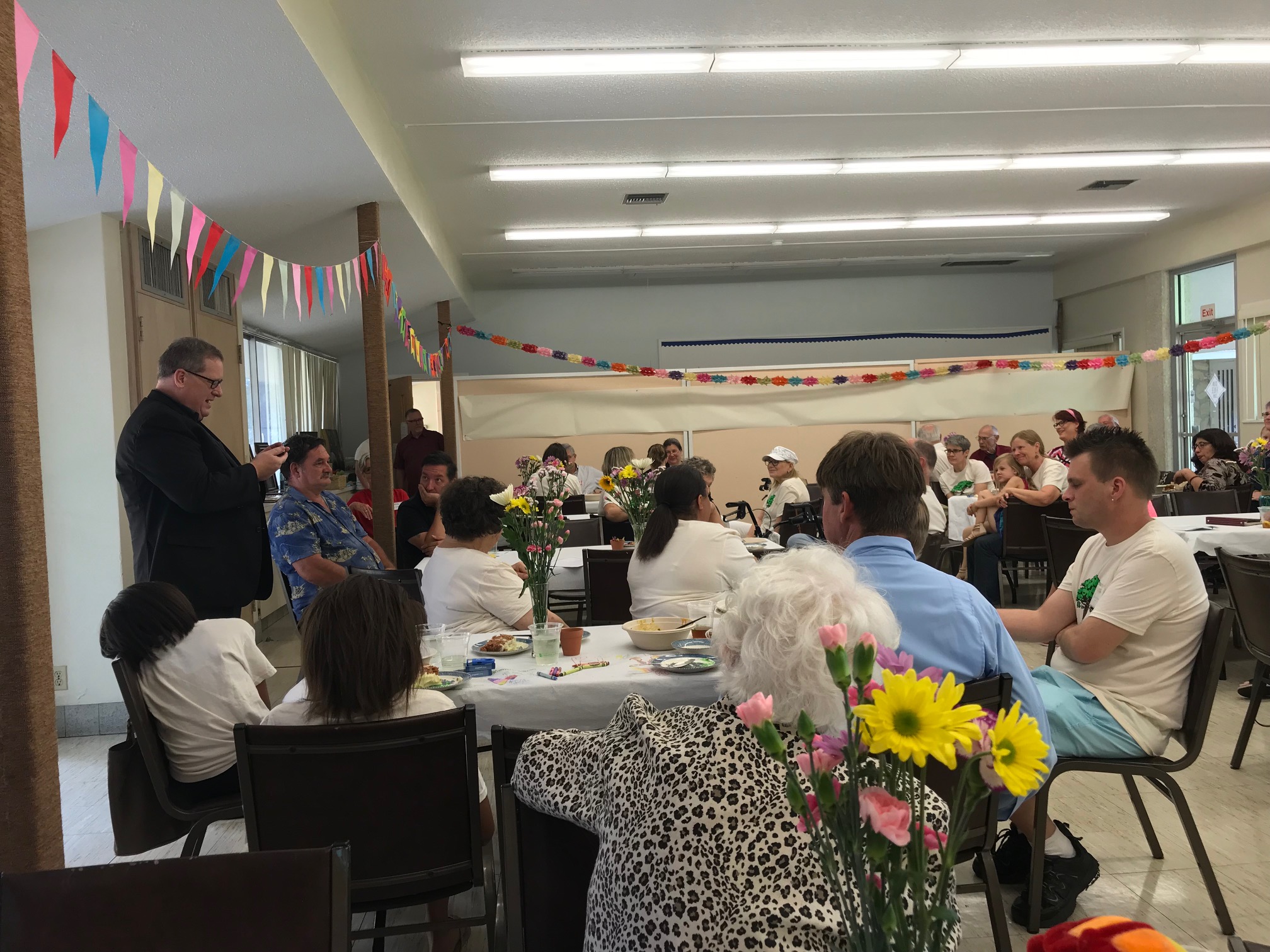
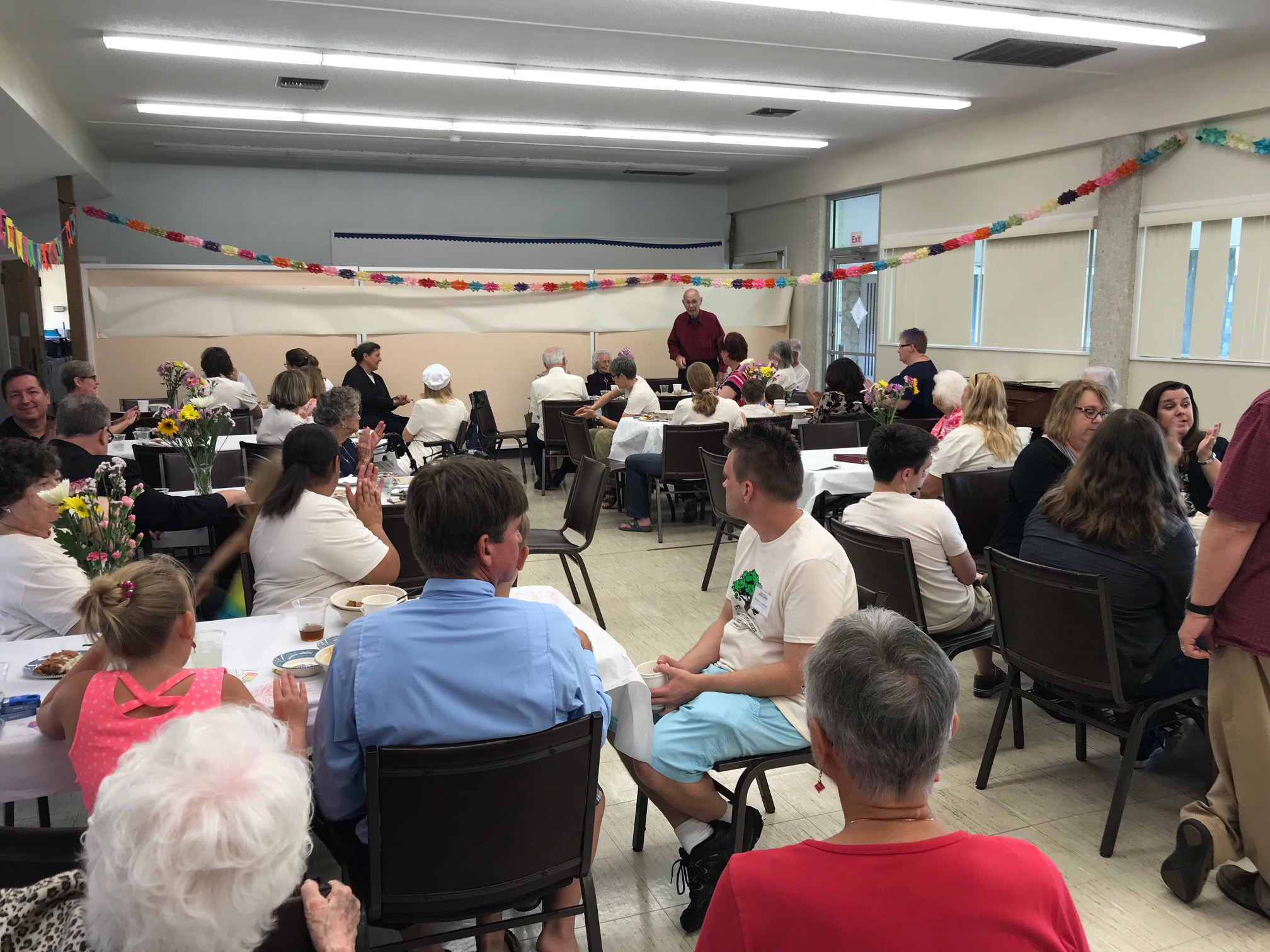
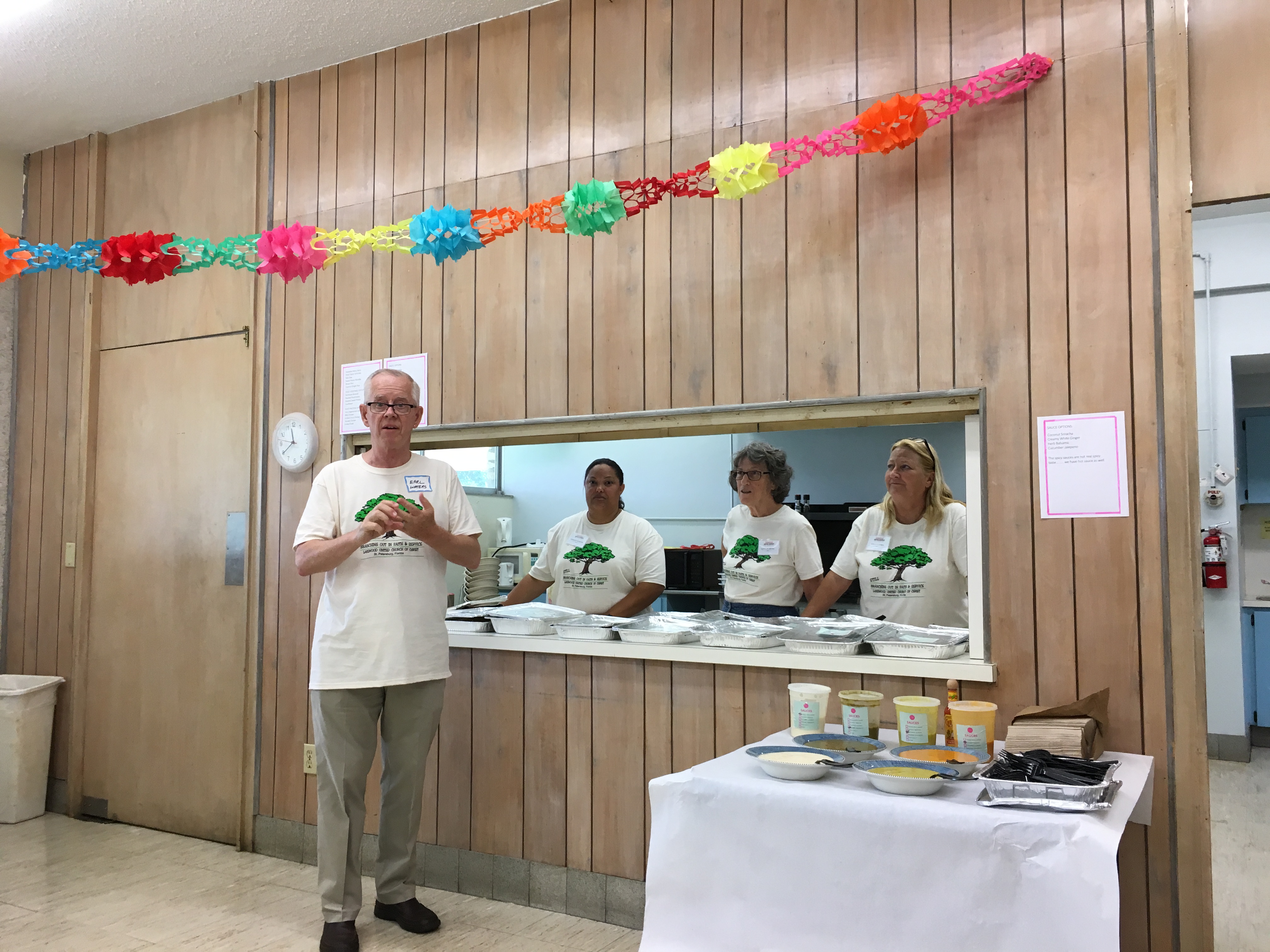
Photos from 50th anniversary celebration
photos by Ruth Pettis and Yoko Nogami






Podcast: 50th Anniversary Celebration — Guest preacher, Rev. Angela Wells

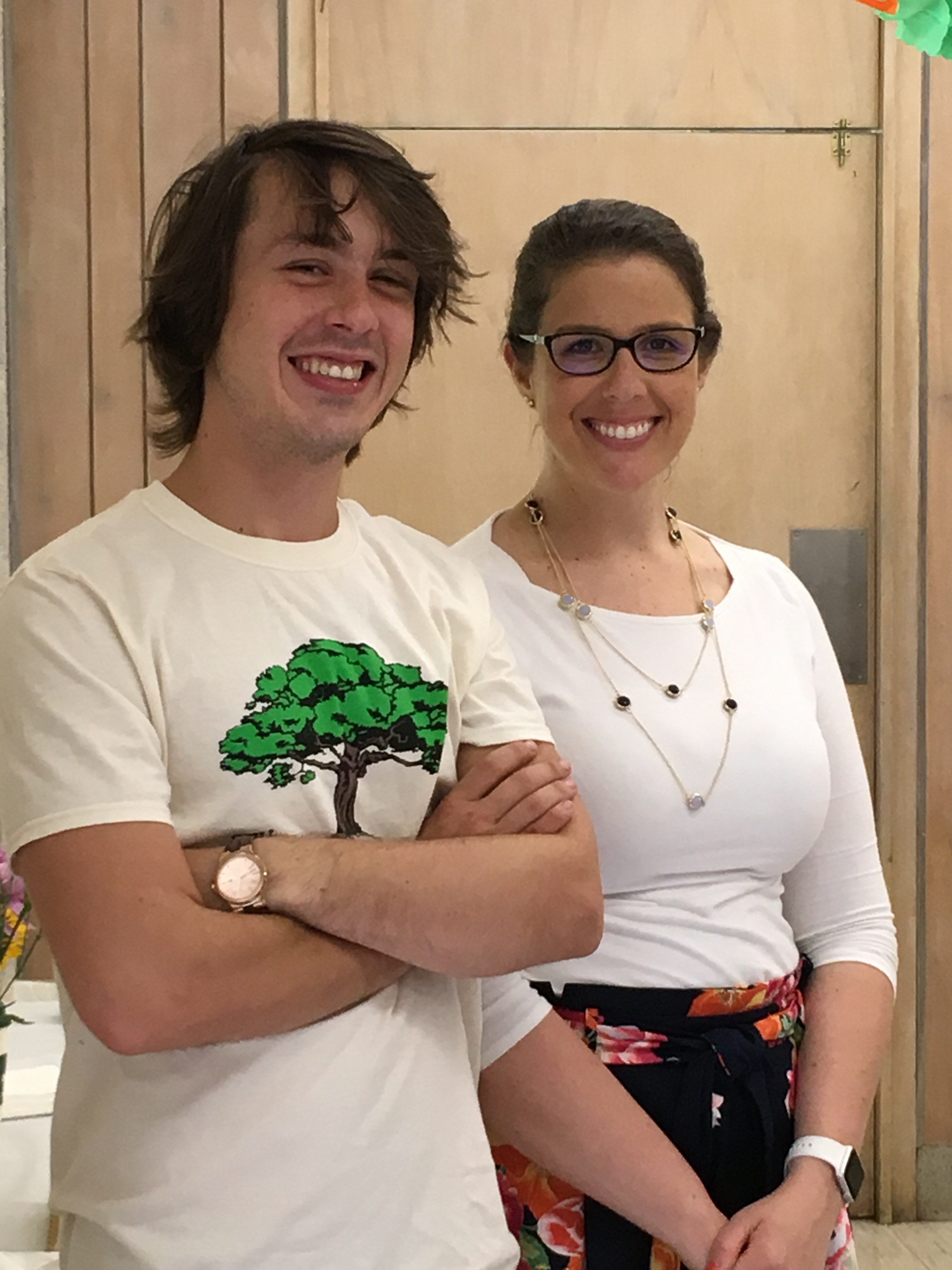
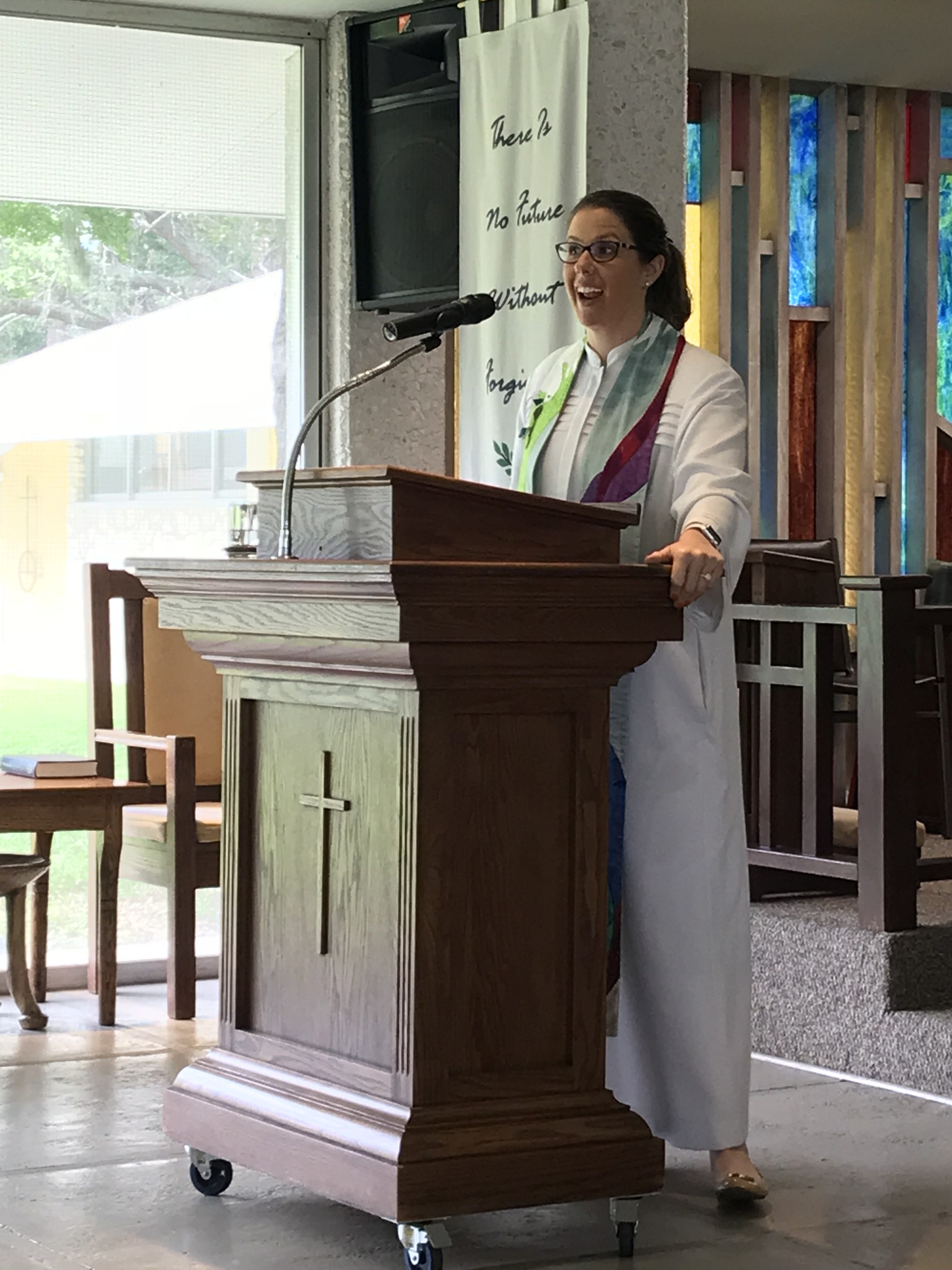
Sunday, April 15th, 2018 Lakewood UCC celebrated its 50th Anniversary! The anniversary celebration included a beautiful worship service with guest preacher Rev. Angela Wells. In the 50 year history of the church, Angela is the one person from the congregation to become an ordained pastor. After the service, a group picture was taken around the Peace Pole, followed by a festive lunch.
GUEST PREACHER: The Rev. Angela Wells grew up in Lakewood United Church of Christ, the daughter of Kim and Jeff Wells. Following graduation from New College of Florida in Sarasota, she attended Union Theological Seminary in New York City. During seminary, she served two Florida churches over the summer while the pastors were on sabbatical leave: The Venice United Church of Christ and St. Andrew United Church of Christ, Sarasota. After graduating from Union, Angela was called to serve the United Church of Christ Congregational in Burlington, MA and ordained into the ministry of the United Church of Christ at Lakewood, her home church. Angela continues to serve in Burlington. As part of that ministry, Angela serves on the Board of Directors of People Helping People, a non profit organization established to meet the needs of the residents of Burlington. She is a past president of the board. Angela serves on the Metropolitan Boston Association Committee on Ministerial Standing. She is a former chairperson. Angela is part of NGLI, Next Generation Leadership Initiative, of the Pension Boards of the United Church of Christ. This program equips select young pastors for future leadership in the UCC especially in light of the changing landscape of ministry. Angela is active in the Burlington Interfaith Clergy group. She is an on call chaplain for the Lahey Clinic. AND, Angela is a newly elected commissioner of the Housing Authority of Burlington which oversees managing affordable senior housing. Angela is engaged to Andy Bean, director of the Boston Climate Action Network, a community organizer and public policy specialist. And Andy is a newly elected town meeting member in Burlington.
Sermon Easter Sunrise – Fully Known, Fully Loved
Easter Sunday April 1, 2018
Scripture Lesson: John 20:1-18
Pastor: Rev. Kim P. Wells
It is painted, sung about, and immortalized. That moment in the Easter story from the Gospel of John when Mary meets Jesus in the graveyard. She does not recognize him until he says her name. Mary. In the name is the knowing. It just takes the name and we know that this is a reference to the identity of the person, the history, the experiences, the inner feelings, the relationships, the habits, the quirks, the foibles, the full sense of Mary’s being. In that moment, Mary is made aware that she is fully known.
Jesus is known for fully knowing. He is known for knowing people as they truly are, not as they may perceive themselves nor as they may be perceived by others. His is a true knowing. A knowing in full not in part.
We see this in story after story in the New Testament. In the story of Jesus meeting the Samaritan woman at the well, he mentions that she has had five husbands. That is not something that she would have been advertising about herself. Yet he knew. Probably everyone else in her town was spreading the word. And we are shown a Jesus who knows this. And he still asks her for water. And he still gives her living water. And she goes to offer this saving gift to the people of her town who have doubtless tormented her. Fully known.
The gospels share a story of Jesus finding a group of men ready to stone a woman for adultery. She makes no plea of innocence. Fully known. But in the story, Jesus turns to those with the rocks at the ready, arms drawn back, and says, “Let the one without sin cast the first stone.” They, too, are fully known.
In another story, Zacchaeus, a notorious hated upper crust financial functionary, climbs a tree to get a glimpse of Jesus. And Jesus stops and invites himself to Zacchaeus’ house. Jesus knows all about Zacchaeus and his cheating and his greed. Zacchaeus is fully known.
And there is the story of a rich young ruler. He comes to Jesus desperately seeking life in God. Jesus knows this man. He knows there is just one thing. And the rich young man cannot accept Jesus’ offer. And Jesus is sad, so sad, for he knows this man.
We are told that Jesus knows those who initiate his execution. He knows those who adjudicate his trial. He knows the governor who can stay his execution, but does not. He knows the thieves that are crucified with him. Jesus knows them all. They are fully know.
Just that one word, in the cemetery, “Mary.” She is fully known. As are so many others. Nothing is hidden.
And what of these people who are fully known? With their past. With the evil intentions of their hearts. With their cheating and stealing. With their self absorption and greed. With their lust for power. With their self protectionist proclivities. What of this sorry lot? We are shown a Jesus who knows it all. They are fully known. Not in a clairvoyant, woo woo, supernatural way. But in a sincere, insightful, honest way that comes from paying attention and listening and caring.
We are also shown something else about Jesus. All of these people, all of the people healed and forgiven. The crowds. The women. The townspeople. The corrupt leaders. The hypocritical priests. The executioners. The disciples. All of them are fully known. And they are also fully loved. Loved for their full humanity and all of its imperfections. Loved for all of their misguided schemes. Loved for all of their hopes and dreams. Loved for all of their pain, grief, and guilt. Loved because of who they are. Loved in spite of who
they are. Fully known. Fully loved.
We may not know all about Jesus. We may hardly know his story. But all we really need to know is about the love. For each and every person. Because at the core, each and every one of us is holy and sacred. And because of that, we are worthy to be loved. Before anything we do or say, we are beloved. Because of everything we do and say, we are beloved. In spite what we do and say, we are beloved. And there’s nothing we can do about it. We are fully known and fully loved in the reality of God.
In the book, The Song of the Bird, Anthony De Mello shares this story:
I was a neurotic for years. I was anxious and depressed and selfish. And everyone kept telling me to change. And everyone kept telling me how neurotic I was. And I resented them, and I agreed with them, and I wanted to change, but I just couldn’t bring myself to change, no matter how hard I tried.
What hurt the most was that my best friend also kept telling me how neurotic I was. He too kept insisting that I change. And I agreed with him too, though I couldn’t bring myself to resent him. And I felt so powerless and so trapped.
Then one day he said to me, “Don’t change. Stay as you are. It really doesn’t matter whether you change or not. I love you just as you are; I cannot help loving you.”
These words sounded like music to my ears: “Don’t change. Don’t change. Don’t change. I love you.”
And I relaxed. And I came alive. And, oh wondrous marvel, I changed.[Quoted in 25 Windows into the Soul: Praying with the Psalms, from the writings of Joan Chittister, p. 78]
Yes, the story of the encounter between Jesus and Mary in the garden is famous for that one word, “Mary,” showing us that we are fully known and fully loved. But there is another phrase in that story that is also well-remembered. Jesus asks Mary, “Why are you weeping?” Why are you weeping?
Do we weep because of this great love? We are fully known and fully loved. Does the enormity of it bring us to tears? Why are we weeping? Are we weeping in repentance? Seeking the healing of forgiving love? Why are we weeping? Are we weeping because the awareness that we are fully known and fully loved makes our compassion for ourselves, others and the world well up? Why are we weeping? Is it because in spite of this love, we will continue to hurt ourselves and others? Why are we weeping? Is it because we have not been able to say yes to this belovedness?
Why are we weeping? This Easter, may we know that we are fully known and fully loved and may we weep tears of joy. Amen.
A reasonable effort has been made to appropriately cite materials referenced in this sermon. For additional information, please contact Lakewood United Church of Christ.

