Photos by Kim Wells. Click on images for closeups.

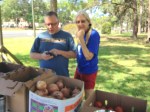






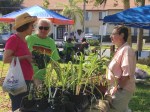


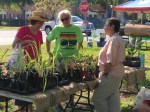

Photos by Kim Wells. Click on images for closeups.
Photos by Melanie Moore. Click on images for closeups.





photos by Melanie Moore, click images for closeups


Scientists tell us that plants compose 99% of the biomass on earth. Plants communicate sending chemical signals. They have senses and use echolocation. Because of their design, 90% of a plant can be killed, but the plant can still regenerate. If humans were to vanish from the earth, plants could continue to grow and thrive. If plants were eliminated from the earth, humans could not survive. Plants provide humans not only with food but with needed medicine and other material support. Plants provide us with a wealth of information and are an amazing part of creation. And yet how much attention to we pay to plants? Do we daily recognize our dependency on plants? Some of us are very plant aware. But for the most part, I don’t think plants get the respect they should given their significance to humans and their role in the natural order.
What accounts for this lack of appreciation for plants? Is our science curriculum lacking so that we never learn enough about plants to truly appreciate them? Has our society become so technologically advanced that we no longer feel a direct connection to our dependency on plants? Are we too busy to pay attention to plants – paying a lawn service to mow and clip and no longer being directly involved with plants? Has “paving the planet” contributed to our disassociation from nature?
Think of some of the things we do hear about plants. “I had to pay to have that tree taken down because it was too near the house and could have fallen on the roof in a storm.” “I had to have the lawn treated for weeds.” (Probably with toxic chemicals.) “Weeds keep growing up in between the the sections of pavement in our driveway. I have to get out the Round Up every week it seems.” “The mangroves along the shore are blocking our view of the water and we aren’t allowed to cut them down.” “That tree drops all of its leaves and petals into the pool. It is so annoying.” And, recently, I heard, “I wish someone would cut down all of the oak trees.” I was stunned by this statement. It took me a moment to realize that the person was suffering from allergies to the oak pollen.
Part of the reason we may not have more appreciation for plants and for the natural world may have to do with the church. For one thing, the church has come to have a focus on the salvation of humanity, i.e. getting people into heaven. This has contributed to an obsession with humanity, with ourselves, with our own species. The church has definitely promoted anthropocentrism. While our tradition teaches that God carefully created all of nature, we tend to focus on our species. While our scriptures are filled with images from the natural world on virtually every page, we seem to be absorbed with ourselves and how to get right with God so that we get the “goodies.”.
There is irony here on several fronts. To deny nature, to demean the natural world, is to disrespect the handiwork of God. That amounts to a direct affront to God. Lack of appreciation for nature is a lack of appreciation for God. Damaging and destroying the natural world can be seen as a direct assault on God; the very God that we are supposedly trying to please so that we get into heaven and/or have a good life. In addition, as a species, our goal is to thrive and flourish. And we are supported in many ways from oxygen to medicine to food by the natural world. Nature is our lifeline. Our God-given life support. When we don’t appreciate nature and are in bondage to ourselves, we undermine our own well-being by destroying nature.
If we believe in a God who desires our highest good, then we will want to care for the natural world, appreciate it, respect it, and take delight in the plants and animals and rocks and water and land. To care for nature is to care for ourselves and each other. To take delight in nature is to praise God.
This Lenten season, take some time to learn something about the earth and all that fills it. Reflect on the miraculous, mysterious world around us. Do something to nurture the nature which sustains you.
Prayer: Our scriptures tell us that the earth is God’s and the fullness thereof. We pray that we would allow ourselves to be more enchanted by the natural world around us. May we give thanks to God for the incredible earth and universe which not only sustain us, but delight us, enrich us, and instruct us. May our awareness of the earth lead to an appreciation for our place in the web of life and cure us of the sin of self-obsession. In this holy season we remember that Jesus came to give life to the world not just to human beings. Amen.
It happened again this week as I was looking through the hymnal choosing hymns for the service Sunday. If you are not a pastor, you may not realize that this is more complicated than it might at first appear. There are a number of things to consider. What does the congregation know and enjoy singing? One new hymn in a service is o.k., but picking three or more that are new or not well known? No. That doesn’t make people feel like they are at home where they belong in their church. And it doesn’t encourage robust singing. People who don’t read music may feel kind of left out. Then there is the spirit of the hymn. Is it rousing? Quiet? Pensive? Melodious? A certain part of the service may call for a certain mood so it helps to pick a hymn that contributes to creating that mood. Then there are the associations with the hymn. Some hymns seem to have quite a bit of “baggage” – sometimes good and sometimes not so good. There are some people in our church who grew up in very fundamentalist Christian churches. I have noticed that they do not sing the hymns from their youth with the same vigor that they have for newer hymns. Too many negative associations, I guess. If you pick 3 old timey hymns for a service, or even two, a first time visitor may get the impression that the church is very traditional/orthodox when it really are not. Yet there are those in the congregation who love to sing those old standards. So care must be taken with that. There are also the limitations of the hymnal that constrict things. We have the copyright license to use other music but we don’t like to have to do a lot of extra copying and using extra paper. As you can see, there is much to consider in hymn selection for Sunday mornings.
But the biggest challenge I find when choosing hymns is the words. Yes, the words. Three verses may be great. Then there is mention of something that is not at all compatible with the expression of Christianity that most of the people in our church share. On many of these things, I can be flexible, skip a verse, or just sing something that is “old fashioned” and recognize that that is how well meaning Christians used to look at things.
But there is one place I do balk. I really can’t accept choosing a hymn that says flat out that Jesus is the only way: The one way, the only way, to God, to right living, to salvation, to justice. That I cannot bring myself to have the congregation sing. That kind of language bespeaks the very imperial arrogance and exclusivism that Jesus was against. That is the sentiment that Christians have used as validation to take up arms against those of other religions. Again, a blatant violation of the pacifism of Jesus. That kind of exclusivism undermines the very mission of Jesus as an expression of divine love for ALL people and for the WHOLE world with no privilege or preference except for those who are made poor. Jesus did not check out someone’s background or beliefs before healing them, feeding them, teaching them, or forgiving them. He embodies divine love and grace to those at the top and those at the bottom, those of his religious tradition, those of other or perhaps no religious inclination.
In today’s world, language about Jesus that implies that he is the only way to God or good, creates many problems which Jesus himself was trying to overcome. Such wording separates people. Jesus was always trying to bring people together. That perspective devalues those who are different. Jesus was trying to get across that each and every person is sacred and created in the image of God. The “Jesus only” message is used to fuel conflict, contention, and even violence. It gets in the way of respect and cooperation. This is absolutely at odds with the intentions of Jesus. Religion is to be a force bringing people together to serve the common good, not a source of division and conflict.
As far as I am concerned, Jesus leads me to God. Jesus shows me the way to the highest good for society and for myself. Jesus brings out my best. And Christianity is the tradition in which I find the community and solidarity that I need to follow in the way of Jesus for the good of the world. But that is not the only way to be a good person or to work for the good of the world. If I had been born in Saudi Arabia I would probably be Muslim. And within that tradition I could also be led to God and to serving the greater good. If I had been born in Thailand, I might be Buddhist and within that tradition be led to experience the transcendent and to serve humanity. Most of the reason I am Christian is really the randomness of my birth. And I accept that. I embrace the goodness and the potential of our Christian tradition And because of our commitment to do unto others as we would have them do unto us, and to love our neighbors as ourselves, I also support and respect the religious paths of others. That is the way of Jesus. That is the way of peace. But it sure makes it hard to pick hymns for church on Sunday.
Prayer: In this Lenten season, as we grow in our faith, we celebrate our heritage as Christians and all the good that is inherent in the way of Jesus. We pray for the grace to truly love everyone as Jesus did. We are grateful for the many paths of faith that lead others to pursue the welfare of the world and goodwill for all people. May we devote ourselves to being the best Christians we can be which means not judging or condemning others. May we trust a God that is truly universal and not limited by our preferences or perceptions. Amen.
 Lakewood United Church of Christ