
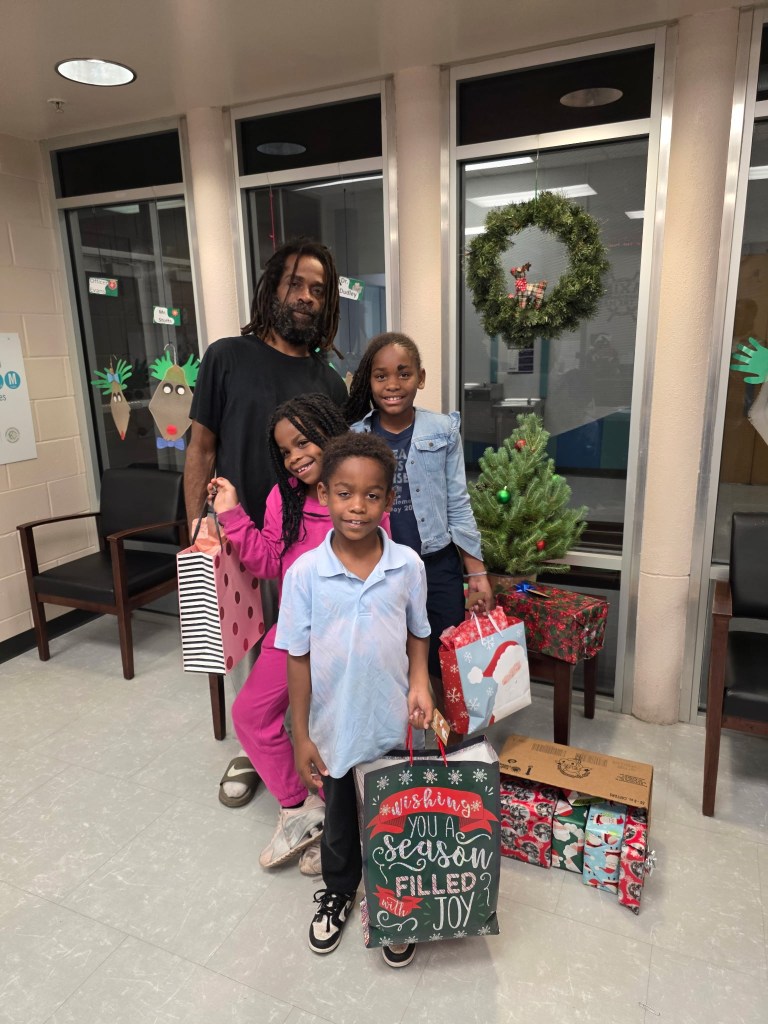





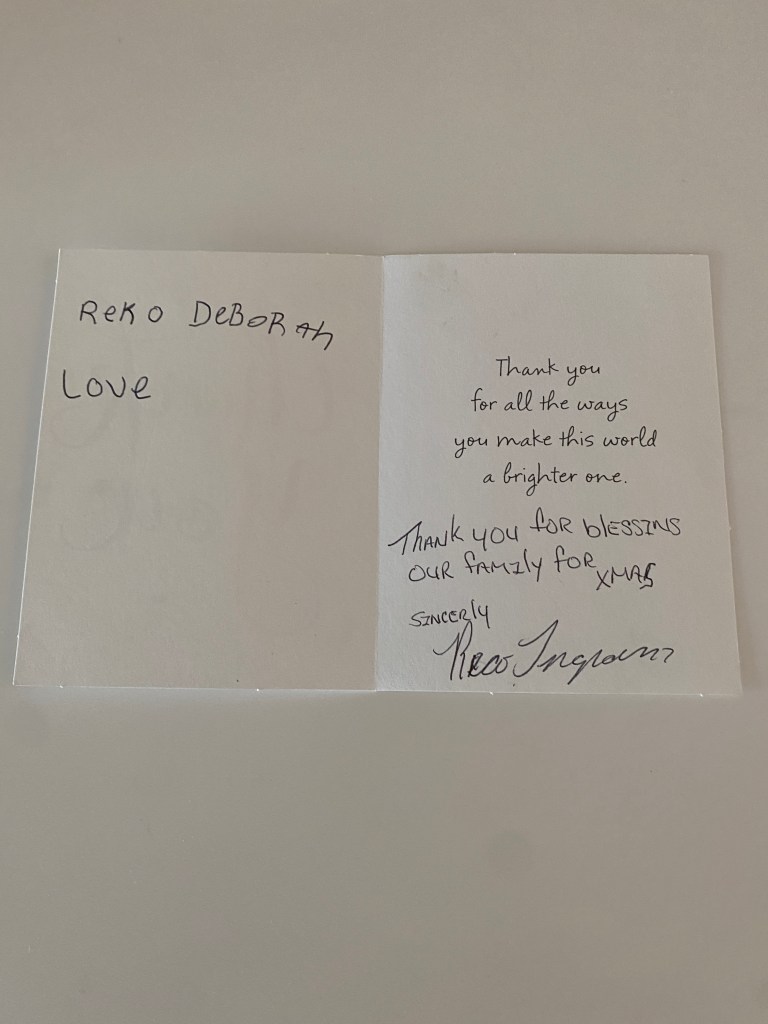
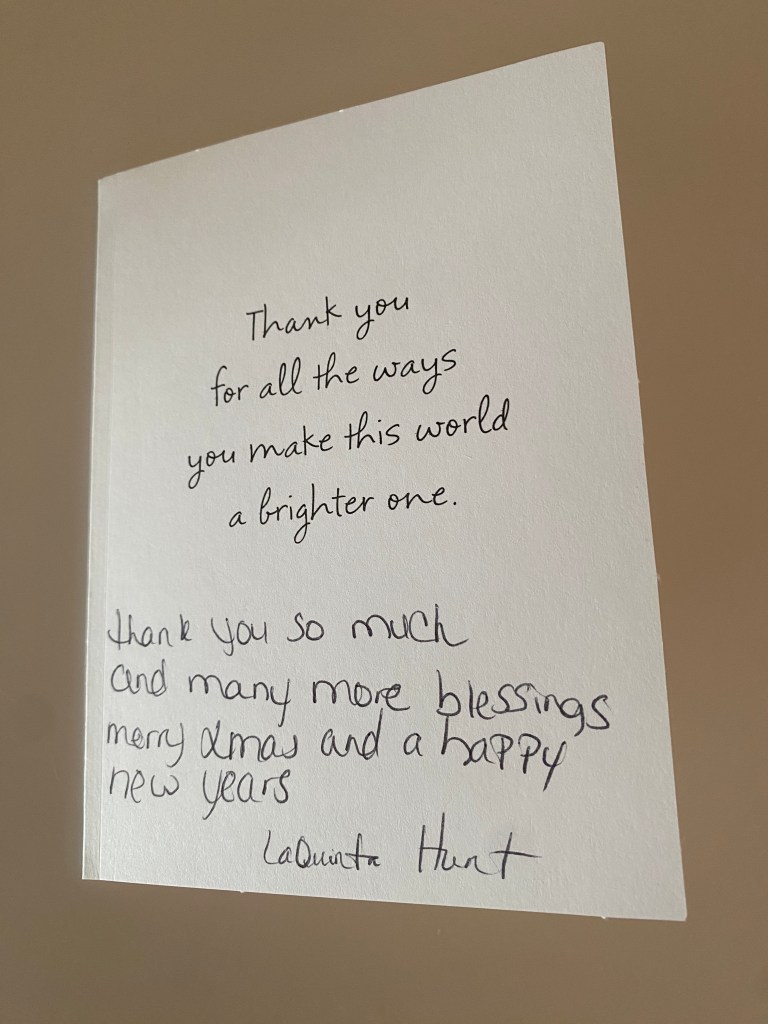
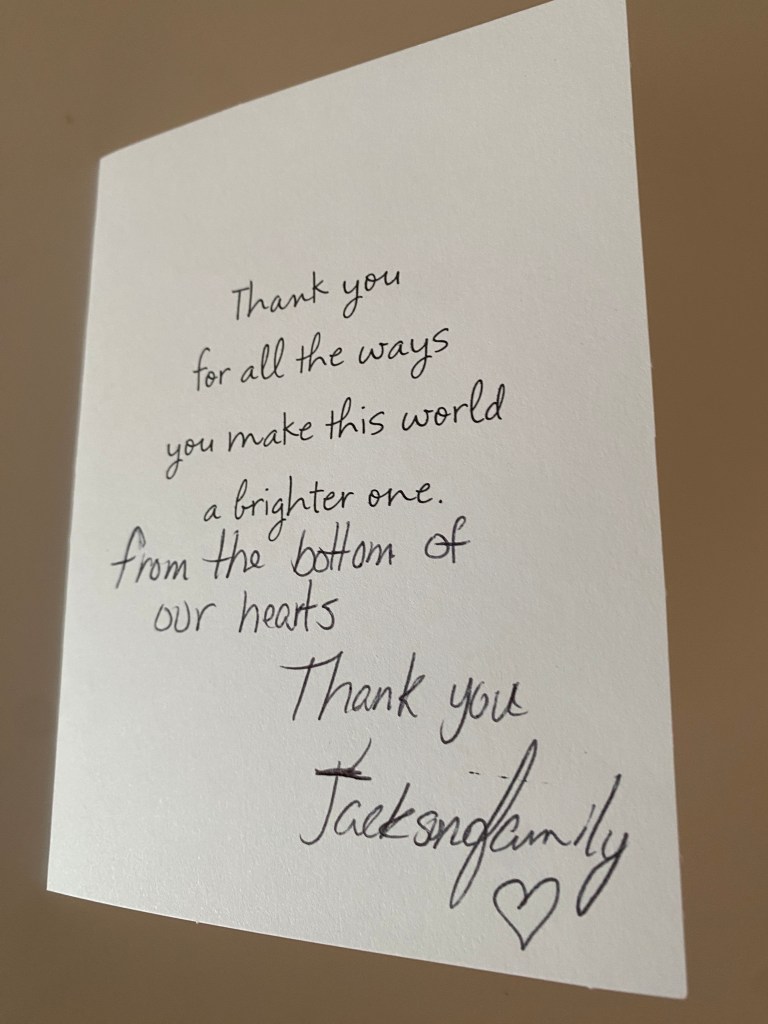
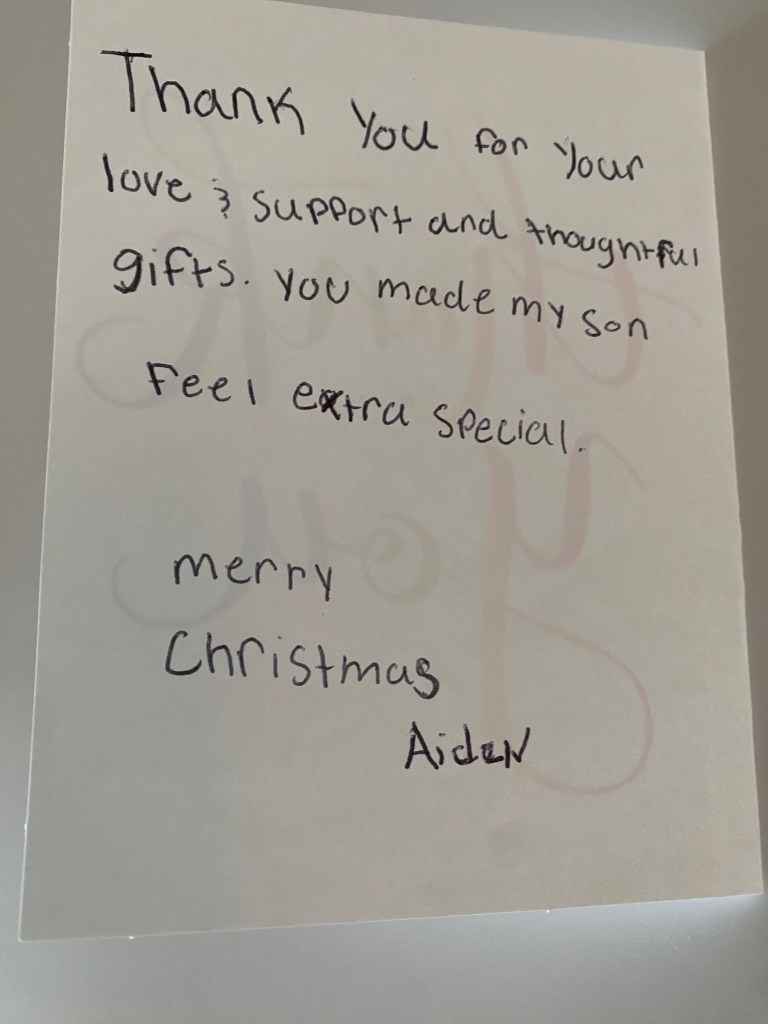
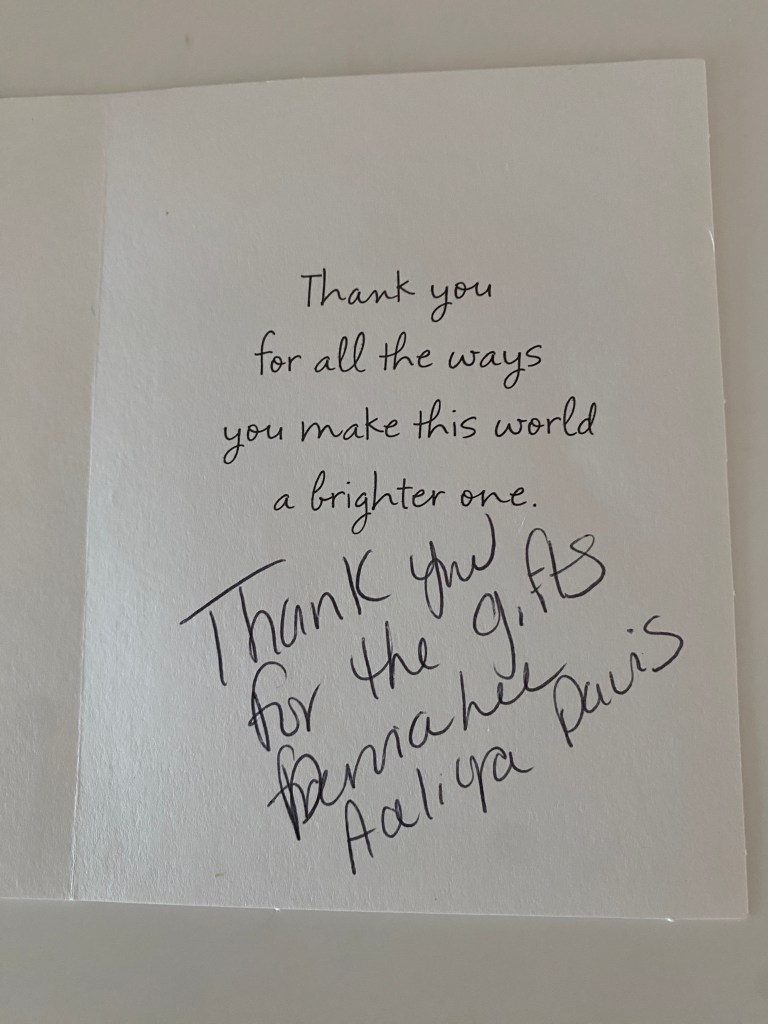
Each year the Lakewood congregation partners with Maximo Elementary School to provide Christmas gifts for the students who are houseless. The school provides the names and ages of children and preferred gifts. And Angel Tree is set up in the sanctuary with the names and gifts listed on ornaments. People take the ornaments purchase the gifts and bring them back to church wrapped and tagged. We are so grateful to all who support this effort to bring joy to children in our community.
Category: Posts
Sermon: Beyond the Star
LAKEWOOD UNITED CHURCH OF CHRIST
2601 54th Avenue South St. Petersburg, FL 33712
On land originally inhabited by the Tocabaga
727-867-7961
lakewooducc.org
lakewooducc@gmail.com
Date: January 4, 2026
Scripture Lesson: Matthew 2:1-12
Sermon: Beyond the Star
Pastor: Rev. Kim P. Wells
We have sung it many a time:
We three kings of Orient are;
bearing gifts we traverse afar,
field and fountain, moor and mountain,
following yonder star.
O star of wonder, star of light,
star with royal beauty bright,
westward leading, still proceeding,
guide us to thy perfect light.
We don’t sing this at church in this season because we don’t have copyright privileges for the music. Alas! But we know the gist of the journey from the story in the gospel of Matthew.
It is a story of a group of magi following a star that they observed in the night sky. And eventually finding the baby Jesus. What might this well known story have to tell us about our spiritual journey as we face the coming New Year?
First, the magi. They are astrologers. Magi are associated with magic. With sorcery. There were seekers. Wisdom figures. Interested in stars, the occult, dreams. They were not Jewish. They were Gentiles, from Persia or Babylonia, today maybe Iraq or Iran.
In describing these magi, the New Interpreter’s Bible tells us they “could not be more remote from the Jewish citizens of Jerusalem in heritage and worldview.” [The New Interpreter’s Bible, vol. 7, p. 80.] The message here is that the birth of Jesus, this Messiah breaking into the world, was of significance for all of creation, for all people, Jewish, Gentile, religious, atheist. It matters not. Jesus is God’s gift to the world. A gift of peace. For all. Whether or not we even ever hear of him. He has come to bless the world with universal, unconditional love.
This is a reminder to us that the purposes of God are universal. God is not working only through one religion, one group, one people. The purposes of Divine Love include everyone. And the birth of love that we witness in Jesus is a universal love. So there is not room in our faith for prejudice, bigotry, or favoritism. There is no space for distaste for the foreigner. There is no place for targeting people of another religion, background, language, color, or culture. Period. God is about universal love for all people and that is our calling as well.
And we are told that they follow a star. Well, they are astrologers after all. We see the forces of nature, creation, doing the bidding of Divine Love. Creation bears witness to the purposes of God. There is no evidence that there was any kind of astronomical occurrence around the time of the birth of Jesus. But the point is to see that not only people but Creation itself does the bidding of God, is obedient to God. Creation guides and teaches us what we need to know.
As we approach this New Year, then, we can expect nature to inform our spiritual journey. This is nothing new. Mystics and people of faith throughout the ages have turned to nature and Creation seeking to find the purposes of God. We may be among the first generations, we of the industrial and post industrial age, who no longer seek to be spiritually illuminated by nature. This is something for us to consider in this New Year. How will we let the beauty and the complexity and the web of nature illumine and inform our lives as we seek to live from a place of universal, unconditional love? How do we let the wonders of Creation shape and form us, instead of vice versa?
The story of the magi shows us that this baby being born is about more than religion, peoples, culture, or kings. It is a story bigger than wealth and power and nations. It is a story for the universe, and so the natural world participates in this glorious revelation.
We also want to note that the magi traveled by foot or maybe camel or donkey. To cover the distance indicated by their origins may have taken years, certainly many months. It was not a short trip. Yet the story tells us that they persisted. They did not abandon their project despite the length of time and the distance involved. They were devoted to this enterprise. To find this new king.
To pursue this journey, these magi clearly had resources. We know this also from the gifts they bring. Things that were costly. These people were of high status. Respected in their society and people of means.
Here we are reminded to be persistent and patient in our spiritual quest this year. The way may not be easy. It may take a lot out of us. It may reorient our lives who knows in what ways. But to live from a place of unconditional love as Jesus did, to follow the gospel with our whole selves and our whole lives, it takes effort, and time, and dedication. This runs counter to our culture which has come to expect everything – yesterday. We want fast internet, we don’t want to wait for a web page to load. We want our purchases and packages the next day, if not the day of ordering. We have come to expect instantaneous results. Into this reality we are confronted with the story of the magi. On a quest that takes years, with no assured result. So, this year ahead, let us expect to be determined, focussed, and persistent as Divine Love works in us.
Along the way, these magi, following a star, encounter what turns out to be a clash of kings. They are seeking this newborn king that they know about from their investigations and wisdom and dreams. And when they get to the capital, Jerusalem, they inquire about this newborn king. And they come head to head with Herod, the current king, who will have no competition, no threats to his power. The magi end up in the middle of a significant power struggle and confrontation with a fearsome authority. There is conflict and contention with the political authorities, the religious authorities, and the residents of Jerusalem. These are the people who later in the gospel will be responsible for the crucifixion of Jesus.
So along their journey, following a star, the magi encounter confrontations with political and religious authorities which put them at risk. But they still follow the star. They stay true.
We are here because we, too, are on a journey. Perhaps following a star. The star Jesus. We are here because we want to follow Jesus and be part of creating the world of peace and justice that God sent Jesus to inaugurate. We are here because we want to align ourselves with the purposes of love in this world. We are here because we, too, want to affirm the universal love of God, for all people, not just some people. The rich. Or the people we like. Or the people like us. But all people. We know that our journey will involve confronting darkness. Hatred. Injustice. Bigotry. Greed. In ourselves and in others, and very much in the society of which we are a part.
We also see that our journey involves the clash of political and religious figures. Of political parties. And authority that definitely clashes with our morals and values as followers of Jesus. It is not an easy path, this journey of seeking and following Jesus.
I spoke with someone this week who as part of their job was required to arrange for ICE to pick up a suspect. What was the suspect’s offense: loitering and prowling. I told the person: That is what ICE does, loiter and prowl. Hunting people down. This person felt so conflicted carrying out this dictate, but was told they were required to do it as part of the job. There is rent to pay and money is needed for food to eat. So, one has to cooperate. It’s not easy.
There is something else we notice from the story of the magi. We don’t know how many of them there were. Three gifts are mentioned, so that has come to be seen as an indicator of three magi. But we don’t know. We are told that there was more than one. They are referred to in the plural. So, this journey to Jesus is not something that we do alone. It is something that we pursue with others, in community. That is why we have the church. Hopefully as a congregation, together, we are journeying to Jesus, and helping each other along the way. This is not a solo venture. Remember one of the first things we are told that Jesus did in his ministry was call others to work with him. The disciples. Our calling to the journey to Jesus is one that we pursue in community with others. And Jesus becomes the sole authority for us. We follow him. Even when it means being in conflict with the culture and political forces around us.
Now, the magi, we are told, eventually do find Jesus. And they are filled with joy and praise. Adulation. They give their costly gifts which they have carried for miles upon miles. I think of how we measure everything in our backpacks when we go hiking. Keep the weight down. Gold. Frankincense. Myrrh. The frankincense and myrrh were not native to Palestine. So they had to be carried. The magi bore this burden. And they gave the gifts with joy. The scene seems like they are being filled with love. Overpowered by joy. After all of their travels and their hassles in Jerusalem, they are clearly awed. It was all worth it.
This past week, we attended two of the Kwanzaa celebrations here in St. Pete. At one of the events, a speaker asked us to think about who had poured into us. Who had filled us with love. Inspired us. Given us hope. Who had poured into us. In the story of the magi, you get the feeling that finding and seeing the baby Jesus and his mother, fills the magi. The holy family, the encounter, fills them. And they are able to go on.
In our journey, we know that we, too, will also encounter Christ Jesus. In ourselves, in others, through praise and worship, through prayer and scripture. In nature. And like the magi, our encounters with Christ fill us with joy and invite us to be giving. We, too, have gifts to give. Gifts to show our love. Our appreciation. Our devotion. Maybe these gifts involve money given where it is needed. Given to the community, the church. Given to help right the wrongs around us that are in conflict with gospel values.
Our gifts may be time given. To our faith community. To the wider community where needed. To a neighbor. To a friend. A ride to the doctor. A meal. A conversation.
Our gifts may also be as simple as a smile to someone to make them feel more comfortable in a certain situation. Our gifts may be words of encouragement to a friend or stranger who needs them. Our gifts may be a hug or gesture of sympathy in the face of great sadness. Whatever situation we are in, we have gifts to give.
This week I read about how people in the Logan Correctional Center, the largest women’s state prison in Illinois, 40 women are involved in training service dogs. The inmates teach the pups the skills they will need to serve as mobility or emotional support animals. So even in prison, there is the opportunity to give. And the women are grateful for the healing presence of the dogs in their lives as well as being able to help others who need healing and help outside of the prison. [Nice News, 1.3.26.]
Once we have encountered Jesus, or Divine Love, however it may come to us, we are not the same. We are devoted to one principle: Love. We express that love through anti violence and giving in whatever way we can to be of help to others and to the world. And the result is joy!
In her Christmas poem, “Amazing Peace,” Maya Angelou expresses the impact of our encounter with Jesus at Christmas. She writes in part:
“We clap hands and welcome the Peace of
Christmas.
We beckon this good season to wait awhile
with us.
We, Baptist and Buddhist, Methodist and
Muslim, say come.
Peace.
Come and fill us and our world with your
majesty.
We, the Jew and the Jainist, the Catholic and
the Confucian,
Implore you to stay awhile with us
So we may learn by your shimmering light
How to look beyond complexion and see
community.
It is Christmas time, a halting of hate time.
On this platform of peace we can create a
language
To translate ourselves to ourselves and to
each other.
At this Holy Instant, we celebrate the Birth of
Jesus Christ
Into the great religions of the world.
We jubilate the precious advent of trust.
We shout with glorious tongues the coming
of hope.
All the earth’s tribes loosen their voices
To celebrate the promise of Peace.
We, Angels and Mortals, Believers and
Nonbelievers,
Look heavenward and speak the word aloud.
Peace. We look at our world and speak the
word aloud.
Peace. We look at each other, then into
ourselves,
And we say without shyness or apology or
hesitation:
Peace, My brother.
Peace, My Sister.
Peace, My Soul.”
Christmas, the encounter with Jesus, changes us.
In the story of the magi, we hear that they are told in a dream to go home another way. Not to go home through Jerusalem and have another encounter with Herod. But also, they go home to Persia or Babylonia as changed people. They are different. They must pursue a new route with their lives. They can no longer be complicit with a leader who kills children. They can no longer cooperate with a murderous ruler. Their loyalty and devotion is to universal love and peace. They are obedient to Divine Love. They can no longer be complicit in power arrangements that involve the death and destruction of innocents.
So we learn that once we have encountered Jesus, we, too, are changed. We cannot go back to our old ways, though they pull at us at times. We see that we must rely on our community of faith as our companions in this changed reality. We need one another to resist the forces of empire which, like Herod, wield the forces of violence to protect power. We must resist the politics and religion that would deny the humanity and sacredness of every life. And, like the magi, we must listen to our dreams. Dreams which warn us and guide us to ways of peace and justice. Dreams that revere the holiness of life. Dreams that reflect the sacredness of all Creation. Dreams of healing not hurting. Dreams of relationship not retribution.
After encountering Jesus, we are changed, personally and in our political and social associations. We are no longer the same. Our loyalty and devotion is not divided but directed solely to the way of love – for ourselves, our neighbors near and far, and for our enemies. This may very well put us odds with the society around us.
This past week, in this era of DOGE and constant cutting of that which is life giving and life saving for millions of people, it was such a relief to hear the newly inaugurated mayor of New York say, “We will govern expansively and audaciously.” Mamdani is not Christian, or Jewish, he is Muslim, but he has clearly had an encounter with the forces of Divine Love. He is governed by his morals and values, not by the political dictates of those currently in power in this country. And everyday people recognize that universal vision of respect and reverence for each and every life.
Going home a different way after our encounter with Jesus, we realize that we are people of power with much to give. We are all of us people of generosity regardless of our income or status. The generosity and giving of each and every one of us is needed for the realm of peace to hold sway.
We who have encountered Jesus this Christmas season begin this New Year a different way. Having been changed. Having encountered Divine Love once again, in a fragile baby, we are no longer the same. So as we enter this New Year, alive anew after our encounter with Christ at Christmas, let us go into this New Year with these words of poet Mary Oliver echoing in our hearts: “Keep some room in your heart for the unimaginable.”
May we be blessed as we make our journey together into this New Year. May we encounter Christ. And may we let the journey change us.
Amen.
A reasonable effort has been made to appropriately cite materials referenced in this sermon. For additional information, please contact Lakewood United Church of Christ.
Advent Devotion 26: JOY!

This is the day that we celebrate the nativity of Jesus the Christ. Interestingly, scholars think that Jesus was actually born sometime in the spring. And yet the feast day of his nativity was set at the end of December.
Well, in the long days of darkness, people need a celebration of light. In the spring, the church has the celebration of Easter. Something was needed in the dead of winter. Also, the Romans had a big winter festival at the end of December. All of the people were busy with their revelries. But the followers of Jesus eschewed Roman God’s and Roman festivities. So, they came up with a season of celebration of their own: Christmas, the feast day of the nativity of Jesus. And the 12 days following, up until Epiphany, the celebration of the wise ones visiting Jesus. So, Christians had their own festival. Twelve days worth. And that celebration has now become the most celebrated holiday in the world! (Thank you, Santa, presents, shopping, and capitalism!)
But for those who are followers of Jesus, or attempting to be followers of Jesus, regardless of when he was actually born, the celebration of Christmas, of Jesus’ birthday, is a celebration of JOY! Of the love of God breaking into human history in an earth shattering way! That has changed history for all time. And that has impacted our very lives.
The singular characteristic of Christmas is and must be JOY! Whatever is wrong in our lives and in our society and in our world, still Christmas reminds us of the joy that Divine Love intends for all Creation. Joy is subversive in the presence of pain, of sadness, of grief, of despair. Joy!
Mary’s song, the Magnificat explodes with joy! My spirit rejoices. Joy! Looked with favor upon a lowly servant. Joy! All generations will call me blessed. Joy! The Mighty One has done great things for me. Joy! God’s mercy is for the faithful from generation to generation. Joy! Strength scattering the proud. Joy! Brought down the powerful. Joy! Lifted the lowly. Joy! Filled the hungry with good things. Joy! Sent the rich away empty. Joy! Helped Israel and fulfilled the promises to the ancestors. Joy!
Whatever your circumstances this Christmas, make space for JOY!!!
Prayer: Joy to the world! Christ the Savior is born! Amen.
This devotion was prepared by Rev. Kim P. Wells, pastor of Lakewood United Church of Christ in St. Petersburg, FL.
Advent Devotion 25: Born in us

It is finally Christmas Eve. Most of us will go to church tonight. We will finally celebrate the nativity of Jesus, our Savior, and the Savior of the world.
To me, what is most important about Jesus is that he shows us who we are. Who we can be. We, too, are to be vessels of the Holy Spirit.
Christmas is not just about Jesus being born. It is about Christ being born in each and every one of us. In the beloved carol, “O little Town of Bethlehem,” there is the prayer, “be born in us today.”
Meister Eckhart, a mystic of the 14th century said this: “We are all meant to be mothers of God…for God is always needing to be born.”
An eternal theme of the spiritual life meets us at Christmas. How are we vessels for Christ? How are we temples of the Holy Spirit? How is Divine Love seeking to to be born in us? To make a home in us? To impact the world through us?
The spiritual life for a Christian is not just about who Jesus was and what he did. It is about who we are and what we are to do. This is a time to consider the question so beautifully posed by poet Mary Oliver: “Tell me, what is it you plan to do with your one wild and precious life?”
Prayer: As we celebrate the nativity of Jesus, may we remember that the power of Divine Love is seeking to be born in us, today. Amen.
This devotion was prepared by Rev. Kim P. Wells, pastor of Lakewood United Church of Christ in St. Petersburg, FL.
Advent Devotion 24: Pay attention!

Pay attention. This is another timeless theme of the spiritual life. Paying attention. To our lives. To our spirits. To our feelings. To others. To the presence of the sacred, the holy.
In the stories of the nativity of Jesus in the gospels, there are lots of special ‘signs.’ Joseph has dreams. Elizabeth’s baby kicks. Mary entertains the angel Gabriel. The wise ones see and follow a star. The shepherds see the skies open up and hear the songs of angels. There is one magnificent manifestation after another. But these are only impactful because someone is paying attention.
Joseph could have dismissed his dreams as indigestion. Of course baby’s kick inside the mother. Why does Elizabeth think that is some kind of sign? Mary could have turned up the radio or the podcast she was listening to and ignored Gabriel. Had he gone to other young women before Mary? The shepherds could have been fast asleep in the fields and missed the whole show with the angels. The wise ones could have dismissed the star as some kind of anomaly, noted it in their charts, and gone home to bed for the night.
All of the characters in these stories are paying attention. They are open. They have space in their lives, time, for the breaking in of something important. They are not so distracted by entertainments and information and greed that they miss the power of Divine Love active in their lives.
We can be so heavily scheduled and distracted by a million things, literally a million or more with smart phones and the internet, that we may very well miss how God is seeking to love us into wholeness. In these last days before Christmas, may we remember to pay attention.
Prayer: As advent comes to a close, may I remember to pay attention. May I seek to be aware of the power of love in my life and in the world around me. Always. Amen.
This devotion was prepared by Rev. Kim P. Wells, pastor of Lakewood United Church of Christ in St. Petersburg, FL.

