Weekly Update 1/23

This Sunday: This Sunday we hear of the call of the disciples and consider how “Jesus went
through Galilee. . . proclaiming the good news of the kingdom and curing every disease and
every sickness among the people.” [Matthew 4:23] How does Jesus offer healing today?


Church School: The theme for this Sunday is nurturing people. The gathering will be led by
Olivia Gibson.


Memorial Service: There will be a memorial service at the church on Saturday Jan 25th at 2:00 p.m. in remembrance of the life of Bruce Drouin, Bruce was Wally LeBlanc’s partner.  A Celebration of Life luncheon/party will follow the service. If planning on attending please only wear bright or colorful clothing, nothing dark or black.


Before I Die. . .  The installation on the chalk boards remains available in the sanctuary.  You are welcome to add to the responses finishing the sentence, Before I die, I am going to. . .   You are also encouraged to look at the boards and see the responses of others.


Sing Out! Tampa Bay Concert: at the Mahaffey Theater Friday Jan. 31 at 7:00 p.m.  Several people from the LUCC congregation are part of the community chorus that will be accompanied by the Florida Orchestra under the direction of Michael Francis.  Admission is pay what you can at the door.


Labyrinth Available: There is a straw labyrinth on the church grounds adjacent to the memorial garden. All are welcome to walk the labyrinth at any time. There is information about the labyrinth in a mailbox near the installation. The labyrinth is provided for your encouragement, support, and inspiration on your spiritual journey.


Just Mercy Community Conversation: You are encouraged to see the movie Just Mercy and then participate in a community conversation Saturday Feb. 1 from 2-3:30 p.m. at James Weldon Johnson Community Library ( 1059 18th Ave. S, St. Pete). Everyone is welcome!


Opportunities Knocking: Here are several projects from the wider church that may be of interest:

The Florida Conference UCC women will be meeting Sat. Feb. 8 at Church of the Isles, Indian Rocks Beach.  There is information on the bulletin board at church.  Contact the Church Office for more information.  

Pinellas County CROP Walk for Hunger.  This Walt is scheduled for Sunday March 1 at 2:00 p.m.  The money collected is donated locally to DayStar Life Center and the St. Petersburg Free Clinic.  Funds are also donated to Church World Service to be used in other areas of the US and abroad.  For LUCC to participate, a coordinator is needed.  Please speak with Rev. Wells if you are interested in this mission project.  

Church Women United of Greater St. Petersburg meets regularly and is seeking addition participation.  Church Women United is involved in a variety of projects locally and beyond to foster a sense of compassion and community among diverse people.  For more information, please contact the Church Office.  


Operation Attack: Operation Attack is very much in need of clothes for men, boys, and girls as well as diapers and peanut butter and canned fruit. Donations may be placed in the shopping cart in the entryway to the sanctuary. Volunteer dates are February 10, March 9, April 13, and May 11. They also need people to help on the first three Tuesdays of the month from 9:30-noon.

Operation Attack is an ecumenical effort serving families with children located at Lakeview Presbyterian Church, 1310 22nd. Ave. S., St. Petersburg. LUCC was a founding member of Operation Attack in the 1960’s!


Hearing Augmentation: Devices are available from the usher in the sanctuary during worship.


January Birthdays: Martha Lamar 1/2, Elinor Ross 1/4, Chip Cosper 1/7, Jackson Cosper 1/9, Hilton Jones 1/23, Bob Bell 1/28. Someone missing? Contact the church office with birthday information.


Circle of Concern: Family and loved ones of Esther Ryland, Tony Rogers, Wally LeBlanc Sherry Santana, Jen Degroot, Carolyn Moore, Ann Quinn, Maggie Brizendine, and Ann Rogers.


Recent Post:


Weekly Update: If you are involved with an activity or event that you would like to share with the LUCC family, please send the information to the church office by Tuesday since the Update usually is sent out on Wednesday.
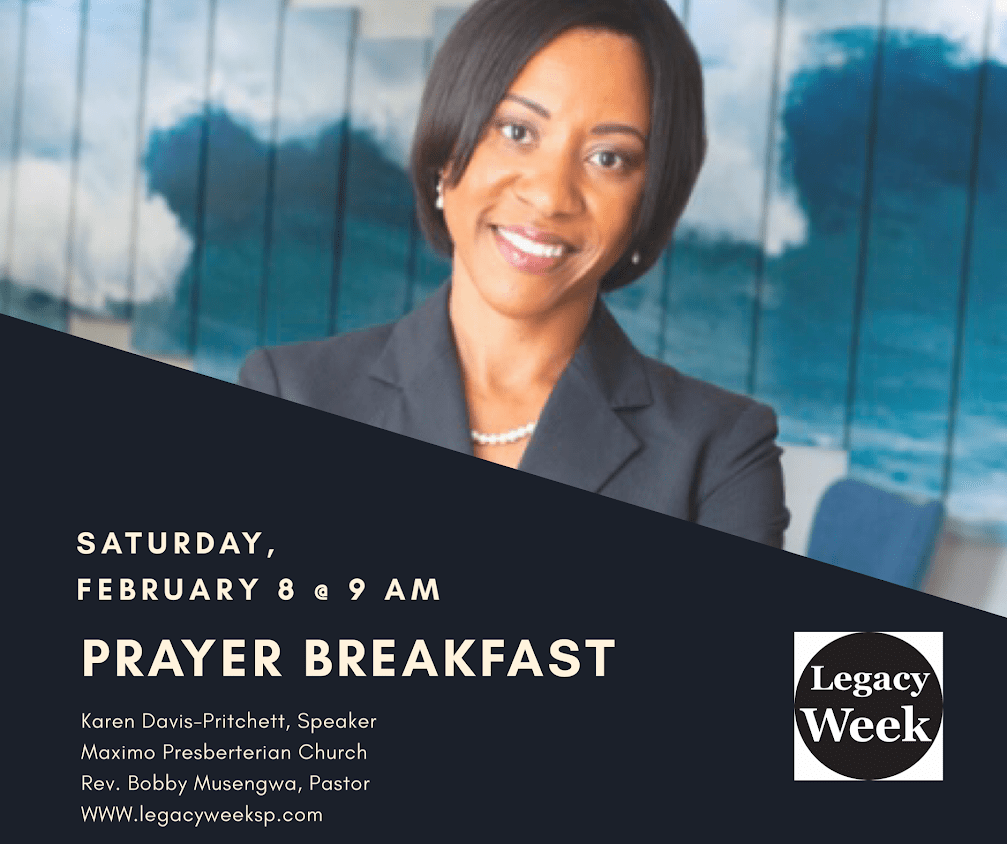

Toni Morrison Documentary

pastedGraphic.png

COME SEE THE NEW DOCUMENTARY”TONI MORRISON – THE PIECES I AM”

Presented by The St. Petersburg Branch of THE ASSOCIATION for the STUDY of AFRICAN AMERICAN LIFE and HISTORY, INC. (“ASALH”) In Support of the Community Remembrance Project CoalitionFree  and Open to the public with Free Continental Breakfast  DISCUSSION TO FOLLOW 

WHEN: Saturday, JANUARY 25th, 2020 WHERE: Eckerd College in the Dan and Mary Miller Auditorium, 4200 54th Avenue South, St. Petersburg, Florida 33711

TIME: 9:30 AM (refreshments) – Film: 10:00 AM

Sermon 1/19 Let the River of Justice Flow

Date: Jan. 19, 2020, Dr. MLKing, Jr. Sunday
Scripture: Amos 5:21-24
Sermon: Let the River of Justice Flow
Pastor: Rev. Kim P. Wells

Despite the mixed reviews, Frozen 2 is the highest grossing animated movie ever
made. Even the critics who gave the movie a good review did not like it as much
as the first Frozen but it made more money. Well, I loved Frozen 2, but to be
honest, I am shocked that it was a block buster. Why? The movie is subversive. It
challenges colonialism and imperialism and racism. It confronts a false narrative
about the past that is controlling the present. That’s a theme for a radical social
justice movement not a Disney animated soon-to-be classic.

To summarize the movie, two sisters, Elsa and Anna of Arundelle, find out about
an enchanted forest that has been sealed off in fog for more than 34 years. This
forest is inhabited by an indigenous tribe, the Northuldra. The sisters have been
told that their grandfather, the king at the time, had a dam built to help the
Northuldra people. Then at the celebration of the completion of the dam, the
Northuldra attacked the Arundellians. And ever since, the enchanted forest has
been sealed off by a mist.

That’s what Elsa and Anna were told. But as the movie reveals, “The past is not
what it seems.” The Ahtohallan river, interrupted by the dam, knows the truth, and
as the movie progresses, the truth comes out. The grandfather actually had the
dam built so that there would be an occasion for the two peoples to come together
so that the Arundellians could attack the Northuldra. So the whole thing was a
scheme to mask an attack. In the attack, the grandfather was killed and Elsa and
Anna’s father, King Agnarr, was wounded. His life was saved by a Northuldra
woman. She becomes his wife, Queen Iduna, and the mother of Anna and Elsa.
So, we find out that the girls have an indigenous mother and that their grandfather
used deceit to launch an attack on the Northuldra. And, yes, by now you should be
thinking about how people of European descent treated the indigenous peoples of
this land.

As Frozen 2 progresses, the grandparents and the parents are gone, and Queen Elsa
and her sister, Anna, have to face what they are going to do with the mess that has
been left to them by previous generations. That should sound familiar, too. We’ve
hear it most recently from climate advocate Greta Thunberg. And we heard it from
Dr. King over 50 years ago. What to do about the injustices of the past. In Frozen
2, Elsa and Anna are determined to heal the wounds of the past. So, the dam is
destroyed, the water flows again, Arundelle is saved from the rushing waters of the
freed river by an ice shield thanks to Elsa’s magic powers, the fog lifts from the
enchanted forest, and the Northuldra and the Arundellians make peace. They live
happily ever after. Or until the movie Frozen 3 hits the theaters. Now that sounds
like Disney!

How to go about dealing with the past. This is still a major theme in American life
today. We still don’t know our stories. We still are working from cultural
narratives that obscure the truth and the facts. And as we are told in Frozen 2,
“The truth needs to be found. Otherwise there is no future.” We need to
deconstruct the lies we have been told and accepted. We need to be seeking the
truth about our past as a country so that we can work on healing the wounds of the
past and creating a healthy, peaceful future for our country and the world.

There is much truth to be told about our history particularly the legacy of slavery
and the ripple effects that are still impacting our community and our society today.

This fall, we went to hear Tim Wise, an anti-racism activist and writer, speak at
Eckerd College. Part of his work to confront racism in the United States is to tell
the truth about our past as a country. He pointed out that we have an image that
North America was colonized by people from Europe who were the best and
brightest; people who were smart and adventurous. But Wise points out that the
people who originally came here from Europe came because they didn’t have any
prospects in Europe. They were poor and had no way to make a living. They had
done something bad and wanted to start a new life. They were deviants in some
way and were looking for an escape. As he pointed out, people in Europe didn’t leave their huge, profitable estates, complete with servants and serfs, etc. to sail off
to America where there were no estates, no buildings, no roads, no schools, no
services, no society, not much of anything, but land. If you were successful and
educated and landed and well off in Europe, you didn’t come to the “new world.”
You came if you were at the bottom and had few prospects. That’s who came to
these shores. The dregs and the deviants. Not the cream of the crop. Oh. That’s
not how I learned it in school. How about you?

I happen to be married to someone whose ancestors came to these shores on the
Mayflower. Really. When he heard what Tim Wise had to say, he admitted, he had
never thought of it that way. And Jeff saw validity in what Wise was exposing.
We have told stories that fortify and protect the power of the dominant class in
America. Even when the stories are not true or only partially true.

And we have left many stories untold. Stories of suffering. Stories of injustice.
Stories of heinous violence. Stories that tell the truth. Like the stories of the
Japanese interment camps in World War 2. And stories about how the Statue of
Liberty was originally designed to look like a woman of African descent. And
stories of what was done and continues to be done to the indigenous people of this
continent. And stories about the subjugation of women in the US. And stories
about Stonewall. And stories of slavery and family separation and voter
suppression and the terror of lynching. And stories about the policies and laws that
protect white privilege.

Yes, there was a great boom in America in the 1950’s. After World War 2, my dad
went to college on the GI bill; the first one of his family to do so since they had
come to America in the early 20th century. My parents bought a house with a
government subsidized loan. They were white. These opportunities were not
equally afforded to people of color who fought in World War 2. And the ripples of
that legacy continue to be felt today in accumulated wealth or lack thereof.
And there are still stories happening today that need to be told. I met someone at a
Florida Council of Churches training event from Sanford, FL who told me this story. A white woman who was a leader in her congregation was working on
finding a building for the church to rent to hold services. She found a place that
she liked and met with the owner. Everything was agreed to. They made
arrangements to meet and sign the papers, etc. When they got together to finish the
deal, she brought her husband. He was black. When the building owner saw him,
he made excuses and backed out of the whole thing. That was right here in
Florida, right now. The church couple was not surprised because apparently there
are lots of stories like that in Sanford, Florida.

I am part of the Community Remembrance Project here in St. Petersburg. This
group is working with Bryan Stevenson’s Equal Justice Initiative to install a
lynching memorial here in St. Petersburg to recognize the lynchings that have
taken place here. The mission of the group is to help our community remember the
ravages of racial terror right here in our city. This remembrance is intended to be
part of a healing process. We need to recognize the truth so that we can increase
our understanding. So that we can see the world that we have inherited. So that
we can heal the wounds inflicted in the past and stop inflicting new wounds. The
goal is healing for all.

In addition to passing on stories that are lies or that tell partial truths, we have also
inherited a cultural narrative that edits out the significant positive contributions that
people of color, minorities, and women have made to the development of our
society as we know it. Dr. Martin Luther King, Jr. pointed out how the
contributions of people of African descent are overlooked. He said, “The history
books, which have almost completely ignored the contribution of the Negro in
American history, have only served to intensify the Negroes’ sense of
worthlessness and to augment the anachronistic doctrine of white supremacy.”

He went on to tell this story: “Two years ago my oldest son and daughter entered
an integrated school in Atlanta. A few months later my wife and I were invited to
attend a program entitled ‘music that has made America great.’ As the evening
unfolded, we listened to the folk songs and melodies of the various immigrant
groups. We were certain that the program would end with the most original of all American music, the Negro spiritual. But we were mistaken. Instead, all the
students, including our children, ended the program by singing ‘Dixie.’

“As we rose to leave the hall, my wife and I looked at each other with a
combination of indignation and amazement. All the students, black and white, all
the parents present that night, and all the faculty members had been victimized by
just another expression of America’s penchant for ignoring the Negro, making him
invisible and making his contributions insignificant. I wept within that night. I
wept for my children and all black children who have been denied a knowledge of
their heritage; I wept for all white children, who, through daily miseducation, are
taught that the Negro is an irrelevant entity in American society; I wept for all the
white parents and teachers who are forced to overlook the fact that the wealth of
cultural and technological progress in America is a result of the commonwealth of
inpouring contributions.

“The tendency to ignore the Negro’s contribution to American life and strip him of
his personhood is as old as the earliest history books and as contemporary as the
morning’s paper.” [A Testament of Hope: The Essential Writings of Martin Luther
King, Jr., edited by James M. Washington, p. 581-582]

To build a future of liberty and justice for all in this land, we have to deal honestly
with the past: With how the indigenous people were treated and are still being
treated today. With the continued oppression of women. And with how people of
African descent have been treated and are still being treated. Sure slavery is over,
but injustice continues.

We need to be honest about who we are, how we got there, where we come from.
We need to deconstruct the untruths we have been taught. The lies. So that we can
see the truths of who we are. We need to share our stories. To listen. Learn.
Understand. This is necessary for creating a future of justice and peace. As
Frozen 2 tells us, “The past is not what it seems,” and “The truth needs to be
found. Otherwise there is no future.”

Given our current situation with the growth of white supremacist groups and the
increase in hate crimes, yes, I was shocked at the popularity of the movie Frozen 2.
The sisters are taught a story about their past which is a lie; a lie covering up
heinous deeds by the dominant culture. The sisters find out the whole truth. They
squarely face the evil that was done by their ancestors. And they dedicate
themselves to making things right, whatever it takes. The message is that the risk,
the cost, is a necessary investment for a future of peace.

This kind of commitment and all out effort is what we need in our society today to
address many of the problems that we are facing, especially racial prejudice and
inequality. We need to do what Elsa and Anna did in Frozen 2: Confront the lies.
Seek the truth. And then do whatever we can to set things right.

And the church has an important role to play. We are part of a religion that
specializes in dealing with the past. Christianity is faith of forgiveness and new
beginnings. Many people came to Jesus with their problems and issues. He never
changed the past for them. But he changed their future. Christianity is about
reconciliation and forgiveness and being transformed by that process. We see this
most powerfully in the tradition of how Jesus and his followers dealt with those
responsible for the crucifixion. All were forgiven and invited to be part of the
newly emerging faith community. A powerful example is the apostle Paul who
went from persecuting Christians to planting churches.

The church can be an important force in the healing of racism in our country today
by encouraging the truth to be told about the past. By listening to the stories we
have not heard. By revising our narratives about the past and what is taught to
children including our narratives about the church. And by advocating for policies
and laws that redress the injustices of the past. The church needs to help to create
a society that is more honest and open and equal.

In a lullaby sung at the beginning of Frozen 2, the question arises, “Can you face
what the river knows?” We have much to learn. It is not an easy process to face
the truth. But only when we face the truth of the past is a bright future possible. And here is where we may feel it’s too daunting. It’s too overwhelming. The
problems are just too big. We may feel lost about how to confront the lies that
undergird our status quo. Dr. King had something to say about the good people
who did nothing to further civil rights. He said, “We will have to repent in this
generation not merely for the vitriolic words and actions of the bad people, but for
the appalling silence of the good people. In the end, we will remember not the
words of our enemies, but the silence of our friends.”

Here, again, there is inspiration in Frozen 2. The two sisters, Elsa and Anna,
commit themselves to finding the truth and then doing whatever they can to set
things right. They encourage each other using a phrase common in the recovery
movement: “Do the next right thing.”

That is our call as people of God, as followers of Jesus, as part of 21st century
American culture. We don’t have to solve the whole problem. We are not
personally responsible for eradicating racism. We cannot tell the whole truth. But
we can do the next right thing. Each one of us. We can do our part in transforming
American culture, its institutions and its narrative, which continues to inflict pain
and suffering today. Do the next right thing, Frozen 2 tells us. So that the river of
justice can run freely from sea to shining sea. Amen.

A reasonable effort has been made to appropriately cite materials referenced in
this sermon. For additional information, please contact Lakewood United Church
of Christ.

Operation Attack

1310 22nd Avenue South St. Petersburg, FL 33705   (727) 822-1187            www.operationattack.org

January 2020                                           Peggy Junkin & Diane Klamer – Lead Volunteers


Hours: 9:30 am – 12:00 pm    (1st, 2nd, 3rd Tuesday of each month) 6:30 pm – 7:30 pm    (One evening a month)


Happy New Year – and many thanks for your support throughout the past year.

We greatly appreciate your donations of food, children’s clothing, and money so we can continue serving our neighbors in the community.  We could not provide these services without our faithful volunteers who are at Operation Attack three mornings and one evening each month – and those who assist in the many tasks that must be done “behind the scenes.”

We would like to give a special thanks to Center for Spiritual Living Florida Gulf Coast for their donation of food and new/gently used clothing, Also, First Presbyterian Church gifted us with new and gently used clothing, including new socks, underwear and school uniforms for Back to School. A Big Shout Out goes to Winifred Pfister for her extremely generous financial gift.  Many Blessings to all of you who share your good fortune with the people in our community.

During the past year we provided assistance to 630 families, clothed 551 children with 6,887 clothing items, and provided food to 1,325 people.  We also assisted 117 people with their PAST DUE electric bill.

Volunteers Needed

We have been blessed this year with new volunteers, but more are needed.  Please contact Diane or Peggy if you are interested in volunteering just one Tuesday each month, or more often – or assisting with some “behind the scenes” tasks.

Clothing Needs

As we still have a couple of months of cooler weather, we continue to need boys’ and girls’ jackets for sizes 2T through teens.  When buying for teens, please keep in mind the styles they prefer.  We also need girl’s tops for sizes 6-12, boy’s jeans for sizes 10-18, and XL boys no show socks.  We have been providing more sizes of diapers to our families and can use donations of sizes to fit Newborn – 35-pound children.  

Food Needs

We always need canned fruit, soup, vegetables, meat, pasta, pasta sauce, rice, beans, peanut butter, bread and cereal. Be sure your donations are foods our families will enjoy preparing and eating.  Currently, we especially need oatmeal, cereal, peanut butter and canned meat.

Speakers available

We would be happy to speak to your group about Operation Attack.

Sermon 1/5 Before I Die…

Scripture Lesson: Ecclesiastes 3:1-13
Sermon: Before I Die. . .
Pastor: Rev. Kim P. Wells

Happy New Year! It’s the season for resolutions, or not, depending on how you
like to approach things. Have any of you made a New Year’s resolution? No need
to go into the details.

In any case, the beginning of a new calendar year, whatever your thoughts on
resolutions, is a time to take stock. To look back. To think about what to leave
behind in the year passed. It is a time to reflect. To observe where you are. Are
you where you thought you would be? Are things as you had anticipated? It is
also a time to look ahead. It’s a useful moment to pause and reflect – whether or
not you are inclined toward resolutions.

I do not personally lean toward a five year plan or a ten year plan or a seven step
plan as I go about my life. I am by nature a planner and highly organized but I
have found that things happen beyond our control, things change, unexpected
circumstances arise, and if locked into a plan, opportunities can be missed. So, I
try to be invested in paying attention, listening, reflecting, and being intentional.
The New Year is a natural opportunity for all of this.

The writer of Ecclesiastes has given us the wonderful wisdom poem that we heard
this morning to help us reflect on life’s journey. As we think about the perspective
of Ecclesiastes, we want to remember that these are teachings that Jesus would
likely have known. Jesus would have been schooled in the teachings of this book
which is an invitation to think about life in its fullness, diversity, and intensity. He
would have been familiar with the verses we heard this morning. They would have
brought him strength and comfort as he made his journey through his life and
death. Ecclesiastes teaches that there is good and bad. There are ups and downs.
Joys and struggles. All depending on the time, the context, and the circumstances.
The living of our days includes a wide spectrum of experiences and that is what
makes life abundant and meaningful and mysterious. The writer of Ecclesiastes is
offering guidance for the living of life and for understanding life’s journey. There
is much encouragement for merriment and fun. And there is much
acknowledgment of the vanity of life – the writer mentions vanity over 30 times in the book. So scholars argue whether the writer was an optimist or a pessimist. I
would say, yes, to both. I think this wisdom book counsels work hard, play hard,
be a morally good person, and accept the utter inscrutability of God. There is a lot
that simply cannot be explained. So do what you can to live fully and abundantly,
and accept that the circumstances and outcomes are beyond our control or
understanding. Life is a mystery.

We see this perspective in the song, “The Dance,” made popular by Garth Brooks.
He talks about how we go through life and we don’t know how things will turn out.
We love and then experience loss. We think we are on top and then we fall. We
just don’t know how things will unfold. The main sentiment of the song is
expressed in the last line, “Our lives are better left to chance, I could have missed
the pain, but I’d have had to miss the dance.” In the original music video, there are
clips of John F. Kennedy picking up John John and Martin Luther King, Jr. scoop-
ing up one of his small children and the Challenger astronauts entering the space
shuttle. If they’d only known. . . But they didn’t know. And so they carried on.

And this is what we do. We don’t know and we carry on. Like the writer of
Ecclesiastes, we seek to be fully alive, to live abundantly, to embrace each moment
with awe and grace – work hard, play hard, and be morally good accepting the
inscrutability of life and the inevitability of death.

Yes, we are all going to die, that is something we can be 100% sure of. Look
around this sanctuary. Everyone here is going to die. All of us. We don’t know
when. We don’t know how. But we know each and every one of us is going to die.
That is what makes this moment and every single moment so precious and sacred.
That is what makes the experience of being alive, taking a breath, so intense and so
holy. But in the ordinariness of going through the paces of daily life, we can loose
sight of the gift we are being given each and every moment. We can miss the
transcendence in the bug, the leaf, or the touch. Remembering that we are going to
die brings home the mystery and magic of this moment.

This week I read about a phone app called WeCroak. Do any of you have it?
Ironically it is in the health and fitness category. Well, it sort of fits. The WeCroak
app reminds you randomly five times a day that you are going to die. It sends you a message: “Don’t forget, you’re going to die.” Yes, I know it sounds, well,
morbid, but it is based on a folk saying from Bhutan in the Himalayas: “To be a
truly happy person, one must contemplate death five times a day.” So, this app
helps you do just that. The goal? Happiness.

In case you are interested, the WeCroak app gets a 4 star rating, it’s free,
appropriate for ages 4 and up, and it is available in English and Italian.

Awareness of death reminds us of how precious this moment, this day, this journey
of life is. It reminds us of each opportunity we are given, day in and day out, to
relish the experience of being alive on this planet with billions of other beings and
life forms. So what do we make of this life?

Yes, much is beyond our control and inscrutable. Why did he get killed by the
drunk driver? Why was her cancer cured? Why were they born into abject poverty
in Sudan? Much is unpredictable and beyond our understanding but we still have
responsibility for how we live our lives, in our circumstances. We still have
choices to make about our behavior and our thoughts and attitudes. We have
choices about how we interact with other people, what we give our time and
money and energy to, whether we forgive. We decide whether to live our lives
giving or taking. We decide whether to help or to harm. Most of our choices are
fraught with moral consequences, good or bad, whether we want to see them or
not. So what are we making of our lives? As the poet Mary Oliver puts it, “Tell
me, what is it you plan to do with your one wild and precious life?”

In 2011, artist Candy Chang was living in post-Katrina New Orleans. It was a
situation of devastation and shattered hopes. Then a dearly beloved mother figure
in her life died. She reflected on the unfulfilled dreams of her loved one. Chang
got permission from the city to use an abandoned house in her neighborhood for an
interactive art installation. She painted an outside wall of the house with chalk
paint and stenciled the words, Before I die I want to. . . Chalk was provided. And
as it turned out, people, many people, in the neighborhood used the chalk to finish
the sentence: Before I die, I want to. . . The wall and the house became covered
with the hopes and dreams of the people of the neighborhood and beyond. The
response was far greater than expected. There have now been over 5000 installations of a similar nature in 75 countries in 35 languages. I saw the installation this summer in Cincinnati. I understand there was one in St. Petersburg in connection with the Shine Festival in 2016.

The prompt “Before I die I want to” encourages us not only to acknowledge that
we are going to die but it also reminds us of our agency, our ability to take respon-
sibility for our actions and choices. So, what do people want to do before they die?

People put all kinds of things on the chalk boards, and you will have the
opportunity to write on the boards that have been created for our use this morning
as the New Year begins.

Before I die. . . Some people put celebrity status dreams on the boards; things like
Before I die I want to name a mountain, drink from the Stanley Cup, kiss Brad Pitt.

Some finish the sentence with altruistic aims, like save a life, end global warming,
do good things, see the death of evil, shift global consciousness, see equality, live
without money, be a teacher.

There are mundane aspirations expressed on the chalkboards: grow a mustache,
own a boat, eat a taco from Mexico, ride in a golf cart.

There are responses that seem to have a back story: Before I die I want to meet my
daughters-in-law, tell my life story, see Germany, hug my boyfriend, be in the
upper middle class, go to jail.

And there are a lot about relationships: Before I die, I want to love myself, fall in
love, inspire someone, be a friend, find happiness, be a good person, live, live
alittle.

The challenge, Before I die, invites us to embrace our mortality in all of its
ephemeral glory. We are not to be afraid of death or dying, but of not fully living
So as this New Year begins, we are invited to think about what we are being called
to do with our one precious and holy life. It is a time to reflect on what we are here
to do before we die. What is beckoning to us? What is our unfinished business?
Each of us as unique individuals is here to live and love deeply and fully. What is
the longing in our hearts?

In the book of Habakkuk, chapter 2, we are told that God instructs the prophet:
“Write the vision; make it plain on tablets, so that a runner may read it.” In other
words, make a billboard with your dreams for the future. So, we have our chalk
boards waiting for us to proclaim our desire to relish and reverence the living of
our days. What hopes and dreams and desires are we being given? Let us write
them. Share them. Commit to them. In Chang’s installation, the sentence given
is, “Before I die I want to. . .” As people of faith, we wanted to express more
commitment with our dreams, so our boards say, “Before I die I am going to. . .”
Realizing that none of us fully knows what is ahead, we are still bold and trusting
in sharing the dreams that are being laid upon our hearts. So, in just a moment,
we’ll hear the song, “The Dance,” and you are invited to head to a chalk board and
express your desire, your intent – to embrace the fullness of this precious life.
Before I die I am going to. . .

And in addition to writing on a chalk board, you are also invited to dance – alone,
with someone, in a group, in whatever way you would like.

The poet W.H. Auden invites us,
“I know nothing, except what everyone
knows – if there when Grace dances,
I should dance.”

As this New Year begins, may we fully embrace the dance of life! Amen.

A reasonable effort has been made to appropriately cite materials referenced in
this sermon. For additional information, please contact Lakewood United Church
of Christ.