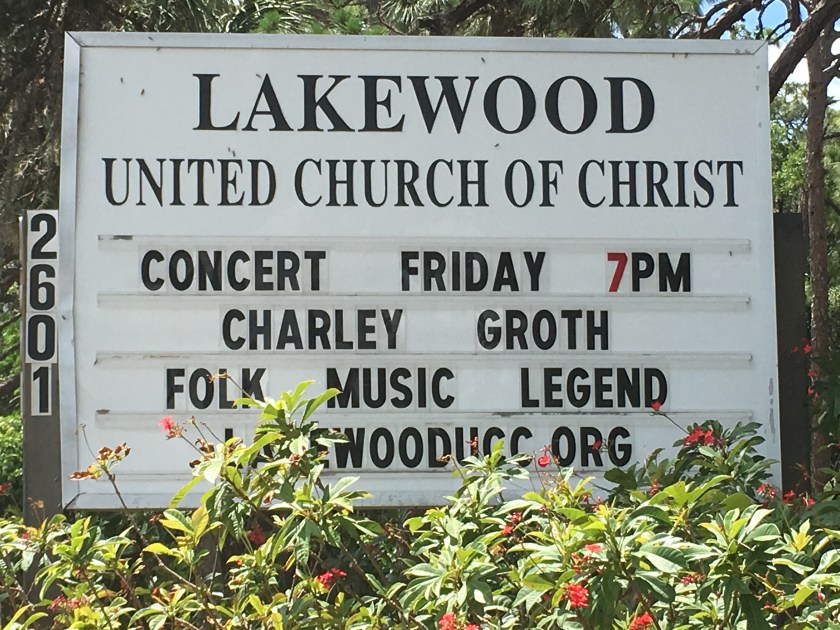
Sermon Palm Sunday 4.14.19 The Death of Jesus

Scripture Lesson: 1 Corinthians 2:1-2                                                                                    Pastor: Rev. Kim P. Wells

To me, Christianity is based on one simple fact.  Yes, a fact.  Jesus was crucified.  Killed.  Dead.  A first century Palestinian Jewish teacher was put to death by the state.  Capital punishment.  As I said, for me, that is the central fact that is the basis for the Christian faith.  

What was crucifixion?  It was not just a random killing.  Jesus didn’t die by accident.  He wasn’t offed by one of his own.  He was killed by the state.  It was a government sanctioned sentence that was carried out by the civil authorities of the Roman Empire.  It was the worst form of death imaginable at the time.  It was a humiliation.  The memory of those crucified was deleted.  They were liquidated.  Obliterated.  People didn’t mention the names of those who were crucified it was so horrific.  This form of capital punishment was used widely by the Romans.  One ruler crucified several hundred people, another eighty.  After the death of Herod, around the time of the birth of Jesus, 2,000 Jews were crucified.  In the book, Inventing the Passion: How the Death of Jesus Was Remembered, theologian and biblical scholar Arthur Dewey tells us, “For the most part, the Romans carried out this form of execution on lower classes (slaves, violent criminals, unruly elements), non-citizens, and traitors.  Serving as a political and military punishment, allegedly an effective deterrent, crucifixion was a very public display.” [p. 17]  The practice was ended by Constantine in the 4th century.  

We are given the impression that Jesus was considered a traitor against the Roman Empire or maybe an unruly element?  Somehow his message, his teaching, his activities were considered a threat to the stability of society.  I can’t imagine that Jesus was killed for healing people, or for giving them food, or for praying. So it must have been for challenging the power structures of his day; both the religious and civil authorities.  

Thus, Jesus was crucified.  That was not supposed to happen to a respected wisdom teacher, a rabbi, a sage.  Yet there it is.  The people are left to make meaning out of this death which is so shameful the person is intended to be forgotten, removed from memory, reduced to nothingness.  Yet this death was remembered because the people who were Jesus’ followers and those after them chose to make meaning out of this death in ways that served their circumstances and communities.  They dealt with this trauma by remembering, they recovered by making meaning out of this death, meaning that was powerful in their context.  Decades after Jesus’ crucifixion, Paul and the gospel writers of Matthew, Mark, Luke, and John each make meaning of this death for their particular communities and circumstances.  They use the cultural traditions of the hero’s death, the martyr, the memorial meal, and the tale of the suffering of the innocent one.  They address their contexts where some expected the end of days any time, some were facing persecution, some were still coming to terms with the crucifixion of 2,000 of their countrymen, and they were dealing with the razing of the Temple and the destruction of Jerusalem in 70 CE.  Each of those involved in making meaning of the death of Jesus was creating a story to meet the needs of their circumstances for their people.  As Dewey puts it, “The ancient writer was not interested in passing on ‘the facts’ but in determining what was meaningful for his community.” [p. 125]

It is interesting that for Paul the death of Jesus meant a whole shift in his understanding of God and thus his perception of reality.  Dewey tells us, “In accepting this shamed criminal the God of Israel had taken an outrageous step.  God had accepted the impure, the socially damned and disadvantaged.”  This was a big transformation in the imaging of God for Paul.  Now he saw that God was on the side of the marginalized, the victim, the outsider.  No more preferential treatment for the Jews alone in Paul’s view.  The crucifixion revealed a God who loves everyone. Dewey tells us, “Paul turned the social stigma of Jesus’ death into an opening for those who were shamed in the eyes of the people of Israel. . .  He turned a social and political liability into a conduit of benefit and hope.”   This is one example of how the people of the first century made meaning out of the death of Jesus.  They used interpretation, imagination, reflection, and creativity to find culturally fitting ways to redeem the death of Jesus.  

As I said at the beginning of this sermon, to me, the crucifixion of Jesus is the central fact that defines Christianity.  So, like the ancients, we face the challenge of how to make meaning out of this death in our context, in our circumstances, in our situation.  Jesus was crucified as a criminal.  Put to death by the state.  This innocent person whom we consider the fullest human embodiment of Divine Love. We are challenged to use our imagination, interpretation, reflection and creativity to make meaning out of this death for our day and time.  

Maybe there is some inspiration for us in the case of Emmett Till, the young man from Chicago who was brutally murdered in Mississippi in 1955.  After his body was found in the Tallahatchie River, it was taken back to Chicago for burial.  His mother insisted on seeing the brutalized body of her son: the odor, the huge tongue protruding from his mouth, the right eyeball laying on his cheek, the left eyeball gone altogether, the broken nose, the top of his head split open, a bullet hole near the temple. [p. 71]  Then, she insisted that the casket be open for viewing for the funeral.  Thousands of people saw that mangled face and head and that vision was a pivotal moment in the emerging civil rights movement in this country.  

Emmett’s mother, Mamie, tells us, “I knew that I could talk for the rest of my life about what happened to my baby, I could explain it in great detail, I could describe what I saw laid out there on that slab at A.A. Rayner’s place [the funeral home], one piece, one inch, one body part at a time.  I could do all of that and people would still not get the full impact. . . They had to see what I had seen.  The whole nation had to bear witness to this.  I knew that if they walked by that casket, if people opened the pages of Jet magazine or the Chicago Defender, if other people could see it with their own eyes, then together we would find a way to express what we had see.” [p.72-73] 

In the book The Blood of Emmett Till, Timothy Tyson shares the courage of Emmet’s mother:  “‘I had no idea how I could make it through,’ Mamie recalled. ‘But I knew that I had to do it.  And I knew that it wasn’t going to get any easier as we prepared for what was ahead.’  Now that she had the world’s attention, she had to decide what to do with it.  As she looked into the glass-enclosed coffin, she knew that a political and spiritual struggle lay ahead to make her son’s death meaningful in ways that his life hadn’t had time to be.”  [p. 74]  This was in intentional effort to make meaning out of the death of this child; meaning for that time and those circumstances.  “From this tragedy,” Tyson tells us, “large, diverse numbers of people organized a movement that grew to transform a nation, not sufficiently but certainly meaningfully.” [p. 202]

As we think about the death of Jesus, crucified over 2,000 years ago, we as Christians are confronted with the challenge of how we will make meaning of his death today.   What meaning do we need from the death of Jesus to help us deal with the death of innocents today?  People dying at the hands of the state, whether through war, or police brutality, or abuse in prison, or policies that leave people too poor to take care of themselves, or environmental problems that lead to death through storms or toxins in the water and air, or deaths of children in government care in our communities and at our border?  What about refugees and journalists and other innocent victims dying here and around the world?  How does Jesus’ death help us to confront the death of innocents in our midst?  That is what we must ask ourselves as we remember the death of Jesus, the central fact of our faith.  

You can have Christianity without heaven.  You can have Christianity without hell.  You can have Christianity without Jesus being God.  You can have Christianity without a virgin birth.  You can have Christianity without a stable in Bethlehem.  You can have Christianity without the literal resurrection of the body of Jesus.  But you can’t have Christianity without the crucifixion of Jesus.  That is the core fact that we have as the basis of our religion.  How do we make meaning out of that heinous, humiliating death at the hands of the state?  This is the question that faces us.  

In his retelling of the story of the death of Emmett Till and it’s aftermath, Timothy Tyson draws this conclusion:  “Emmett Till’s death was an extreme example of the logic of America’s national racial caste system.  To look beneath the surface of these facts is to ask ourselves what our relationship is today to the legacies of that caste system – legacies that still end the lives of young African Americans for no reason other than the color of their American skin and the content of our national character.  Recall that [writer William] Faulkner, asked to comment on the Till case when he was sober, responded, ‘If we in America have reached the point in our desperate culture where we must murder children, no matter for what reason or what color, we don’t deserve to survive and probably won’t.’  Ask yourself whether America’s predicament is really so different now.”  [p. 209]  Thus ends Tyson’s reflection on Emmett Till.  

We desperately need to seek meaning in the death of Jesus for our time and our context so that it speaks a word of hope and new life for us.   Facing the continued ravages of racism and other oppressions, facing obscene economic injustice, facing toxic tribalism and globalization, facing the collapse of the eco system on Earth as we know it, facing the challenges presented by technology and genetic engineering, facing the neglect of children and elders, what meaning can we find for our day in the death of Jesus?  We must make meaning that will transform our reality so that we find a way to value the lives of all human beings, treat Creation with reverence and respect, and prevent the suffering and death of innocents today especially children.  May the ancients be our inspiration in this holy work of imagination and faith.  Amen.  

A reasonable effort has been made to appropriately cite materials referenced in this sermon. For additional information, please contact Lakewood United Church of Christ.

Sermon 3.31.19 “Honestly”

Scripture Lesson:  Luke 15:1-3, 11b-32                                                                                  Pastor:  Rev. Kim P. Wells

Apparently there is a syndrome on social media, especially Facebook, where people post cute pictures of themselves with their boyfriend or girlfriend and all their friends think they are in a happy relationship.  The friends comment on how sweet the picture is, etc., but really, the relationship is awful.  Maybe the woman is abusive or the guy is cheating but in the world of Facebook or Instagram or Snapchat, they look like happy lovers.  And that’s what their friends think.  So there is the false social media world of the relationship that looks pretty and fun, and then there is the real situation of suffering and pain.  For those involved, the false social media relationship can make it harder to get out of the real relationship.  

It’s not hard to see how this kind of dynamic develops.  We want to look like we are having fun.   We want to appear successful.  We want to present an image of being happy and prosperous.  Regardless of the truth.  There are pressures in our society pushing us to cultivate such an image even when it is false.  We live in a context that thrives on competition – in the economy, in sports, in games, in relationships, in so many ways.  Advertising defines what we are to aspire to.  There are winners and losers.  We want to be winners or at least look like winners. So we create a facade, our face to the world, that shows our success and hides our pain and our shortcomings.  We cringe at shame, humiliation, giving the wrong answer in front of the class, not be chosen for the promotion, not getting the medal.  We are trained to make it look like we are on top.  We perpetuate this by giving children awards and medals and trophies at every turn as they grow up.  We’re saying, you’re a winner.   It is important to be a winner.  You have to be a winner.  And all of this implies that it is not ok not to win.  Not winning is bad.  It’s not ok to come in second.  It’s not ok to be last.  It’s not ok to do it wrong.  It’s not ok to not get picked.  That’s bad.  You have to be a winner.  

Think of the president’s impression of John McCain.  Why should McCain be celebrated for his military service and character.  He was not a winner.  He got caught and was a prisoner of war.  That doesn’t go with being a winner.  

So we post pictures on Facebook and Snapchat of a gorgeous girlfriend even if she poisons our spirit because we want to look good and successful at work and at play and maintain our precious image. 

It takes a lot of energy to maintain these facades; to perpetuate these images of success and happiness that obscure the truth.  But we maintain these images, like ramparts, like a fort around us, to protect us.  It takes a lot of work to maintain these defenses.  

But what happens is that these walls, these facades, that shield the truth also block out joy and grace from life.  They deprive us of the abundance of love and mercy that enrich the human spirit.  They cut us off from our truest selves, from others, and from the love, acceptance and understanding we desperately want in this life.  

The line, “he came to himself,” from the story we heard this morning, the prodigal son or maybe more accurately the prodigal father, may very well be my favorite line in all of scripture.  He came to himself.  There in a foreign land, swilling pigs, abhorrent to him as a Jew forbidden to eat pork, lonely, hungry, spent, this young man “came to himself.”  He acknowledged honestly the truth of his situation.  He saw things for what they were.  He admitted to his dissolute living and to how he had betrayed his father, his family, his heritage, his religion, and his culture.  He admitted to himself that he had betrayed and dishonored himself.  

And this young man decided it was time to make amends, to head home, to take responsibility for situation, to be honest not only with himself, but with those who had loved him.  Did they still love him?  Would he be accepted?  Would they refuse him and drive him away after he had offended his father by asking for his inheritance – akin to wishing the man dead?  Would his family receive him?  The servants?  The neighbors?  In honesty and vulnerability, he heads home to face what he has to face because it can’t be worse than the mess he has gotten himself into.  

We digress a moment here to the older brother.  He doesn’t come to himself.  He maintains his defenses.  He stays in the reality of merit based transactional relationships.  He sees himself as a hired hand.  He sees his father as stingy.  He insults his father by refusing to come to the party for the brother.  He is filled with resentment for what he perceives as his maltreatment.  And this defense, this false image he has created, meant to protect him, keeps out the love and joy and acceptance he so desperately wants.  

The father, unashamedly, loves his two sons, goes out to his two sons, is generous to his two sons.  He has no defenses up.  His heart is on his sleeve.  He is not protecting or maintaining any false image.  He is open and authentic.  He is filled with love which flows freely from him.  He knows grace and joy as well as heartbreak.   

When we are honest and act on that honesty, when we are willing to be vulnerable, when we let the defenses down, we open ourselves to grace and joy and love.  We can have compassion on ourselves.  We can also have compassion on others.  When we open ourselves, rather than enclose ourselves within false images and narratives, when we are honest, we can say, Wow, I really screwed that up.  Instead of, It’s his fault this happened.  We can say, I’ve put you in a tight spot.  I’m sorry.  Instead of, You should have known better.  We can say, How did I get myself into this?  Instead of, How could she do this to me?  We can learn and grow and become more fully ourselves.  Creating a culture of authenticity, integrity and honesty facilitates the flow of love and grace and joy in our lives and in the world.  

To cultivate this kind of honesty runs counter to our culture.  We are all about images and impressions, Our daughter sent us a funny picture of a young man in the waiting room of a hospital dressed in a three piece suit.  He is the uncle awaiting the birth of his niece or nephew.  The caption indicates that he is dressed this way because “first impressions matter.”  

It’s not just politicians and celebrities that are putting on a show.  People, everywhere, every day are putting on a show, and social media gives the perfect staging opportunity.  

This Lenten season, we are talking about All Things New.  The story of the father and sons from Luke reminds us that for things to be made new, we must embrace honesty and vulnerability.  This is what opens us to the grace, love, and acceptance that we are all seeking in this life.  The journey to authentic living involves coming clean, admitting the truth of who we are.  That may mean coming to terms with our power for good – our gifts and skills and assets.  That may mean taking responsibility for the more untoward, problematic aspects of our character.  Honesty embraces it all.  Then, to be new, we learn to function from that place of honesty, with ourselves and others.  We are willing to take the risks involved.  The younger brother went home and was received with literally open arms.  He could have met rejection.  He could have met his death at the hands of his father or a neighbor or his brother – after his betrayal and the pain he had caused the father.  It can be difficult to live from a place of honesty and vulnerability but it is the only way for love and joy and grace to get into our lives.  And that is what makes us truly alive.  

This aspect of making All Things New functions on a collective level as well as an individual level.  In society, we can spend a lot of energy and time protecting the past; creating images and illusions about who we are as a culture, as a community.  We are seeing this play out related to Confederate monuments and the naming of buildings.  If we want to heal the racism in our country, we have to be willing to “come to ourselves” and be honest about the legacy we have inherited.  Without that honesty, the walls of protection prevent connection and reconciliation, grace and understanding.

We went to the Will MacLean Folk Music Festival several weeks ago.  A well known Florida folk musician, an elderly man, sang a song that he wrote about how disturbed he is that the Confederate flag is being used by neo nazis and skin heads to promote hate.  The song conveyed his indignation that the symbol of the Confederate flag is being used to foster violence and bigotry.  He sang of the nobility of the Confederate flag as a symbol of men giving their lives for their convictions; an honorable cause defending hearth and home.  But there is no acknowledgement in the song that the Confederate flag is a symbol of a culture and economic system based on people owning people.  It is about some people benefiting from the free labor of other people who are possessions.  The Confederate flag cannot be dissociated from slavery.  That is the honest truth.  

When we can be honest as a society, we can begin to open ourselves to the process of healing and transformation.  What would happen if we were honest with ourselves as a society about fossil fuels and global warming?  This could lead to something new.  But there are still many walls of protection round the current fossil fuel mindset.  What if we were honest about economic inequality?  What if we were honest about gender bias and sexual identity?  Amazing healing could take place freeing America from bondage to false images and narratives that keep people down instead of lifting them up.

The younger brother in the story from Luke comes to a reality based assessment of his situation in his many hours spent tending the pigs.  To come to ourselves, to be honest, to examine our hearts, to be self aware takes time.  It takes reflection.  In our busy society, bombarded with messaging 24/7, it can be a challenge just to step off the media mill and think.  Remember.  Ponder.  Let meanings and patterns surface.  But this is essential to our health and highest good.  

Edward Abbey, a 20th century environmental writer, reminds us, “Wilderness is not a luxury but a necessity of the human spirit, and as vital to our lives as water and good bread.”

“He came to himself.”  When we come to ourselves we can be part of creating a new future for ourselves and for society.   Honesty and vulnerability create openings for grace and love and  joy.  The process can lead to celebration.  A party.  

This week I heard Terry Gross of National Public Radio’s “Fresh Air” interview Lori Gottlieb, a therapist who writes the “Dear Therapist” column for The Atlantic.  Gottlieb has recently written a book called,  Maybe You Should Talk to Someone.  In the interview, there was a conversation about Gottlieb asking her therapist, Do you like me?  Gross followed up asking Gottlieb if she is asked this question by her clients.  Gottlieb explains:  “But I think that one of the things that people worry about is that if they tell the truth of who they are, that they can’t be loved. I think that when they come into therapy, they’re telling you all of these things that they won’t tell the people that they want to be loved by in the outside world, because they’re afraid that those people won’t still love them if they know this.  I think what they discover in therapy is that the truth of who they are is what draws people to them.” Gottlieb talks about how she likes her clients when she gets to know who they really are.  Until then, she doesn’t know if she likes them because she hasn’t really gotten to know them.  Until she sees more than the facade, the image, the impression, how can she like them?  About one client she says, “When he tells me the truth of who he is, then I start to like him.”  She goes on to explain that when you know someone, when you see who they are, then the way is opened to understating and acceptance.  You see some of yourself in others.  We discover our common ground as human beings.  According to Gottlieb, what people want is to be understood, accepted, liked, and loved.  This can only happen when we are honest and vulnerable with ourselves and with others.  When the walls come down, then the real me can like the real you.  And it is authentic and genuine.  [https://www.npr.org/sections/health-shots/2019/03/28/707561940/a-psychotherapist-goes-to-therapy-and-gets-a-taste-of-her-own-medicine  March 28]

May our faith encourage us to “come to ourselves.”   May we dismantle the walls of protection and illusion that separate us from others creating openings for the flow of love, forgiveness, acceptance, grace, reconciliation, and joy!  Amen.  

A reasonable effort has been made to appropriately cite materials referenced in this sermon. For additional information, please contact Lakewood United Church of Christ.

Sermon 3.17.19 The Fox and the Hen

Scripture Lessons: Isaiah 55:1-9  and  Luke 13:31-35

Sermon: The Fox and the Hen

Pastor: Rev. Kim P. Wells

When I was a child, one of my favorite songs to sing was “The Fox Went Out on a Chase One Night.”  We learned it in school and our family has a record with the song sung by Harry Belafonte.  I loved the tune and I liked a song with a story.  I still do.  But every time we sang the song, the goose and the duck got killed.  Every time.  The fox got into the pen and killed two of the animals who thought they were sleeping in safety and the farmer was unable to protect them.  

And so, that subtle process begins, instilling in us the way of the fox.  In our collective imagery, the fox is a sly, devious, predator.  It is cunning, evil, and dangerous.  The fox is a trickster.   The fox takes; it doesn’t give.  It gets the hens, the geese, and the ducks, and whatever else it wants.   And so, in the story we heard this morning from Luke, Jesus refers to Herod as a fox.  It’s not a complement.  Jesus is  calling out Herod as someone who is devious and cunning.  Not to be trusted.  Not interested in the welfare of others.  He will definitely save his own skin, no matter the cost.  Kind of sounds like a lot of politicians today.  The fox sees death and destruction as the cost of doing business.  The fox takes advantage of others for personal gain.  No qualms about that.  By using power to threaten and intimidate, the fox instills fear and then capitulation ensues.  We see this pattern happening all around us.  We see fox style leadership in the political and economic realms of our society.  We see people taking advantage of others, preying on them, through policies and practices that cause harm and destruction.  We see the steady cultivation of fear and intimidation used by the fox.  The fox approach to life and leadership surrounds us.  We are surrounded by the fox world view, the fox reality.  

But there is another animal image in this story from Luke.  Jesus also refers to a hen:  “How often have I desired to gather your children together as a hen gathers her brood under her wings. . .” [Luke 13:34]  This image of the hen implies protection, security, safety, nurture, and care.  The hen does not prey on the young of others.  The implication is that the chicks under the charge of the hen are cherished, precious, beloved, vulnerable and frail.  Each life deserving of love and care and protection.  The image of the hen offers a vision of community where everyone is safe and protected and provided for.  The picture of the hen echoes other references in scripture that portray God with these kind of nurturing traits.  Here are some examples:  

Deuteronomy 32:11-12  This is in reference to Moses and the Exodus –

“As an eagle stirs up its nest,                                                                                                          and hovers over its young;                                                                                                                as it spreads its wings, takes them up,                                                                                        and bears them aloft on its pinions,                                                                                              the Lord alone guided him;                                                                                                              no foreign god was with him.”  

Ruth 2:12  This involves Ruth and her mother-in-law, Naomi, gleaning in the fields of Naomi’s kinsman, Boaz.  Boaz hears the story of these refugees and responds:

“May the Lord reward you for your deeds, and may you have a full reward from the Lord, the God of Israel, under whose wings you have come for refuge.”  

And from the Psalms –                                                                                                                 Psalm 17:8                                                                                                                                     “Guard me as the apple of the eye;                                                                                             hide me in the shadow of your wings. . .”

Psalm 36:7                                                                                                                                      “How precious is your steadfast love, O God!                                                                              All people may take refuge in the shadow of your wings.”  

Psalm 91:4                                                                                                                                        “The Most will cover you with pinions,                                                                                        and you will find refuge. . .”   [adapted for inclusive language]

And from Isaiah.                                                                                                                              Isaiah 31:5                                                                                                                                        “Like birds hovering overhead, so the Lord of hosts                                                               will protect Jerusalem;                                                                                                                     The Lord will protect and deliver it,                                                                                            The Lord will spare and rescue it.”  [adapted for inclusive language]

Isaiah 49:15   Describing God’s care for God’s people –                                                             “Can a woman forget her nursing child,                                                                                        or show no compassion for the child of her womb?”

All of these examples show the hen side of the nature of God and of our nature.  Jesus  lives out of the hen image of the Divine.  He gives us a vision of a world where all are cherished and cared for as a mother hen attends to her precious chicks.  This world comes into being when we care for each other with divine mothering love.  

The hen vision of the world is a world where everyone is wanted and included and valued.  Where everyone is safe and cared for.  Where everyone is provided for and has the opportunity to make a contribution.  It is a society of compassion and care with special sensitivity to the vulnerable and frail.  When you think about how we treat the children and elders of our society, we immediately see that we do not live in a way that reflects the hen vision of reality and values.  In speaking with David Lomaka, the executive director of Neighborly Senior Services, this week, he mentioned that there are 1,000 people in Pinellas County on a waiting list for Meals on Wheels.  Surely, he said, we can manage to give everyone who needs it one meal a day!  

Jesus is inviting us to live a hen style reality, to create the hen ideal.  It is an alternative to the fox view of reality.  Jesus offers an alternative vision; a different kind of allegiance not to self interest but to the common good.  It is a life affirming, life giving, life valuing conception of reality.  Jesus did not win people over through threat, intimidation, or violence.  He won them over with food, healing, forgiveness, mercy, and solidarity.  That’s the hen style of living, not the fox style.

So let’s look at a few examples of where we see the fox style of reality and the hen style of reality at work.  

Since it is St. Patrick’s Day, let’s look at the traditions surrounding St. Patrick.  First of all, the St. Patrick’s Day holiday has become more about shamrocks, luck, green, and beer than about St. Patrick.  And that may not be such a bad thing because St. Patrick is known for having used intimidation, fear, and even invoking God to kill people to promote Christianity in Ireland.  In addition, his legacy is built on a false presumption.  He was not the first one to bring Christianity to Ireland.  Palladius, Brigit of Kildare, and Columba preceded him.  But Patrick was the most heavy handed, fox style, so he is the one most remembered.  

And many of his prayers include the concept of protection because he was engaged in life threatening conflict.  He got pushback.  He is known for evicting the snakes from Ireland.  Well, Ireland has never had any snakes.  This is considered metaphor for kicking the Druids out of Ireland.  Is that Jesus style?  Jesus was trying to bring his religion back to its original heart, back to justice and compassion.  He was not trying to start a new religion and he was not trying to evict an old one.  The biblical concept is that the Jewish community will live according to the ways of a God of generosity, justice, and right relationship.  People will be inspired and want to live like that too, and will be drawn to that way of living.  It’s hen style.  But by the time Jesus was around, things had gone fox style.  It’s very tempting as we see with St. Patrick who was definitely fox style however noble his intentions may have been.  

Next, let’s look at the situation in Jerusalem and Israel and Palestine today.  In a context of much fear and intimidation, the fox style of managing the situation is prevailing as it was in Jesus’ day, and it is not succeeding in creating peace with justice for all people.  Fox style never does.  It can’t.  You can’t create peace using violence and fear.  Jesus is portrayed crying over Jerusalem several times in the gospels; they just won’t see their way clear to do it God’s way.  Jesus laments, “Jerusalem, Jerusalem. . . Your house is left to you.”   In other words, you will reap what you sow.  And several decades later, Jerusalem lay in ruins.  The lesson is yet to be learned, however.  The fox style of reality is still holding sway today in Israel and Palestine with countless victims in its wake.  

This week, we saw another horrific scene of carnage, this time in New Zealand.  The pope, whom I respect, called the killings senseless.  Well, it is not senseless at all if you are from the fox world view.  From the fox world view, such killing sends a message.  It makes your life worthy.  It is a declaration of supremacy.  It instills fear and trembling.  It is a display of power through destruction and death.  If that is your world view, such carnage is not senseless at all.  And from the hen perspective, it is not senseless, it is sinful, evil, and morally reprehensible.  And this killing was not senseless, in terms of bodily senses.  The killer wanted people to sense, experience, the killing, over the internet – seeing it and hearing it in real time.  No, that act of terror was not senseless.  It was the fox.

And look at the responses.  In New Zealand, the government is seeking to tighten access to guns and promote stiffer gun control.  Protect the people.  This is a hen response.  In the US after such a massacre, the response from many is more guns.  That is a fox response.  

One of the places today where we see the most beautiful manifestation of the hen view of reality is in the farm worker movement.  I was in Gainesville on Thursday as part of the farmworker demonstration at the University of Florida.  To put it briefly, the farmworkers are promoting a Fair Food Alliance which is an agreement between growers and farmworkers about working conditions.  The provisions include things like water in the fields for farmworkers to drink, protection from toxic pesticides in the fields, a process of reporting sexual harassment in the fields, being paid a penny more per pound for picking tomatoes, and the like.  It is very basic and rooted in human rights.  Growers who have signed on feel they have a much better relationship with the farmworkers and productivity is increased and things go more smoothly for everyone.  Some growers have refused to sign on to the Fair Food agreement.  The farmworkers are trying to get their cooperation by getting major corporations to buy only from Fair Food growers.  That would pressure more growers to be part of the Fair Food agreement.  The Fair Food campaign targeted Taco Bell years ago because Taco Bell was buying its tomatoes from growers that were not part of the Fair Food Alliance.  Many boycotted Taco Bell.  Eventually, Taco Bell signed on, and so did many growers.  Another target was Burger King.  They have since signed on.  We are still working on Publix and Wendy’s to sign on and to buy tomatoes from growers who agree to the Fair Food program.  

The issue at Gainesville is that there are two Wendy’s restaurants on the school campus leasing space in school buildings.  The effort is to get the school to cut the contracts with Wendy’s.  

When you hear the leaders of the farmworkers talk about their vision, it is of a world where all people are treated fairly and valued in every line of work.  It is a vision of a world where all people have equal rights, human rights.  It is an expansive, inclusive vision.  And they know that they can only achieve this vision by treating others with dignity and respect, including the chairman of Wendy’s and the head of Publix.  At the event in Gainesville, there was mention of fairness and dignity for all, with specific citing of gay, lesbian, transgender, bi sexual people, people of every sexual identity.  It was also notable that a group of people, predominantly African American, from the Fight for 15, working for a minimum wage of $15 an hour in Florida, were right in there chanting and singing and demonstrating with the mostly Latino farmworkers.  It is so inspiring to see a movement of people committed to human rights and dignity for all taking non-violent action to make society more just.  It is based on people power.  And they are firm in the belief that people can be influenced to do what is right without violence or threat of personal harm.  The farmworker movement is based on the power of the mother hen protecting her chicks.  They are using perseverance, dedication, persistence, courage, creativity, and sacrifice to achieve their ends;  not money, status, or privilege.  And they will prevail.  They already have.  Time and again.  The farmworker movement is a hen movement and it just lifts your spirits to be part of it!  I was so glad I went on Thursday even if it did mean 4 hours on a bus!

Where does the church stand in all of this?  Do we see the church living out of the hen perspective of reality?  Or do we see the church serving the fox view of reality?  The hen style, the way of Jesus, is a way of compassion and love and mercy.  It is not a way of intimidation, threat or violence.   It is a way of sharing, giving, and helping.  It is not a way of taking, taking advantage, or taking over.  We who follow Jesus are following one who extolled and honored the mother hen vision of reality.  To live in that reality actually takes much strength and courage.  Jesus knew that he would be going to Jerusalem and that he would be killed there.  And he followed that path.  Anything the Pharisees or Herod, or the disciples for that matter, said was not going to dissuade him.  He knew what he had to do if he was to live fully from the hen vision of reality.  He recognized the fox, he knew the fox, but he would not capitulate to the fox.  

What about us?  Do we recognize the fox?  Do we know the fox for what it is?  Do we capitulate to the fox?  It is easy to be swept up in the prevalent world view, to let your guard down, to let fear in, and then to be playing on team fox.  

Our Lenten theme is All Things New.  For all things to be new, we need the hen view of the world, the way of Jesus, the path of transformation through compassion and non-violence.  And, like Jesus, we must be relentless, unswayed by the fox.  We must be fighting fear at every turn.  You can’t be a hen and a fox, the two just don’t mix biologically or metaphorically.  And to be of the hen heart and mind is to be part of living into a world where every person, every single person, is sacred, and where Earth is sacred, as a mother, a home, a provider, to be revered.  That takes vigilance, sacrifice, and bravery.  The hen is fierce about cherishing, protecting, preserving, and nurturing especially those who are vulnerable and frail.  It’s not a passive approach.  The fox wants to take you at every turn.  We must be vigilant so that we are not taken in but we must never succumb to fear because that opens the door for the fox to get into the henhouse. 

So, we are expecting our first grandchild in June.  I know I will want to sing that favorite song of my childhood, “The Fox Went Out on a Chase One Night,” to this new family member.  But I think I’ll have to think up some new words.  It won’t do to have the fox steal a goose and a duck and celebrate the feast.  Maybe the farmer, John, and his wife, can give the fox some tofu to take home to the family for dinner.  Amen!

A reasonable effort has been made to appropriately cite materials referenced in this sermon. For additional information, please contact Lakewood United Church of Christ.

Sermon 3.10.19 All Things New

Date:  March 10, 2019, First Sunday of Lent

Scripture Lessons: Joel 2:1-17 and Luke 4:1-13

Pastor: Rev. Kim P. Wells

Our daughter, Angela, spent a semester in college at the University of Nottingham in England.  When we arrived at the school, we were greeted by a student who was from Kenya.  She was assigned to help Angela get settled in.  I mentioned that we had been to Kenya about 10 years before and had a wonderful time.  And I can remember the host’s response.  She thought about it.   And then she announced with great delight and glee, “Yes, we Kenyans are amazing!”  Frankly, I was a bit taken aback, but I readily agreed with her because she spoke the truth. Kenyans are amazing!  

In the reading from Joel, we heard a very vivid portrayal of the character of God:  Gracious.   Merciful.  Slow to anger.  Abounding in steadfast love.  Relents from punishing.  Bestower of blessing.  How amazing is that?  And if that is how God is, then we know that that is how we are to be because we are created in the image of God.  This description captures the capability and potential inherent in every human being.  It conveys our nature and our calling.  Gracious.   Merciful.  Slow to anger.  Abounding in steadfast love.  Relents from punishing.  Bestower of blessing.  How amazing is that?!  

When the Kenyan woman proclaimed that Kenyans are amazing, I remember feeling surprised.  Yes,  Kenyans are amazing, but I wouldn’t have said that about myself.  To me a statement like that would feel boastful and prideful.  And maybe even socially boorish.  And as a Christian, thinking about cultivating humility we try not to pepper our speech with braggadocio.  We don’t want to think too highly of ourselves.  But the other side of that is thinking too little of ourselves. When we perceive ourselves as weak and of little significance, this contributes to apathy and indifference.  What can I do?  I don’t deserve any better. And neither do you.  And then we are easily swayed and manipulated.  

With a degraded sense of worth we settle for less and yet we desperately seek approval.  We want to belong.  Be part of the in crowd.  We want wealth to show that we’re successful so that other people know we are worth something.  We want the latest fashion and technology to demonstrate that we are up to date, “with it.”  We seek these outer trappings to build up our worth in the eyes of others and ourselves.  We are constantly seeking approval.  On her speaking tours in the United States, Mother Teresa was always quick to point out that the obscene abundance of the West fostered malnourished souls. [Suzanne Guthrie, http://www.edgeofenclosure.org/lent1c.html ]   And so our poverty of spirit leaves the door wide open for evil to creep in, seep in, or storm in to our lives and our society.  

Jesus was able to resist the temptations of evil because he centered himself on the God within.  He was focused on manifesting the attributes of God that were within him and are within all of us:  Graciousness.  Mercy.  Slowness to anger.  Full of steadfast love.  Not interested in punishing.  Bestower of blessing.  Jesus was centered on God and that kept him fully occupied so that he was not concerned with being a people pleaser or a devil pleaser.  He wasn’t obsessed with accruing acclaim and being a powerful ruler.  He was not tempted by the trappings of wealth and power.  He was not out to win a popularity contest.  He didn’t want to wheedle his way in with the rich and powerful.  He knew his worth as a creature created in the image of God and that was enough.  With that foundation he set out to love his neighbor as himself.  In Jesus’ world view, success comes from embodying the traits and characteristics of God, being true to God alone.  Success does  not come from impressing other people, amassing wealth, and certainly not from negating yourself.  

Like Jesus, we are called to encourage the God within us to rule our lives, to guide our behavior and our relationships and the way we go through life in this world.  We, too, want to cultivate the attributes of God within us.  

At the end of the passage from Joel, the desperation of the people is expressed.  With destruction looming, they are afraid of being humiliated in the eyes of of the world.  They plead:  “. . . do not make your heritage a mockery, a byword among the nations.  Why should it be said among the peoples, ‘Where is their God?’”  [Joel 2:17]   Where is their God?  Where is the grace and mercy?  Where is the restraint of anger?  Where is the abounding love?  Where is the pardon and the blessing?  These are standard character traits of God.  Where is this God?  This God is within us, each of us, as human creatures.  The world sees God when human beings exhibit these traits in the world.  Where is their God?  God is within us.  Eager to be expressed.  Hungering to be shown to the world.  

Gracious.  Merciful.  Slow to anger.  Abounding in steadfast love.  Relenting from punishing.  Bestower of blessing.  Truly, we human beings are amazing!  Amen.  

A reasonable effort has been made to appropriately cite materials referenced in this sermon. For additional information, please contact Lakewood United Church of Christ.