Sermon 7/14 Still Under Attack

Date:  July 14, 2019

Scripture Lesson: Daniel chapters 3 and 6

Sermon: Still Under Attack

Pastor: Rev. Kim P. Wells

I don’t know about you, but I did not wake up this morning afraid of being thrown into a fiery furnace or scared of being eaten by lions.  I don’t think a lion has been seen in these parts recently, unless it was at Busch Gardens. So, it’s easy to see how these two famous Bible stories are dismissed as quaint, simplistic folk tales that witness to a more primitive view of faith in an interventionist God. 

Given this background, it’s actually a bit surprising how timely these stories are to our situation today, even though we don’t have any lions, or even Florida Panthers, around.  

The root of the conflict in the two stories are problems around ethnocentrism, bigotry, and intolerance.  In the stories from Daniel, there is conflict between those who are the dominant group and the captives, the foreigners.  The natives have it in for the foreigners. Daniel and his people are Jews, transplants, outsiders. And they are being groomed by the king for positions of authority, prestige, and power.  But the hometown people resent this. And so they target these foreigners. They scheme to get the foreigners in trouble. And what are these foreigners doing? They are working hard and doing their jobs.  They are not defiantly making trouble. And yet they are targeted by the natives, the citizens, the insiders.  

This ethnocentrism specifically takes the form of religious intolerance in the stories from Daniel.  Daniel and his people merely want to continue to practice their religion even though they are in this new culture.  They want to continue to worship and pray to their God. In a cultural situation where the worship of many gods is accepted, this should not be a problem.  What is one more? But the Jews do not want to worship the gods of their captors because that is against their religion which has only one God. They only want to worship and pray to their God.  

So, the locals knowingly get the king to carry out laws which conflict with the religious beliefs of the Jews.   The Jews are only to pray to their one God so the local leaders get the king to make a law ordering people to pray only to the king for thirty days.  This law is specifically designed to entrap the Jews, specifically Daniel who has risen to great power through his hard work and reliability and wisdom.  In the furnace story, the young men are targeted for refusing to worship a statue. Ethnocentrism and jealousy take the form of religious intolerance in laws created to target foreigners.  

How this resonates with our situation today!   We see this kind of religious and ethnic conflict happening all over the world even in our beloved United States which was intended to be a beacon of religious tolerance and freedom.  And yet there are issues over turbans and headscarves and prayers and public displays. Where is the spirit of tolerance and acceptance and respect for religious freedom that marked the founding of there United States?

This impulse to target foreigners is what is behind the ICE raids taking place today in 10 cities across the US.  We hear this anti foreigner sentiment expressed daily here in our United States – not only by fringe hate groups but by main stream politicians and even by the president.  They’re taking our jobs. They don’t belong here. They are undermining our cultural unity with their strange ways. They are causing trouble. So, let’s make laws that they will necessarily break so that we can arrest them and get rid of them.  How familiar is that???? That is just what happens in the book of Daniel. But we don’t want to put these foreigners in a lion’s den or a furnace – just cage them up in a detention camp, thank you very much, and deny them the most basic necessities so that they are made to feel subhuman and undeserving.  Of course, is it seems lost on many that this strategy makes the perpetrators appear subhuman not the victims.   

These stories from Daniel display the spirit of intolerance shown to foreigners and how dangerous it is and we see this same dynamic playing out in our midst today.  THAT is scary.    

This brings us to another theme in these stories.  Power. The dictatorial, absolute power of the king in each story appears clearly foolish and absurd.  All peoples, all nations, all languages, bow down. This is ridiculous. Humanity has supposedly progressed to the point of realizing  that social groups are most effectively managed by law and representative governmental arrangements not by dictators with authoritarian powers.  And yet we have a president who esteems dictators with authoritarian control and seeks such a role for himself. But as these stories show, this kind of concentration of power always leads to a bad end.  As Lord Acton said in a letter written in 1887, “Power tends to corrupt, and absolute power corrupts absolutely.” So these stories bear a warning about absolute power.  

While I may not be afraid of lions or a furnace, I am afraid of concentrated power in the hands of the federal government.  This week I sent an email to someone about the ICE raids with instructions about how to respond if confronted by ICE agents.  I was very careful in the email not to mention any names, not to make any personal references. I just gave the list of instructions and said here is some information that might be helpful.  I did not mention anything else because I was afraid that my email might be read by federal authorities and I don’t want to be leading ICE to potential targets. To me, that is more scary than the lions!  But that is where we are today.  

These stories from Daniel also address civil disobedience.  The people are told to kneel down and pray to the golden statue whenever the band plays.  Is this law merely based on the egotistical bravado of the king or is is specifically designed to entrap the Jews who are only to pray to their one God?  Either way, it is problematic for the Jews. So, Daniel’s friends, Shadrach, Meshach, and Abednego do not comply when the band plays. This is breaking the law in that context.  But they refuse to comply with a law that is in conflict with their religion. This is civil disobedience. It is nonviolent, passive resistance.  

In the second story, the king makes a law about only praying to him.  When Daniel and other Jews pray to their God, they are defying this law which was intended to snare them.  So, their defiance can be seen as civil disobedience.

In a way, this is like taking the knee.  The national anthem plays and people are supposed to stand out of respect.  It’s not the law, but it is accepted practice. But now many are kneeling during the national anthem in defiance.  They are not breaking the law, but they are defying convention to make a public statement. And while it may not lead to death, it can ruin a career.  This is nonviolent, passive resistance.  

The examples from Daniel have inspired others to take up civil disobedience.  It is interesting to note that these stories from the book of Daniel were inspirational to Mahatma Gandhi as he fought for civil rights first in South Africa and then in India.  In referring to Daniel, Gandhi commented that he had, “found much consolation in reading the book of the prophet Daniel.” Gandhi saw Daniel as, “one of the greatest passive resisters that ever lived.”  In coming up with a strategy to resist the pass laws directed at Indians in South Africa, Gandhi advised people to “sit with their doors flung wide open and tell the gentleman [South African authorities] that whatever laws they passed were not for them unless those laws were from God.”  [The New Interpreter’s Bible, vol. 6, p. 771] This was inspired by Daniel praying three times a day to his God with the windows open.  

So, when you think about is, it’s surprising how these ancient folk tales from Daniel, entertaining for children in Church School, deal with themes that are current for us today.   So what do they say to us? Well, here we turn to Jesus. Jesus knew these stories from Daniel. He knew other stories, like the story of Esther, where the Jews are targeted for death because of their religion and their beliefs.  And what do we see in the ministry of Jesus? Jesus specifically reaches out to and interacts with people from groups that have targeted the Jews. He reaches over those divisions of ethnicity and religion that have divided people.  He specifically makes references to stories in the Hebrew scriptures that involve Gentiles and foreigners showing that they are to be embraced and welcomed and treated with respect and dignity. Jesus, despite the harm done to his people because they are Jews, does not allow racial, gender, ethnic or religious divisions to get in the way of loving our neighbor.  When you think about what other groups have done to the Jews, in Jesus day and before, his welcome and embrace of all people is all the more radical.  

So, here we get our inspiration for the ordering of our loyalties.  Sure, we are to be dedicated to our families. Yes, we put trust in our governmental system.  Or we used to. It is appropriate for us to support our national leaders. We may get behind a particular political party.  Our country is important to us. Our culture and language have value. We have respect for the rule of law. But the message of Daniel and the witness of Jesus backs up the sentiments of the Psalms [146]:

Do not put your trust in princes,

in mortals in whom there is no help.

When their breath departs, they return to the earth;  

on that very day, their plans perish. 

Happy are those. . .  whose hope in the Lord their God. . .  

who keeps faith forever;

who executes justice for the oppressed;

who gives food to the hungry.  

The Lord sets the prisoners free;

the Lord opens the eyes of the blind.

The Lord lifts up those who are bowed down;

the Lord loves the righteous.

The Lord watches over the strangers;

the Lord upholds the orphan and the widow. 

Scripture teaches loyalty in that kind of God.  The book of Daniel and the gospel of Jesus remind us that there is something GREATER than human leadership, a governmental system, a political party, nationality, empire, law, religion, and even family.  Our tradition compels us to put our ultimate trust in God – however we may understand or define God – in something beyond our individual experience, in something eternal and all-encompassing. In something within us, at our very core, that binds us to the greater whole of reality.  So our concept of God needs to be worthy of this kind of ultimate loyalty because God is what is to be given our ultimate devotion, loyalty, and reverence.  

We see this orientation in the stories of Daniel and in the life of Jesus.  And we notice that it got them into trouble because there will always be human constructs that vie for our ultimate loyalty and devotion.  But Daniel and his people and Jesus remain true to God as they understand God despite the pressures of their contexts. Daniel ended up in the lion’s den.  Shadrach, Meshach, and Abednego ended up in the furnace. Jesus was crucified. Maybe if we’re not in some kind of trouble, we don’t have our loyalties properly aligned. Amen.  

A reasonable effort has been made to appropriately cite materials referenced in this sermon. For additional information, please contact Lakewood United Church of Christ.

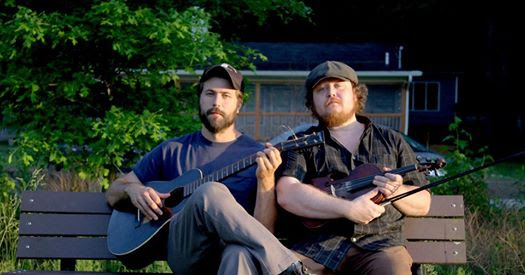
Evan Kinney & Van Burchfield Concert and Workshop

Evan Kinney with Van Burchfield, Old-Time Banjo Workshop and Concert at Lakewood United Church of Christ:  “Georgia Old-Time Repertoire”

Date: Saturday, August 17th

Time: Workshop: 4-6PM Concert: 7-9PM

Admission: Pay at door; cash or check only Workshop: $20 Concert (suggested donation): $20 Both Concert and Workshop Package Deal: $30

Please feel free to share this event on social media with your friends! Here is the link!

https://www.facebook.com/events/2343322152419092/

Bio:

Evan Kinney grew up in a family of old time music in his native Kennesaw, Georgia. He learned from his father at an early age and has continued to hone his skills by studying the eccentric playing of 20’s recording artists such as John Dilleshaw, The Skillet Lickers and Earl Johnson. Evan has performed with bands such as The Griddle Lickers, Georgia Crackers and Dixieland Squirrel Skinners and has taught and performed traditional music at The Blue Ridge Old Time Week in Mars Hill, John C. Campbell, The Alabama Folk School, Festival of American Fiddle Tunes and The Brooklyn Folk Fest.
Guitarist and 78 rpm record collector, Van Burchfield will be accompanying Evan.

Van Burchfield has learned a great deal about hillbilly and blues music from listening to records and most recently has been performing jazz and ragtime in New Orleans with groups like the Big Dixie Swingers and Crazy Arms.

As a duo, Evan and Van perform southern breakdowns, rags and novelty songs from the turn of the 20th century.

“Georgia Old-Time Repertoire”

Evan and Van will discuss and teach lesser known old time tunes from the state of Georgia. Evan and his father have spent a great portion of their time digging up and learning obscure tunes from field recordings and transcriptions from masters such as Frank Malloy of Tifton, GA and Art Rosenbaum of Athens, GA and take great pride in bringing them into the spotlight for all to enjoy. We will break down the tunes into segments for rapid learning and discuss bowing patterns, syncopations and chord choices before moving on to playing them up to speed. All instruments welcome. Video and audio recording is allowed but please refrain from posting on social media.

Lakewood United Church of Christ Concert Series:

This concert and workshop is part of the Lakewood United Church of Christ Concert Series.

About:

LUCC Concert Series invite Old-Time, Blues, Blue Grass, Folk and Country musicians, emerging and obscure in spirit to celebrate and promote Americana music and musicians from all over the United States. 

Concerts at Lakewood United Church of Christ (LUCC) is $20 suggested donation at the door. All proceeds benefit the musicians. Doors open at 6:30PM, show at 7PM. 

Lakewood United Church of Christ Concert Series

http://lakewooducc.org

Lights for Liberty

Lights for Liberty:  A Worldwide Vigil to End Human Concentration Camps,
Friday, July 12th at 7:00pm at Allendale United Methodist Church 3803 Haines Road N.  Please contact Lucille Ruga if you are interested in riding together from the church.  ceilruga@gmail.com

Friday’s Vigil at Allendale UMC to End Immigrant Detention sounds powerfully moving, plus there will be break-out action/information groups afterward for those who want to stay. This is a national/international event to compel response & action.

Several people from LUCC attended a coalition building meeting this week to address this issue.  These are the notes from that meeting:  

St. Petersburg Coalition to End Immigrant Detention

Notes from Kickoff Meeting at Allendale UMC

July 9, 2019

A kickoff meeting for the St. Petersburg Coalition to End Immigrant Detention was held on July 9, 2019 at 6 PM at Allendale United Methodist Church.  The official name will be discussed at our next meeting. Vickie Dunn (lead organizer for Indivisible FL-13 & Allendale Church Council Chair) facilitated the meeting.

Attending:  ACLU -Wendy Snyder; Safety Harbor Indivisible – Charrie Moscardini, Kevin McCullough, Barbara Nelson, Amy Bryant, Temple Beth-El – Joshua Bean, Rabbi Michael Torop; Network Of Spiritual Progressives – Rev. Fred (last name?); For Our Future – Nick Arent; Clearwater United Universalists – Rev. Patrice Curtis; The Weekly Challenger – Jake-ann Jones; Lakewood United Church of Christ – Rev. Sue Sherwood (retired,) Patti Cooksey; Indivisible FL-13 – Meryl Blackman, Cynthia Lippert, Kate Pravera, Vickie Dunn

Goals

Given the limited time of the meeting, the following goals were identified, but not discussed in detail or prioritized. The objective was to have a common reference point from the onset.

  • To end family separation
  • To reunite families
  • Short-term: Improve conditions for children and identify appropriate places they can go
  • Return children to sponsors
  • Eliminate for profit facilities
  • Advocate for people to sponsor a child

Strategies

The following strategies were identified for consideration, and there was some discussion of planning an action for July 19, when there will be a hearing on the Flores Agreement. However, it was decided that we should wait until the hearings are held, and a ruling is made.

  • Research corporations that benefit from immigrant detention, expose them to the public and put pressure on them
  • Follow laws regarding asylum (It is still legal and people should be allowed to enter U.S. for this purpose.
  • Secure an international observer
  • Pressure congress to exercise oversight, i.e. hold hearings
  • Increase public awareness by making more “noise”
  • Network and collaborate on the national level to leverage greatest impact

Tactics

Numerous tactics were raised for future consideration. The following list represents what was captured on the white board.

  • Promote and facilitate trips to Homestead
  • Organize boycotts to pressure complicit corporations 
  • Network in Dunedin (incomplete information here)
  • Organize a demonstration in front of Rubio and Scott’s offices in Tampa
  • Participate with others in the weekly ongoing presence in front of senators offices (Rubio, Scott)
  • Letter to senators
  • Focus on statewide exposure and education
  • Consider pressuring state child welfare agency
  • Set up a series of in person meetings with elected officials during the month of August. Utilize the weight of business, civic and religious leaders to gain access (Based on HIAS model & possibly in coalition with HIAS)

Next Steps

  • Next meeting will be held at Allendale on Tuesday, July 23 at 6 PM, but we will  plan to rotate with meetings in north county.
  • Cynthia Lippert will draft a mission statement for discussion on July 23.

Weekly Update July 10

This Sunday: The theme of Biblical literacy continues.  This week is a time to remember Daniel – of the fiery furnace and the lion’s den and the handwriting on the wall.  What got Danieal into so much trouble?  Well, the king had certain ideas and these conflicted with Daniel’s religious convictions.  This is still an issue today even for those of us who live in a country that protects freedom of religion.  Take a look at Daniel chapter 3 and chapter 5, and chapter 6.  


Lights for Liberty:  A Worldwide Vigil to End Human Concentration Camps,
Friday, July 12th at 7:00pm at Allendale United Methodist Church 3803 Haines Road N.  Lucille Ruga is planning to attend this and would like to carpool from the church.  Please contact Lucille if you are interested in riding together.  ceilruga@gmail.com


Westminster Suncoast Lunch: Have Lunch with Rev. Kim Wells on Wednesday the 17th this month in the dining room at Westminster Suncoast. Lunch is 11:30am-12:30pm. All residents of the Shores and Suncoast are welcome.


New Church Administrator: Hello! This update is coming from the new church administrator Gabi. The church office will be open Tuesdays-Fridays 9:30 to noon. Please call, email or stop in to introduce yourself. I am looking forward to working here and meeting everybody!


Children’s Ministry:  The church is putting in place a children’s ministry for the rest of the year. If you are interested in being part of this effort, please speak with Kim Wells or one of the advisors. Many thanks!


July Birthdays:  Ann Quinn(7/6) Someone missing? Contact the church office with birthday information.


Circle of Concern: Sherry Santana, Carolyn Moore, Ann Quinn, Elinor Ross, and Ann Rogers.


Recent Posts:


Weekly Update: If you are involved with an activity or event that you would like to share with the LUCC family, please send the information to the church office by Tuesday since the Update usually is sent out on Wednesday.

Sermon 7/7 “Truly, Our God is in this place”

Date: July 7, 2019 

Scripture Lesson:Genesis 28:10-22

Sermon: “Truly, Our God is in this place”

Pastor: Rev. Kim P. Wells

When we think of the image of a ladder, the first thing that may come to mind is the corporate ladder.  This is a common concept. Climbing the corporate ladder. Making your way up, rung by rung, from a lowly job at the bottom to a more prestigious job up the ladder.  Going up the corporate ladder involves working hard, it involves increasing responsibility, it involves increasing prestige and respect, and, perhaps most importantly to some, it involves making more money.  Many people devote their lives to climbing this kind of ladder in their work life.

This common image of the corporate ladder is usually thought of as a one way climb – up.  People don’t try to go down the corporate ladder, seeking an easier, lower paying, less important job.  The corporate ladder is about going up, up, and away. 

But of course, you can go up and DOWN a real ladder.  Both directions, up and down, are very important to Ed Viesturs, one of the premier mountain climbers alive today.  Viesturs embarked on a goal which he labeled Endeavor 8000. His goal was to climb all of the mountains in the world that are over 8000 meters high.  There are 14 of them with Mount Everest being the highest. It took Viesturs 18 years achieve his goal. He is the only American to have done so. And he is one of only 5 people to summit all of the 8,000ers without using supplemental oxygen.   Viesturs has made 30 expeditions to the high peaks and summited 21 times. He has summited Everest 7 times.   

Viesturs’ success at mountaineering is based on getting up AND down the mountain.  This is his cardinal rule in the big mountains: “Getting to the top is optional. Getting down is mandatory.”  [Ed Viesturs with David Roberts, No Shortcuts to the Top:  Climbing the World’s 14 Highest Peaks, p. 168]  Many times he has seen people so fixated on getting to the top that they don’t give adequate consideration to the descent which can easily result in death as it did for 8 people descending Mount Everest in May 1996.  Viesturs stays focussed on getting up AND down the mountain. Both directions. Not just getting to the top. He keeps the whole picture in mind.  

This morning we listened to a part of the story of Jacob.  In the verses we heard, Jacob is running away from home after cheating his brother out of his birthright by deceiving their father.  And he has done this with the help of their mother. So, Jacob is in trouble. He is fleeing the scene. He is spending the night outside, alone, under the stars, with a rock for a pillow.  Pretty dismal. And we’re told that he has a dream that involves a ladder. The implication is that this ladder goes from earth up to heaven. And what is happening on this ladder? Is Jacob or someone else going up the ladder?  Is there traffic going down the ladder? Interesting, we are told: “. . . there was a ladder, standing on the ground with its top reaching to heaven; and messengers of God were going up and coming down the ladder.” [Gen. 28:12]  That is all that we are told about the ladder. There is a vision of a ladder and divine messengers are going up and down. I think the up AND down is significant. It’s interesting that this ladder is bi-directional. It is not just about going up to heaven.  And it is not just about God’s messengers coming down to communicate with the earthly realm. We are told that the divine messengers are going both ways. The ladder forms a link bringing together the earthly and the heavenly realms. There is ongoing connection and traffic between the two areas.  Heaven and earth are interconnected with back and forth communication and involvement. In this vision heaven, or the realm of God, is not some distant, isolated place. It’s not a destination to which you can only get a one way ticket after you die. The ladder gives us an image of ongoing connection.  

It’s easy to see why several beautiful outdoor hikes have sections referred to as Jacob’s Ladder.  These areas often involve going up high, sometimes on a steep staircase, and enjoying beautiful views of the surrounding landscape.  Heaven on earth in nature. And, of course, we know from hiking, when you go up, you must also go down!

But we are given only that one little line about the ladder.  There is no involvement  between Jacob and the messengers on the ladder.  Jacob does not mount the ladder.  The messengers from the ladder do not speak or sing or offer any message in this story.  It’s almost like it’s a comment about the background, the setting, the reality. But this one little verse with this simple image has gotten a lot of attention through the ages.  There are movies, horror flicks, titled Jacob’s Ladder.  There are songs and music about Jacob’s ladder.  We’ll sing one today. There is a quilt pattern and a crochet stitch called Jacob’s ladder.  There is a piece of exercise equipment referred to as Jacob’s ladder. There is a plant called Jacob’s ladder.  Jacob’s ladder is used to refer to rays of the sun beaming down through a cloud formation. There are many artistic portrayals of Jacob’s ladder – some with figures going up and down, some with figures only going up, and some with no figures at all.  There’s a cat’s cradle string formation called Jacob’s ladder. And there is toy called Jacob’s ladder.  [Take out the toy and pass it around.]  

But for all of the attention given to the image of Jacob’s ladder, what we notice in the story is that the important part really has nothing to do with the ladder.  The core of the story is the appearance of God speaking directly to Jacob in the dream. No messengers involved. God directly talks to Jacob. And God has a very important message.  God has made promises to Jacob’s ancestors that they would become a great people. And God confirms these promises to Jacob. Jacob will be part of fulfilling these intentions. Even though Jacob has done something very bad, God’s intentions to create a great people and give them a land are going forward and Jacob will be part of making that happen.  

Basically God is saying, I am keeping my promises and there is nothing you can do about it.  Jacob cheating his brother and deceiving his father is not going to get in the way of God’s plans.  So even though Jacob is a low life, God is going to do great things through him.  

And what Jacob recognizes is that God is in this place.  He can’t get away from God. He can’t escape God’s plans for him.  His bad behavior will not separate him from God’s presence. God is.  And God is God. And God is ever present. And God is love. And God is good.  And God is steadfast. God has life at heart. And we can’t change that. God is here for us whether we see it or not.  

In this story, we see that there is no climbing the ladder to be good enough, to get high enough, to experience God’s presence.  There is no climbing the ladder to prove we are worthy of God’s attentions.  There is nothing here about our having to be moral and upstanding and selfless to be part of God’s reality.  This story tells us about the connection between the divine and human, heaven and earth. There is this connection no matter who we are or what we have or have not done.  We are still incorporated into God’s reality.  

We see this perspective in the life and ministry of Jesus.  There are stories of Jesus encountering all kinds of people from every sector of life.  He doesn’t come just to help one group, or people who are good, or people who have the right religious beliefs.  There is no test involved for those engaged with Jesus. No ladder to climb to be worthy of Jesus’ attention. Jesus is known for telling people, the realm of God is here, among you, within you.  Jesus is showing people that God is everywhere, present, right here, right now, always. Inside us. Among us. And certainly in nature. We don’t have to go anywhere to find God. And we certainly don’t have to climb some kind of ladder of goodness to prove ourselves to God.  God is always present. And in God, we are accepted as we are. Period.  

God, in the many ways we may conceive of God, is connecting us to each other, to the natural world, to eternity, to Divinity.  The transcendent and the earthly are linked. Heaven and earth woven together. The spiritual and the material blended. Life is a spiritual journey and Divine Love is our companion on that journey.  There is no where we can go to separate ourselves from that Love.  

In the story we heard today, Jacob takes the stone that he used for a pillow and sets it in the ground as a monument marking the place and calling it Beth-El which means the ‘house of God.’  This then became an important place of worship. But the story reminds us that every place is sacred and holy. God is everywhere. There are open borders between the human and the Divine. And religion, with its sanctuaries, its rituals, its holy writings, and spiritual practices is about reminding us continually that we live within Love, and all of life and Creation is sacred, including each one of us.  That is what is real and to be remembered. This is the house of God. We are the house of God. The cosmos is the house of God. Truly God is in this place and every place. Amen.  

A reasonable effort has been made to appropriately cite materials referenced in this sermon. For additional information, please contact Lakewood United Church of Christ.