 At Lakewood UCC we’re very concerned that the words to our prayers, hymns, and anthems all use inclusive language for humanity and expansive language for God. That’s a deep statement, and if you ponder it for a bit — inclusive language for humanity…expansive language for God — you might glimpse how our language for humanity in the past may have been exclusionary and our language for God, restricting. I asked Rev. Wells for suggestions for hymns during this week when we’re celebrating Earth Day. This Is My Father’s World was one of her suggestions! When I queried her about the patriarchal language of the title, her response was, as always, enlightened and compassionate. Here’s what she said, “Many of us grew up singing This Is My Father’s World and know it. Yes, it uses masculine language for God, but we do our best. Don’t want to throw out the baby with the bathwater. Or become legalistic.” It’s great working for someone who really thinks things through.
Here’s words to the hymn so you can sing along: https://hymnary.org/text/this_is_my_fathers_world_and_to_my.
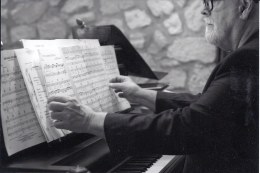
This is a simple rendition, just piano and a string pad. It’s what I would have heard at night as a child as almost every night my mother (violin) and father (piano) would play together in the front room while I feel asleep on the couch. I assume they treated my sister to the same pleasure, but I don’t remember as she’s about 10 years older than me. They favored a romantic style of rubato, improvisational playing of the Fritz Kreisler sort. Guess that accounts for my eclectic tastes.
 There is probably no more archetypal Thanksgiving Day song than this. It should easily be the quintessential Earth Day song as well.
 The title in the New Century Hymnal is To You, O god, All Creatures Sing, #17. It has 6 verses. The only
  This morning’s Earth Day hymn is this famous Native American hymn. #3 in the New Century Hymnal, both verses are given in the original Dakota language as well as in an English translation.
  This week, and the coming Corona Sabbath, is Earth Week at Lakewood UCC. So in celebration there’ll be a daily hymn about the beauties of creation. There can’t be any hymn more arch-typical of the topic than this first one,
  Lakewood United Church of Christ