Weekly Update 12/22

‘Tis A Gift

Christmas Eve

Christmas Eve will be celebrated with an outdoor service at 7:00 p.m. on the church lawn.   Music of the season will begin at 6:30. Please bring your own chair if you can.  The offering on Christmas Eve will be used to support the Creation Justice ministries of the church.

The Christmas Eve Offering 

The offering will be used to support the Creation Justice ministries of the church.  There are several projects under consideration including reforesting part of the church property, signs for the EV station, and installing solar panels.  Caring for the Earth is a priority ministry of LUCC.  The Christmas Eve offering will help the church to increase its greening initiatives.

The Gift of Music

LUCC Music Director Hilton Jones has recorded 2 CDs for the LUCC family.  One is Christmas Piano featuring favorite songs of this season.  The second is Simply Hymns featuring favorite hymn tunes.  Both CDs are available at the church.  The music is a gift to the congregation.  If you would like to make a donation to offset the production costs, you may.  See the display in the sanctuary.  Enjoy the gift of music from Hilton not just on Sundays but every day!

This Sunday, Dec. 26 is the Sunday after Christmas.  Where do we fit into this ancient story from a different culture?   How does it still speak to us today? 

The service will be in the sanctuary with the doors and windows open.


Holiday Cheer to the Homebound

The Care Team had a beautiful time bringing the church to those who are homebound last Sunday.  Check out the joy! 


Anti Racism Demonstrations

Weekly demonstrations along the sidewalk of 54th Ave. S. Make your own sign or use one of the signs at the church. Demonstrations are held Sundays from 4:30-5. In case of rain, the demonstration will not be held that week.

Know justice, know peace! This is an important way to inspire hope in the community and to work to create an anti-racist society.


Guided Labyrinth Walks

The guided walk is held weekly on Wednesdays at 9:00 a.m. This provides an opportunity to be aware and deepen your spiritual journey. If it is raining, the walk is held on Thursday at 9:00 a.m.

Also, the readings and prayers used on Wednesdays at the guided walk are put in the mailbox by the labyrinth each week for use during the week.

The labyrinth is on the church grounds near the southwest corner of the church property. It is available for use at all times.


Gifts to McCabe Early Childhood Learning Center

Thanks to the generosity of the LUCC congregation, LUCC member Claudia Rodriguez was able to provide Christmas gifts for students in her class at McCabe Early Childhood Learning Center on 26th Ave. S. The children were delighted.  Many thanks to Patti Cooksey and Emily Bell for assisting with this.  Click here to see this wonderful display of generosity! 


Playground Clean Up

A friendly neighbor of the church volunteered to clean up the church playground.  The weeds and seedlings are gone.  The space is much more conducive to child’s play.  Many thanks to our wonderful neighbor, Anita!


Zack Blair-Andrews Featured in Tampa Bay Times

College senior Zack Blair Andrews contributed to a very timely article in the Tampa Bay Times last Sunday – ‘The Good, the bad and the ugly of Facebook and Twitter.’  It is posted on the bulletin board at church.  Or check it out on line:  https://www.tampabay.com/opinion/2021/12/16/the-good-the-bad-and-the-ugly-of-facebook-and-twitter-column/


Winter Solstice – Seeing in the Dark

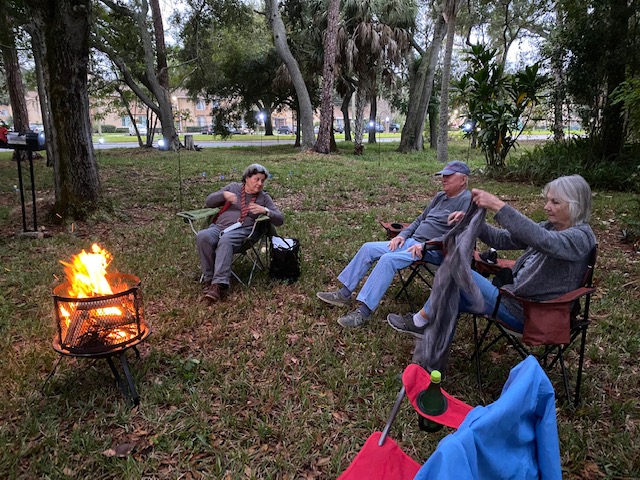
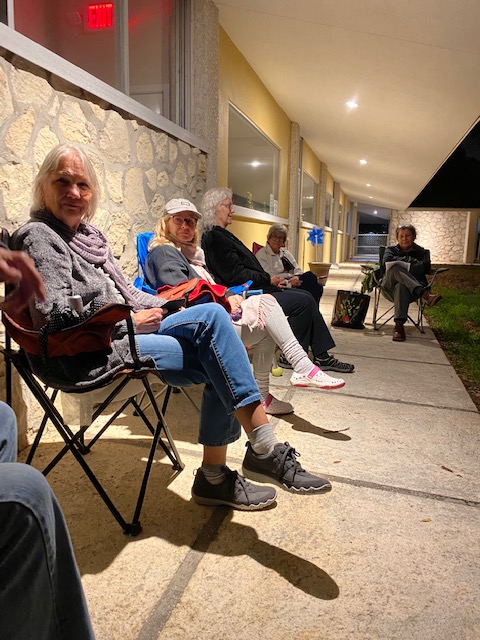
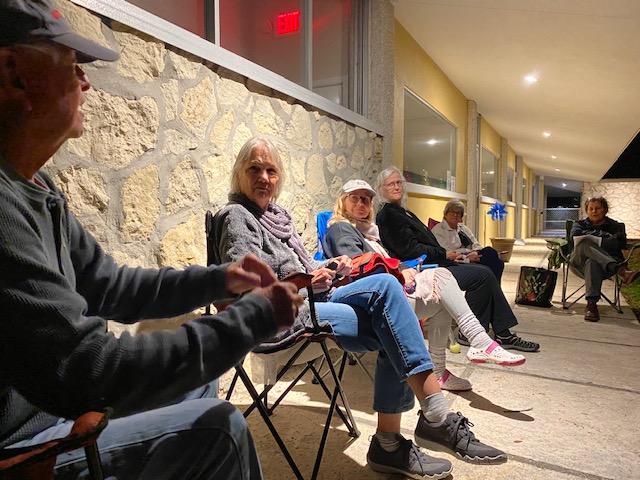
Despite the mist and the rain, seven hearty souls gathered to explore the themes of light and darkness on the shortest day/longest night of the year.  One of the things we ‘saw in the dark’ is the need for ‘wintering.’  For time spent in quiet, solitary, reflection.  Quite a contrast to this season which is often the busiest of the year!   The rain drove the group to the sidewalk under the overhang and prevented the labyrinth walk but did not dampen illuminating conversation and wisdom about light and darkness.  By the time the discussion was over, the rain had dissipated and the fire was still burning, so it was time for roasting marshmallows!  See pictures here:  


New Year – New Beginnings

Sunday, January 2 will be a beautiful service inviting us to find Love in the New Year.  Following the service, there will be a special guided labyrinth walk themed on journeying into the New Year.  All are welcome to extend the worship experience into this labyrinth walk.  You may bring a chair for use at the labyrinth.  


End of the Year Giving

Please consider LUCC as you make plans for your end-of-year giving.  For some, there are tax implications for making additional gifts.  Thanks to the monies from the federal government to help navigate the pandemic, the church has been able to stay solvent.  But these funds are no longer available and some fixed costs are increasing so your increased giving is needed to equip the vital ministries of the church.  As we say on Sundays, may our giving reflect the generosity of God!


New Century Hymnals Available

LUCC has been given 60 used New Century Hymnals from a church that no longer needs them.  If you would like a hymnal for home use, you are welcome to have one.   They are available at church on the bookshelf in the main hallway.  Please help yourself! 


Advisors Needed for 2022

Each year 3-5 wonderful people meet monthly to support the life and ministry of the church especially attending to matters involving finance, administration, personnel, and property. This past year, the church was ably served by Patti Cooksey, Lucille Ruga, Jane Diven, and Malcolm Wells. Some new advisors are needed for 2022. Is this something you might like to be involved in? Or can you think of someone in the church that you would like to see serve in this role? There are forms to fill out at church or speak to one of the current advisors or to Rev. Wells. This is a wonderful way to deepen your ties with the church and to make a difference!


Operation Attack Update

OA needs donations of cereal/oatmeal, mac and cheese, pasta sauce, peanut butter, canned meat, fruit, soup, and vegetables. Donations may be placed on the shelf in the hallway at church.


Being Covid Safe and In-Person Worship

Please stay home if you are not feeling well.

Please wear a mask while in the church building.  While most people have been vaccinated, this helps visitors to feel safe.  

Additional masks will be available at church to use as needed.

Two hand sanitizing stations are available for use by worshippers.

There is well-ventilated, physically distanced indoor seating in the sanctuary.

Please know that your safety is of primary consideration! 

Safe childcare is provided.


Sundays

Look for the bulletin posted on the church website on Friday: https://lakewooducc.org/category/bulletins/

Watch the service on Facebook Live Sundays at 10:30. https://www.facebook.com/LakewoodUCC

Or on YouTube: https://www.youtube.com/user/LakewoodUCC/videos

Instructions for how to access Facebook Live: For additional assistance, please contact the church office.

Here are some instructions to watch our Sunday services live through Facebook:

Use the following link to visit our homepage: https://www.facebook.com/LakewoodUCC/

On Sunday mornings at 10:30 a.m. please use the link above to visit our homepage. There, after using the link, you will see a section labeled “Happening Now”. This is our Livestream of the Sunday Service.

To watch the live stream, locate and click the “watch video” button in the lower right corner of the screen.

If the link above is not working, there is also a link to our Facebook page on our website. Please try that link located on the Home page of our website.

PLEASE NOTE:  

With the cooler temperatures, we will resume opening the doors and windows for morning worship as we continue efforts to mitigate the spread of COVID-19.

Sunday services are being held at 10:30 a.m. Masks are required. There is physical distancing. Childcare is provided.

You can also join in on Facebook Live at 10:30. Please see the instructions below. 


USEFUL LAKEWOOD LINKS:

For the above church website links, please note the “Older Posts” button near the bottom of each page.

You can stream Hilton’s music and videos for free at hiltonkeanjones.com/look-listen/ as well as purchase his CDs and digital albums there.


December Birthdays: Patti Cooksey 12/8, Becky Palmer 12/16, Amaiya Washington 12/18, George Diven 12/27, Melanie Moore 12/27, Someone missing? Contact the church office with birthday information.


Circle of Concern: 

Dana Cosper and family following the death of Dana’s mother

Carol Shores

Dave Radens

William Owen-Cowan

Jen Degroot

Carolyn Moore

Ann Quinn is now under Hospice care

Maggie Brizendine

Janet Hall

All those suffering from COVID-19 and all healthcare workers

Schools: Students, families, teachers, and staff


Church Office Hours:  Tuesday 9:30-noon Thursday-Friday 9:30-noon. 


Recent Posts:


Weekly Update: If you are involved with an activity or event that you would like to share with the LUCC family, please send the information to the Church Office by Tuesday since the Update usually is sent out on Wednesday.

On land originally inhabited by the Tocabaga

Winter Solstice -Seeing in the Dark

Despite the mist and the rain, seven hearty souls gathered to explore the themes of light and darkness on the shortest day/longest night of the year.  One of the things we ‘saw in the dark’ is the need for ‘wintering.’  For time spent in quiet, solitary, reflection.  Quite a contrast to this season which is often the busiest of the year!   The rain drove the group to the sidewalk under the overhang and prevented the labyrinth walk but did not dampen illuminating conversation and wisdom about light and darkness.  By the time the discussion was over, the rain had dissipated and the fire was still burning, so it was time for roasting marshmallows!

Sermon 12/12/2021

Date: Dec. 12, 2021 Third Sunday of Advent
Scripture Lessons: Luke 1:26-38 and Luke 1:46b-55
Sermon: Receive the Gift: The Virgin of Guadalupe
Pastor: Rev. Kim P. Wells

If we ever get to travel widely again, don’t expect me to ever go to Mexico without visiting the Basilica of Our Lady of Guadalupe in Mexico City. I have been there several times and I can’t wait to go back. Hopefully some time I will be able to go there on December 12, the Saint Day for the Virgin of Guadalupe. Millions of people typically visit this shrine every year especially around December 12.

The last time I was there, we got there in the morning and there weren’t many people around. Then people started flooding into the huge plaza in front of the church. Hundreds and hundreds of people suddenly lining up in the square. We got in line not knowing yet what for. There was a large plexiglass box on view in the church. The line was filing past the box. People were venerating what was in the box, saying prayers, kissing the box, leaving flowers and trinkets, kneeling and crying. We were told that the box contained a vial. And in the vial was blood from the pope. The Polish pope, John Paul II. We saw the vial positioned next to a full size replica of the pope in the box. A group of nuns gave us a pennant with an image of the pope. The crowd continued to grow outside the church. People would be in line for many hours waiting to venerate the vial. We had gone to the basilica having no knowledge of these goings on. But it’s like that in Mexico.

I have questioned myself about my fascination, attraction, interest, in the Virgin of Guadalupe. Given that I am offended by the patriarchy, hierarchy, and sexism of the Catholic church, why am I interested in this Virgin of Guadalupe? In addition, I am Protestant, believing in the priesthood of all believers, not going in for that saint stuff. I am repelled by the predatory imperialism of the Catholic church and its role in decimating the populations of original peoples in what are now called the Americas. I am appalled by the manipulative theology and beliefs of the Catholic church. Well, the Protestant church has its share of all of this, too. The church decimated the wonderful, original cultures of Mexico. Razed the temples and places of worship of the indigenous peoples. And used the same stone bricks and blocks to construct Catholic churches on the same sites. Reconsecrated the land after its pagan desecration. I find this all abhorrent. You’d think that the last place I would want to visit is the most renowned Catholic church in Mexico.

But then there is this story associated with the Virgin of Guadalupe. Just to recap for those of you who are not fixated [as I seem to be!] on this phenomenon –

The earliest written record of this story is in a text called the Nican Mopohua in the Aztec language discovered in 1649 in the archives of the hermitage built for Our Lady of Guadalupe. The exact origins of this text are not known.

What we are told is that in December of 1531, ten years after the Spanish conquest, an Aztec peasant, Juan Diego, is walking to mass at a church nine miles away from his village. He is Christian. He has been baptized. And he is evidently devout, walking nine miles each way to attend church. But Juan Diego describes himself in the Nican Mopohua as “just a piece of rope, a small ladder, the excrement of people; I am a leaf; they order me around, lead me by force.” [See The Road to Guadalupe: A Modern Pilgrimage to the Goddess of the Americas by Eryk Hanut, p. 57.] You get the idea. He is a nobody. A disposable.

On his way to mass, he passes Tepeyac Hill, a place sacred to the Aztecs before the Spanish Conquest. There was a shrine there to the goddess who was considered the mother to all of the gods in the Aztec pantheon. This goddess was pregnant, a symbol of fertility. But this temple, like all Aztec holy places was destroyed by the Spanish. As Juan Diego passes, the area is barren, wilderness, deserted, and cold as it is December.

As he goes by, he hears a sound like many birds singing. This gets his attention. Then he hears a voice which addresses him as “Dignified Diego.” And he stops to listen. He sees the image of a young woman, with dark skin, pregnant, with a cinta, a black ribbon, around her midriff, the Aztec sign of pregnancy. She is also wearing an emerald cloak with gold stars over a pink dress. Her body is haloed with rays like the sun. She speaks to Juan Diego in Nahuatl, the language of the Aztecs.

She goes on the tell Juan Diego that he is to go to the Bishop and tell him that she, the Virgin Mary, wants a hermitage, a temple, a church, built for her here on this hill. Here she will bestow her love and compassion upon the people. We are told: “There I will hear their laments and remedy and cure all their miseries, misfortunes, and sorrows.” [Hanut, p. 23.]

So, Juan Diego goes to the Bishop’s palace. He waits, and waits, and waits, hours. Finally at the end of the day, he is allowed to give the Bishop his message. The bishop tells him to come back again, so he can hear this request again, more fully. Juan Diego runs home. On the way he sees the image again. He reports what happened. She tells him to go back the next day which he does.

This time, the Bishop asks for a sign. And he has Juan Diego followed by a couple of guards. They lose him and decide he is crook.

Then Juan Diego is delayed by the illness of his uncle, who is cured by the Virgin. Then he heads back to the Bishop. On the way, he encounters the Virgin again. He tells her the Bishop wants a sign. She tells him to go to the top of the hill and there, in December, in this barren place, the hill is covered with blooming flowers, including Castilian roses. Juan Diego picks some flowers and gathers them in his tilma, a cloak made from crude plant fibers worn by the lowest classes. These flowers are to be the sign for the Bishop. He heads to the palace.

When Juan Diego is finally allowed to see the Bishop, he opens his tilma, and shows the bishop the flowers, and on the tilma is imprinted an image of the virgin in her green star studded cloak and pink dress with black sash, surrounded by rays of light and adorned with roses.

By the end of the month, there is a hermitage on Tepeyac Hill, to the virgin, and it contains Juan Diego’s tilma. And there has been a church housing the tilma on that site ever since. You can go there today and see it still.

The huge church that was eventually constructed on the site is sinking and a new church was built adjacent to the old in a neighborhood of Mexico City now called La Villa. Mexico City is constructed on what was a lake, so there is a big
geological problem with buildings sinking – many huge, historic buildings are sinking. You used to go up steps to enter and now you go down steps to get in. So, the original church of Our Lady of Guadalupe is sinking and a modern basilica was constructed. There is a moving sidewalk that takes you past an enclosed display encasing what is supposedly the cloak of Juan Diego with the image of the Virgin on it. And surrounding the church outside are alcoves and commemorations and memorials with flowers and metal charms of body parts and other items representing the gratitude of people relating to petitions made to the Virgin of Guadalupe: There is a prayer request, ‘Please heal my soccer injury’ and they leave a soccer ball. ‘Thank you for letting me live through my heart attack’ and there is a charm of a heart, etc. You get the idea. These displays ring the basilica. As do tables with vendors selling everything Guadalupe!

And the devotion to the Virgin of Guadalupe is not limited to the vicinity of the basilica. She is the patron saint of Mexico and she is ubiquitous. She is seen on tiles on the walls of buildings – public, private, commercial. She is seen in homes and restaurants and offices – a candle, a flower, a picture. She is on a tile at the water fountain, and on a shelf in the corner of the restaurant. She is in every church in Mexico often in a representation at the top of the altar, above the representation of God and Jesus. After all, she is thought of as the mother of God. She is everywhere in Mexico. And I’ve read that she is the most venerated Mary in the world having gained popularity throughout South America and even Asia. I don’t know how they measure the popularity of the different Mary’s, but apparently she is at the head of the hit parade.

Our nephew, who is of Euro American descent back to the Mayflower, educated at Harvard, Episcopalian, etc. married a woman whose parents immigrated to the US from Mexico when they were young adults. They are citizens and have made a wonderful life in the US. One daughter is a doctor and one is a lawyer. The girls have given their many prestigious diplomas to their parents and they are proudly displayed on a wall by the dining room table. So, at our nephew’s wedding, at a Catholic Church in Los Angeles, at one point the couple knelt before an altar to a generic white Mary and prayers were said. They they moved and knelt at another altar clearly devoted to the Virgin of Guadalupe, brown skin, the rays of the sun around her, clad in a green cloak with stars. And more prayers were said. Isn’t praying to Mary praying to Mary? Why two Mary’s? The bride told us later that this ritual involving the two Mary’s was a blessing of their bicultural marriage.Interesting.

So, I ask myself, why am I so attracted to this story of the Virgin of Guadalupe? I do not pray to her. I don’t expect her to do anything for me. I am not looking for her to intercede for me to God to get some favor granted. But I do have a candle for her in every room of our house; I’m not sure Malcolm and Jeff [my son and husband] are even aware of this.

I am fascinated that in a cultural context where the Catholic church was ‘god,’ where European colonizers had completely decimated the native population and had crammed the people who were left into a permanent underclass, in a racist culture in which brown people were considered sub human by the European occupiers, in a context so thoroughly based on domination and subjugation, there is this story of a poor brown peasant who gets a high and mighty bishop to build a church devoted to a brown Mary who presents with attributes that hearken back to native religions including worship of the goddess. This story undermines and overturns the entire power structure of the Catholic church including its theology. It works in the interests of the indigenous people AND the Catholic church because it creates a bridge for the indigenous peoples to make a home in the omnipotent Catholic church from which they could not escape. So, the story serves the church and it serves the original peoples. There is an integration that meets the needs of the people so that the church can actually be of spiritual support to the Indios. It’s brilliant. A mystery. A miracle?

What we want to notice this season as we Protestant Christians give our nod to Mary, is how the story of the Virgin of Guadalupe is an embodiment, a manifestation, of the song of Mary, the Magnificat, which is based on the song of Hannah, from the book of Samuel. These ancient poems celebrating the justice of God are borne out in the story of Guadalupe. In the Guadalupe story, God chooses a brown Mary, a female figure, to basically cow the Catholic church. God looks with favor on a lowly servant. This also applies to Juan Diego. Who was going to listen to this poor, brown peasant in the opulent prestigious Catholic power structure? And yet, he persists. And the church is built. And Juan Diego and Guadalupe are revered, venerated, like the Mary of the Magnificat.

God does great things for Mary in the Magnificat, and certainly great things have come of the Guadalupe story.

God’s mercy reaches from age to age. To this day, because of the story of Guadalupe, brown people, people of color, even white people around the globe expect mercy and justice from God.

As for scattering the proud and deposing the mighty, you know that Catholic bishop did not want to build that church. He did not want to take direction from some poor Indian. He did not want to use the power and resources of the church to respond to this request from a nobody. But the church is there. Now a basilica is there. And the image of Guadalupe covers the globe — in nooks and crannies and niches in every country. She connects with all people, including those with no connection to the Catholic church, or church of any kind, even with no connection to Christianity. Still, there is devotion for Guadalupe especially among people who are not of the dominant class and culture, who are made poor, who are considered less than. Guadalupe fills the hungry. She is seen as an agent of Divine help and mercy especially among people who feel they have no where else to turn.

The Guadalupe story incorporates all the reversals of the Magnificat. It is a testimony to the God of universal justice and love. A transformational God. It is not just about using the structures of hierarchy and patriarchy for good, but about transforming those structures so that all people are incorporated into God’s dream with no gate keepers, no oppression, no exclusion.

What you have in Mexico is basically a brown, female, pregnant woman, goddess channeling the devotion and reverence of the people. She is not integrated into a pantheon of saints, she is essentially the incarnation of God. On her own.

The story of Guadalupe gives power and might to the Magnificat. That paean of praise, if you notice, is written with past tense. God has done this. God has done that. It is not aspirational, God will do this, or will do that. It is a celebration of what God has already done. How God has already manifested God’s dreams of justice and peace. This hymn is grounded in trust because of what has happened not because of what is hoped will happen.

As I see it, we can look back at the story of Guadalupe and see what has happened, what has been done, how Divine justice and mercy have come to fruition. In the past tense. And this informs our faith and our future.

Mexico is a country where many people are poor and alienated from their government and their land. They are victims of greed and imperialism perpetrated by their predatory neighbor, the United States. Because of industry and greed, much of the land, air, and water in Mexico is polluted and in many places it is easier and cheaper to get a Coke than to get safe drinking water. Many people have very hard lives and they are struggling, desperate, so they resort to leaving their beautiful beloved homeland. And they have brought their dearly beloved Virgin of Guadalupe to this country. A needed gift. In her story we see the reality of God, a reality that’s revealed in the story of Mary of Nazareth, in the story of Jesus, and a reality proclaimed by the prophets who speak of God’s desire that all people live together in peace calling for an end to abuse and oppression and economic violence. So the patron saint of Mexico has now been ‘upgraded’ to the patron saint of the Americas – and oh how we need her witness to mercy and justice! We need her powerful story of transformation and integration. We need her witness to the Magnificat and the reality of God.

As we think about the gifts that we are receiving this precious Advent season, may we consider the story of the Virgin of Guadalupe to be one of those gifts. May her story, remembered by people the world over on this holy day, fill us with hope and joy this Advent season as we prepare to celebrate the incarnation of mercy and justice in its many forms and manifestations. Amen.


Much of the information about the Virgin of Guadalupe in this sermon is taken from the book cited above, The Road to Guadalupe: A Modern Pilgrimage to the Goddess of the Americas by Eryk Hanut.

A reasonable effort has been made to appropriately cite materials referenced in this sermon. For additional information, please contact Lakewood United Church of Christ.