
IMA/Roll to the Polls
This coming Sunday, Lakewood UCC celebrates UCC’s Native American Ministries. As part of that liturgy, all the music for the service is based on Native American melodies: 2 hymns, 3 songs set by the American composer, Arthur Farwell (see https://en.wikipedia.org/wiki/Arthur_Farwell, https://songofamerica.net/composer/farwell-arthur/, and https://www.loc.gov/item/ihas.200035729), and one setting of my own. I’ll post my own setting—one I’ve posted before—later this week, but today’s post are the 3 Farwell settings combined into one video.
The Native American melodies (of primarily the Omaha tribe)) harmonized by Arthur Farwell were drawn from the late 19th Century 20 year research of Alice C. Fletcher, holder of the Thaw Fellowship, Peabody Museum, Harvard University.
Creative folk (musicians, authors, graphic artists, dancers, etc.) create amid a world of 7,874,965,825 ideas of what we should and shouldn’t do! It’s hard enough discerning what we believe ourselves, but the cultural noise gets deafening and discouraging sometimes. One bit of that cultural noise is the prohibition against “cultural approbation.” To make matters worse—regard that issue—white supremacists have taken up against the issue. One is damned if one does support cultural sensitivity or damned if one doesn’t!
Unless we wish to discard Debussy’s pieces based on the traits of Spanish music, Brahms’ Hungarian Dances, Ravel’s music based on Asian scales, Beethoven’s “Turkish March” in his 9th Symphony, and on and on and on…then, everyone needs to find their own comfort zone as to where the boundaries are regarding the setting of “folk” material. (I realize even the term, “folk,” has a colonialist tinge to it.)
My own feeling is that if a setting of other material is…
…then it doesn’t deserve to be condemned for cultural approbation.
I believe Farwell’s setting (and hopefully my own) fall into the “approved” category.
Here’s some info about the UCC’s Native American Ministry. I especially like the first one!
“The 29th General Synod of the United Church of Christ approved a Resolution of Witness calling for the UCC to repudiate the Doctrine of Discovery, which authorized the genocide of native people and the theft of native lands. In that Resolution we recognize the complicity of the Churches, including the UCC, in the perpetration of these injustices.”
https://www.ucc.org/event/american-indian-sunday-usa/2021-09-26/
“The Council for American Indian Ministry (CAIM) is the voice for American Indian people in the UCC. CAIM provides Christian ministry and witness to American Indians and to the wider church. Justice issues that affect American Indian life are communicated to the whole UCC by CAIM.“
https://www.ucc.org/giving/ways-to-give/our-churchs-wider-mission/neighbors-in-need/faq_what_is_caim-2/
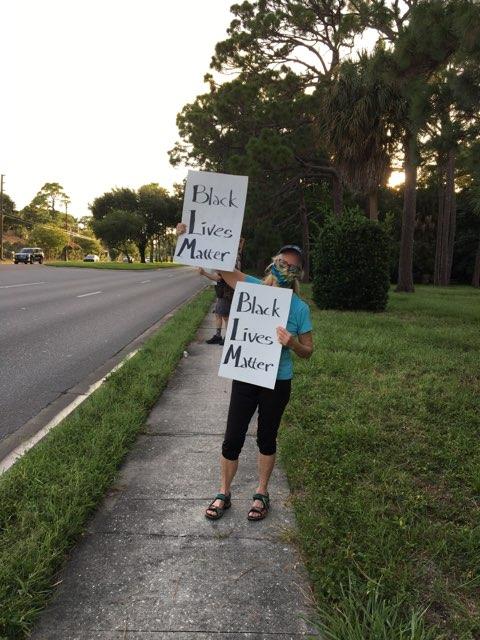
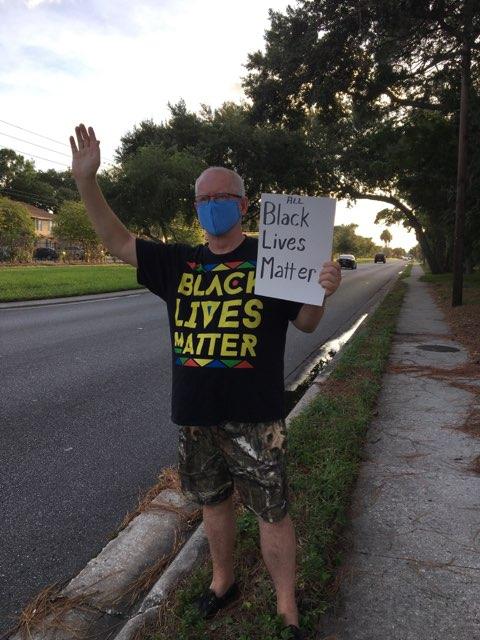
Black Lives Matter and Peace and Justice Demonstrations continue on 54th Ave south on Sunday night August 2nd.





repost from https://www.ucc.org/the_cross_and_the_lynching_tree
Written by Waide Harris
May 21, 2020
The Cross and the Lynching Tree: A Requiem for Ahmaud Arbery
On February 23, 2020 Ahmaud Arbery, 25, left home and went for a jog. During his run, two white men follow Ahmaud, confront him with a loaded shot gun, assume he’s a suspected criminal, and within minutes of their encounter, according to the recorded video three shots are fired. Amhaud falls to the ground and dies.
“Racism is a virus. It infects the spirit.” (The Rev. Dr. Otis Moss III)
On Sunday, May 31, 2020 at 6 pm EST, The United Church of Christ invites you to a live viewing of Rev. Dr. Otis Moss, Jr’s cinematic sermon preached at Trinity UCC Sunday, May 17th entitled, The Cross and the Lynching Tree: A Requiem for Ahmaud Arbery. Immediately following the live video a panel discussion with four respected thought leaders, racial justice advocates, and UCC pastors will discuss the impact of historical and present day acts of racism and violence towards African Americans and how the Christian Church can be actively involved in dismantling racism.

