Posts
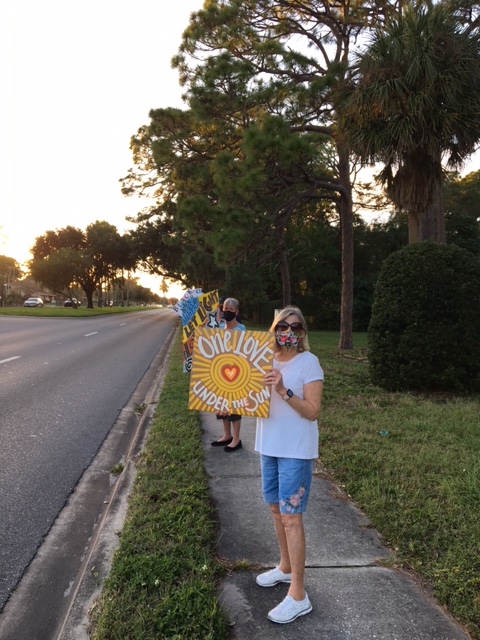
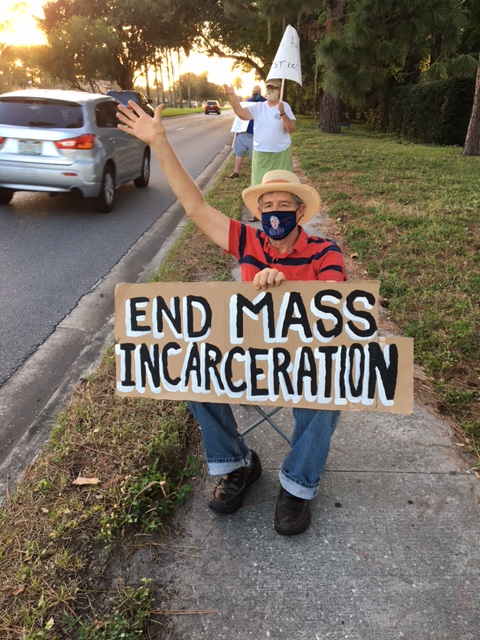
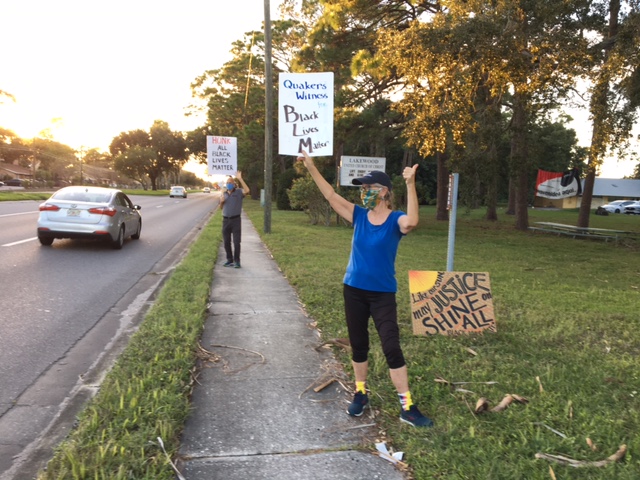
Anti-Racism Demonstration 11/15




Sunday Morning Music: Compassion (a new, original hymn)
This new hymn, COMPASSION (“Just as a Nursing Mother”), is based on a sermon by the Rev. Kim Wells that may be found at https://lakewooducc.org/2020/10/23/corona-sabbath-32-compassion-reflection-text/
Here’s a video of the music score for COMPASSION (“Just as a Nursing Mother”) synced with an instrumental recording. Someday…someday, we’ll all be able to sing together again and I’ll be able to make a recording of the words being sung. Until then, it’s up to your imagination.To see the words more clearly, be sure to take advantage of the icon on the video that lets you make it full screen.
If you’d like to print out a copy of the hymn to play at home, here’s a link to a PDF of it: COMPASSION HYMN – Score. You’re welcome to print it out for you own use at home.
Here’s the text:
REFRAIN
Just as a nursing mother feeds
The growing child upon her breast,
The soul sustaining way of Christ
Gives solace, succor, life refreshed.VERSE 1
And yet, today, their spirits starve
They want to grow and thrive in truth.
They know not what it is or where
It’s found that healing hearts produce.REFRAIN
Just as a nursing mother …VERSE 2
And sadly, faith is often seen
As offered in a selfish way.
It’s offered with a hidden catch:
Salvation giv’n but you must pay.REFRAIN
Just as a nursing mother …VERSE 3
It is no wonder we are shy
Of telling of Christ’s love content.
But, we must gently share our lives
For we have found soul’s hunger quenched.REFRAIN
Just as a nursing mother…
Note: COMPASSION is the tune name. Hymns have tune names that are used in a specific index in the back of hymnals. “Just as a Nursing Mother” is the first line of the hymn. There is a different, specific index just for first lines of hymns. There are other indexes, such as the metric index. The metric scheme of this hymn is 8.8.8.8.D which is four lines of iambic tetrameter, doubled.
Below is an earlier hymn I wrote based on a sermon of the Rev. Kim Wells. I’ve used two different musical settings for those lyrics, one the Irish tune, “Down by the Sally Gardens,” the other an original anthem. (I think I like the “Sally Gardens” setting better for congregational singing!) But, here’s just my lyrics:

I find the thoughts contained in Rev. Wells’ sermon inspirational and providing novel thoughts and perspectives.
Corona Sabbath 35 Investment Advice Reflection Text
Greetings and welcome to Corona Sabbath. This is one of the ways the church is endeavoring to offer spiritual support during these challenging days of COVID-19. We appreciate your feedback and suggestions.
We listen to a scripture lesson from Matthew. It is sometimes called the parable of the talents. Like a good parable, this story has many layers, interpretations, and meanings. Some see this story as offering financial guidance. Some see this story as pertaining to the use of talents. Some see it as an indictment of the oppressive economic system of the time. To some the landowner is a god figure. To others, the landowner is an anti god figure. And the third servant who buries the money. Some see him as a lazy good-for-nothing. Others see him as a model of subversion. As you listen, what do you hear in this story? And one note about the money mentioned. The actual amounts referred to in the story were much larger than the translation implies. The amount entrusted to the last slave was worth about 20 years wages for a laborer. The thousand dollar figure is symbolic of much more money by today’s standards.
Matthew 25:14-30
“Again, it’s like a wealthy landowner who was going on a journey and called in three workers, entrusting some funds to them. The first was given five thousand dollars, the second two thousand, and the third one thousand, according to each one’s ability. Then the landowner went away. Immediately the worker who received the five thousand went and invested it and made another five. In the same way, the worker who received the two thousand doubled that figure. But the worker who received the one thousand instead went off and dug a hole in the ground and buried the money.
“After a long absence, the traveler returned home and settled accounts with them. The one who had received the five thousand come forward bringing the additional five, saying, ‘You entrusted me with five thousand; here are five thousand more.’
“The landowner said, ‘Well done! You are a good and faithful worker. Since you are dependable in a small matter, I will put you in charge of larger affairs, Come, share my joy!’
“The one who had received the two thousand then stepped forward with the additional two, saying, ‘You entrusted me with two thousand; here are two thousand more.’
“The landowner said to this one, ‘Cleverly done! You too are a good and faithful worker. Since you were dependable in a small matter, I will put you in charge of larger affairs. Come, share my joy!’
“Finally the one who had received the one thousand stepped forward and said to the landowner, ‘Knowing your ruthlessness – you who reap where you did not sow and gather where you did not scatter – and fearing your wrath, I went off and buried your thousand dollars in the ground. Here is your money back.’
“The landowner exclaimed, ‘You worthless, lazy lout! So you know that I reap where I don’t sow and gather where I don’t scatter, do you? All the more reason to deposit my money with the bankers, so that on my return I could have had it back with interest! You, there! Take the thousand away from this bum and give it to the one with the ten thousand.
“‘Those who have will get more until they grow rich, while those who have not will lose even the little they have. Throw this worthless one outside into the darkness, where there is wailing and grinding of teeth.’
Reflection from Kim
In the gospel of Matthew, this story is near the end. It is part of Jesus’ last teachings to his disciples. And it is set between two other stories that refer to ultimate things. Coming to the end. What really matters.
When the story is seen as being addressed to the disciples, it can be seen as a challenge having to do with much more than mere money. Are we hearing Jesus confront his beloved friends about the future? When I am gone, what are you going to do with what I have taught you? With what we have experienced together of the commonwealth of God? Are you going to be quiet, play it safe, keep it to yourselves? Or are you going to keep boldly living out what we have shared together, this new reality? This dream of God?
Lots of us tuck our faith away and bring it out on Sunday morning or when we face a crisis or an emergency. We bring our faith out, use it, apply it, and then, we carefully store it away again. It’s for special occasions not every day use. Jesus challenges this kind of thinking.
Among its many messages and meanings, this story urges us to think about our faith as a gift meant to determine our whole lives, meant to inform all of our decisions. Investing ourselves fully in the way of Love. Spending our lives for others and taking risks. Just what are we doing with all that we have been given – breath, voice, time, eyes, mouths, and also talents and treasure?
When we were in seminary, we had chapel services 4 days a week at noon. I’ll never forget the sermon of one of our classmates. An hispanic woman. She challenged people who think they don’t have much power or influence. Who don’t think they have much to offer. You know it can be very easy to hide behind humility as an excuse for playing it safe. Well, this fiery preacher looked around the sanctuary and reminded us that everyone in the room had a mouth, so everyone in the room could be doing something about the injustice and suffering in the world. You have a mouth. You can make a difference. And in today’s world, people also have a mouth on social media which can amplify the message and make the it even more powerful.
We are confronted with asking ourselves what are we doing with the dream of God that we have been given?
The parable invites us to ask not only are we fully living the gospel, the commonwealth of God in our finances and all of the rest of the aspects of our lives, but it also invites us to consider how we are sharing the gospel. So many people today are rootless, disenchanted with society, angry at the economy, and the good news of Jesus Christ offers a word of hope and transformation. Many people lack a sense of purpose or meaning in their lives. They are searching for what the gospel has to give. Are we sharing the good news of the gospel with others? Are we letting people know that there is another world view, another set of values and considerations that are life-giving and meaning-full? Are we encouraging others to find joyful and abundant life following Jesus?
What are we doing with what we have been given? No hiding behind I don’t have this. I can’t do that. I’m too busy with this. I don’t have access to that. This story is about all that we DO have, all that we are given, all that we can do.
Look at Jesus. Poor. From a backwater town. In a land that was under occupation. Lots of disadvantages. And yet he spends his life. He uses it. Gives it away. Enjoys it. He parties, drinks with friends, celebrates. He serves, helps, and heals others. He teaches and preaches and prays. He relishes the living of his days. Jesus loves his life so much, he is so grateful for all that he has been given, that he can’t help but give it away, give it up, give it back.
Like the disciples, we, too, have been given the gospel. What are we going to do with it? In thinking about this story we are reminded that the gospel empowers us to call out unjust economic arrangements and financial systems that leave so many people poor and a few people obscenely rich. If someone is rich, it is usually because other people are being made poor or the environment is being abused. The gospel empowers us to challenge slavery, systemic racism, oppression of every kind, and the degradation and abuse of beloved children of God.
This story is not an endorsement of capitalism which did not exist in Jesus’ day. It is an endorsement of risky living, fully and freely, for the common good. It is about giving back the life you have been given. The gospel tells us to invest in love as our portfolio, our goal, our guide – not personal freedom, or financial wealth, or individual power.
A colleague shares this story:
Recently, a friend of mine wrote me about an experience some years ago that had changed her life. She had gone to an artist’s studio to have her portrait drawn. The artist took his time, asking her a number of questions aimed at drawing her out. Eventually he asked her what she feared most. Her first answer was nuclear war. She mentioned that she had repeatedly had nightmares about nuclear holocaust.
But the artist said, “No, I don’t believe you. That can’t be right. Something more personal.”
Nancy thought and thought. Finally it dawned on her. “What I fear most is getting to the end of my life and realizing that I had been too fearful — too careful — that I never really used my talents.”
“That’s it,” the artist said.
[From Robert Ellsberg, St. Augustine’s Church, Croton-on-Hudson, November 12-13, 2005, cited in http://edgeofenclosure.org/proper28a.html%5D
Amen.
(Click HERE if you wish to see the post containing the video of this text.)
Corona Sabbath 35 Investment Advice
These weeks when we cannot gather in person for Sunday worship, Lakewood United Church of Christ is providing brief weekly sabbath programs for you to listen to on your own or with others in your social isolation group. They will be posted on Friday so that you can schedule your sabbath time to suit your schedule and your spiritual inclinations. We hope these programs are of spiritual support to you in these difficult times.
The post this week focuses on investment strategies based on a very well known and multi faceted story associated with Jesus. What are we investing in? What is our purpose?
This post includes a scripture reading done by Claire Stiles, a reflection from Rev. Kim Wells and music from Hilton Jones. We hope this post helps to feed your spirit in these difficult times.
You are invited to find a quiet space, inside or outside. Light a candle. Take a look around you. Breathe. Life-giving breath. Be present.
You may begin by reading this quote:
Life shrinks or expands in proportion to one’s courage.
–Anaïs Nin, 20th century
When you are ready, start the video/audio below.
(For written text of the above video click HERE.)
As you listen to the music which follows, you are invited to notice the thoughts and feelings and that arise for you.
You are invited to offer the following closing –
I am no longer my own, but yours.
Put me to what you will, rank me with whom you will;
put me to doing, put me to suffering;
let me be employed for you, or laid aside for you,
exalted for you, or brought low for you;
let me be full, let me be empty,
let me have all things, let me have nothing:
I freely and wholeheartedly yield all things
to your pleasure and disposal.
And now, glorious and blessed God,
Creator, Christ, and Holy Spirit,
you are mine and I am yours. So be it.
And the covenant now made on earth, let it be ratified in heaven.
Amen.–Methodist Covenant Prayer
Breathe. Breathe again. Be filled. With purpose. Extinguish your candle and engage whatever may come with a sense of peace and a desire to serve.
LAKEWOOD UNITED CHURCH OF CHRIST
- A Just Peace Church
An Open and Affirming Church
A Creation Justice Church - 2601 54th Avenue South, St Petersburg, FL 33712-4700
(727) 867-7961
see the Contact page for
map, personnel, and email addresses
The mission of Lakewood United Church of Christ, as part of the Church Universal, is to:
- Celebrate the presence and power of God in our lives and in our world;
- Offer the hospitality and inclusive love of Christ to all people;
- Work for God’s peace and justice throughout creation.
USEFUL LAKEWOOD LINKS DURING THE CORONA CRISIS:
- Corona Sabbath Posts
- Sermon and Reflection Texts
- Music at Lakewood
- Lakewood UCC YouTube Channel
- Lakewood UCC on Twitter
- Lakewood on Facebook
- Lakewood on Instagram

