
Poor Peoples Campaign 3 day walk

LAKEWOOD UNITED CHURCH OF CHRIST
2601 54th Avenue South St. Petersburg, FL 33712
On land originally inhabited by the Tocabaga
727-867-7961
lakewooducc.org
lakewooducc@gmail.com
Date: April 16, 2023
Scripture Lesson: John 20:19-31
Sermon: Rising
Pastor: Rev. Kim P. Wells
Every year during Lent and Holy Week, there are articles and posts about crucifixion. That is, about the actual process of crucifixion from an anatomical, biological, physiological perspective. What was done and what actually happened to the body. Churches have adult ed classes about this. I remember many years ago, a charter member of LUCC, Virginia Bodendorfer, gave me a long article, very detailed, written by a doctor, explaining the whole process and the effects on the body. So, we seem to have some kind of maybe gory or voyeuristic fascination with the physicality of the crucifixion. There may be many reasons for this. The worse the pain, the greater the love? I don’t know. I think the article from Virginia is one of the few things you won’t find among the volumes of papers in my office!
But as an historian by training, I have always found it interesting that the crucifixion of Jesus is one of the few things in the gospels that seems to be historically authenticated by an outside party, Josephus, a Jewish historian.
So, we seem to know quite a bit about the crucifixion. But what about the resurrection? What about the particularities of, well, the resurrection?
We have the stories in the gospels which are faith based, not necessarily fact based. And what are we told about the resurrection? We are told of the body of Jesus being placed in a tomb. And we have accounts several days later in the gospels of women close to Jesus finding the tomb empty of Jesus’ dead body. And some stories around that.
Then we have accounts of encounters between Jesus and those who knew him. Like the one we heard this morning. Jesus appearing to the disciples in the locked room. And the story of the conversation with Thomas.
But we seem to have no account of, well, how the body came back to life, or was restored, or resurrected. We have no explanations about what occurred between Jesus being put in the tomb and the tomb being found empty. There is no story about, say, the stone being moved, the body being unwrapped, life being breathed into the body, clothes being provided for the resurrected Jesus. There is a gap in the story. No description or details or explanations of the process involved. We are told of the grave clothes being at the tomb. And angels appearing and saying he is not there. That he has gone ahead to Galilee. But there is no ‘how’ provided.
Now, many of you may be thinking, who cares? We don’t need to know. It’s symbolic or metaphorical, or it’s a miracle and you can’t explain a miracle, that’s why it’s called a miracle.
But stay with me a moment.
I find this lack of detail about the resurrection interesting in part because there are many other stories in the gospels that have a lot of details and explanations. We are told what happened and who was there and what occurred. Let’s just stay with the gospel of John which we heard from this morning and look at a few examples.
The first miracle or sign in the gospel is the story of water being turned into wine at the wedding in Cana. We are told of 6 large stone water jars. We are told of Jesus, his mother, and servants being present. We are told of the servants filling the 6 stone jars with water. Then we are told that the chief steward draws a sample from a stone jar. And it is wine. Good wine. In the story, there are people involved who see and participate in what happens. There is lots of detail in the story.
There is the story of the healing of an invalid near the 5 porticos of the Temple during the festival. There were many invalids and onlookers. There is a conversation in the story. Jesus tells the invalid to take up his mat and walk. And he does.
There is the story of the feeding of the 5,000. Not 2,500 or 7,000 but 5,000. There were many witnesses. The disciples are involved. We are told that 5 barley loaves and 2 fish are collected. Jesus gives thanks. The food is distributed. And there are 12 baskets of leftovers. Not 11. Not 15. But 12. [A significant number in Judaism.] There are many participants and details in this story.
In the story of the man born blind, again there are people around. We are told of Jesus spitting on the ground and making mud with the saliva and dirt and putting it on the man’s eyes and then telling him to go wash in the pool of Siloam. There is an involved description of what goes on in the story.
And there is the story of the raising of Lazarus. Martha, maybe Mary, and other mourners are present. The stone is moved from the grave. There is a smell. We are told Jesus looks upward and prays. He cries out in a aloud voice, “Lazarus, come out.” Lazarus emerges, bound in strips of cloth, even his face is wrapped, we are told. And Jesus instructs the on lookers to unbind Lazarus. Again, a story told with great attention to detail.
Then there is the story of the resurrection. Jesus is buried. Three days later, the stone has been moved from the entrance to the grave. We are not told how. The linen wrappings are there. Angels are there. The body is gone. But we are not told what happened, how the stone was moved, how Jesus was resurrected. There is no detail, no explanation of the actual resurrection process.
So we have a story of suffering and sacrifice that leads to new life. We have a story of transformation. We have a story that conveys that love is stronger than death. That redemption, restoration, reconciliation is always possible. No matter the circumstances. There is a path from death to new life.
But we can’t just open our maps app and be shown the route. Here’s how you get from death to life. Here’s how you get from horrible violence to peace. Here’s the route from devastation to restoration. No. We aren’t just handed a user manual that tells us how this all works.
There’s death. And there is new life. And I think we are not told of the intricacies of the resurrection because it is left to us, in our time, in our context, with our challenges, to create the process. To make the path. To map our the route. As we go. Our faith tradition tells us this is possible. It assures us that it can happen. We are given the power of Divine Love to overcome even death. But is up to us to lean on our faith and on each other and make the way. We are to figure out how fill in the gap. What process is needed. In a way that leads to the triumph of life and love over death and defeat.
This past week on Wednesday I went to the vigil at 49th Street and Ulmerton Road during the execution of Louis Gaskin. We held signs and made a witness to the many drivers traversing that intersection. There were many honks in support of our witness. And then we heard from Herman Lindsey, a person who was wrongly convicted, spent 3 years on death row, and was finally exonerated in 2009. He is the 135th exoneree in the US, and the 23rd exoneree in the state of Florida which has the highest rate of exonerations in the US. Though exonerated, Lindsey still does not have his full civil rights reinstated.
But Herman Lindsey told us a part of his story, a story of making that path from death to life, in a way that he never could have anticipated. When Lindsey was finally released from death row, he wanted to get back to his family and friends, make money, go back to a normal life. The last thing he wanted was to think about or talk about his harrowing experience with the criminal injustice system which had consumed his life for years. He wanted to put all that behind him. But the executive director of Floridians for Alternatives to the Death Penalty contacted him and asked him to speak to a group about his experience. He was not interested. He didn’t want to talk to any audience. He didn’t want to relive his experience on death row. He didn’t want to worry about any body else on death row. He just wanted his life back. But Mark Elliott, the director, persisted. And then he offered to pay Lindsey to speak. Lindsey told us, “I wanted a new pair of Nikes, so I said yes.” And this is what Lindsey has been doing ever since. One group. Then another. Then another. Talking to people about how the death penalty is wrong. And how it creates victims, not just the ones who are killed, but all those who have to carry out the killing are traumatized by it. And about how the death penalty is against our deepest religious and moral convictions. And we compromise ourselves when we try to justify it and certainly when we implement it. So, Lindsey never got his normal life back. Instead he got a new life. As an advocate for the eradication of the death penalty. He is the executive director of Witness to Innocence the only national organization in the US composed of and led by exonerated death row survivors and their family members. A life he never anticipated or imagined.
To me, we aren’t told about the details of the resurrection because we are supposed to use our imaginations. As renowned scientist Albert Einstein observed, “Imagination is more important than knowledge. For knowledge is limited to all we know and understand, while imagination embraces the entire world, and all there ever will be to know and understand.” We are supposed to be creative. We are supposed to imagine. We are supposed to discern and devise the way from death to life in our time and in our context, our situation. Whatever we are facing, as an individual, as a society, as a culture, as a species, we have been given the capacity to navigate the way from death to life. From terror to justice. From abuse to affirmation. From deprivation to abundance. From destruction to construction.
There is so much pain, woundedness, violence, and injustice around us, within us, and among us. There is so much need for the transforming power of love. This means there are countless ways for us to witness to the resurrection. To make the way from death to life. To create our story.
When we feel the wounds and heal the wounds, our doubt becomes belief. And we are raised to new life. Amen.
A reasonable effort has been made to appropriately cite materials referenced in this sermon. For additional information, please contact Lakewood United Church of Christ.
 |
 |
 |
| This Sunday This Sunday: This Sunday is the Sunday after Easter. It is traditionally called ‘low’ Sunday because attendance is usually much lower than it was the week before on Easter. This 50 or so member congregation had 64 people in worship for Easter. What a marvelous celebration. In the early church, every Sunday was considered a celebration of the resurrection, so please know that you are welcome to be part of celebrating the resurrection again this Sunday! The service will involve the echoes of Easter themes and the beautiful story of Thomas whom we remember for his faith (and doubt). Take a look at John 20:19-31. SPECIAL GUESTS THIS SUNDAY This Sunday, the congregation of Trinity United Church of Christ of St. Petersburg will be worshipping at Lakewood with the LUCC congregation. This is an opportunity for the two congregations to begin to get to know one another as conversations begin between Trinity, Lakewood, and Pilgrim UCC in St. Pete about how the three congregations can work together and support each other. The Trinity folks are bringing refreshments for after worship. Childcare is provided at all Sunday services. |
 Grandma’s Lentil Soup At the Maundy Thursday observance, lentil soup was served for dinner along with a mulberry crumble made with mulberries from the farm where Malcolm Wells works. Several people asked for the soup recipe. |
| It was also mentioned that lentil soup has become a staple sustaining the people of Ukraine as the sourcing of their food supply has been disrupted by the war there. Here’s the recipe for lentil soup from Kim’s Italian grandmother, Grandma Angie. 3 tbsp. olive oil 1 large or 2 small cloves of garlic 1 cup lentils 1 8 oz. can Del Monte tomato sauce (or whatever brand is available) 1 tbsp oregano 2 tbsp vinegar (red balsamic is an option) salt and pepper to taste 1 cup elbow noodles water (or vegetable broth) Brown garlic in olive oil in a 3 quart pot. Put aside until cool. Examine lentils and remove any foreign particles. Wash well under cold water. Add tomato sauce to garlic and oil. Then add lentils, oregano, salt, and pepper. Fill pot 3/4 full with water (or vegetable broth can be used). Cover and simmer for 1 1/2 to 2 hours. Then add vinegar and noodles. Cook an additional 10-12 minutes. Serves 6. [For ceci bean soup, replace oregano with rosemary.] |
 LUCC Book Talk LUCC Book TalkFor almost two years a small group has been meeting each month via zoom. Each member shares the book(s) they have been reading…fiction, non-fiction, current or classics. There is always a wide variety of books shared and discussion is lively. We usually meet on the third Thursday of each month. Rev. Kim issues the zoom invitation. We would love to have you join us!!! NEXT BOOK TALK: Thursday April 13 at 6:30. Zoom link: https://us02web.zoom.us/j/2700683648 |
 Florida UCC Women to Host Retreat Florida UCC Women to Host RetreatLUCC Dyanne Edds is involved in the women’s ministry of the Florida Conference. She can share more information about this upcoming retreat. 93rd Annual FL UCC Women’s Conference – All women belonging to a UCC church are invited to attend the 93rd Annual FL UCC Women’s Conference, May 5-7 2023 at San Pedro Conference Center in Winter Park, FL. Registration deadline is April 1, 2023. More information as well as registration forms can be found on the FL UCC Women’s website: Register here: https://www.uccfla.org/floridauccwomen |
| Religious Leaders for Reproductive Choice |
| LUCC pastor, Kim Wells, has been recruited to participate in a demonstration on Monday morning April 17 in Tallahassee. The rally is a gathering of religious leaders witnessing to the Florida Legislature that there are people of faith, faith leaders, in fact, who fully support the rights of women to access the full spectrum of reproductive health care options, including abortion. A woman deserves to have the right to make her own health care decisions. This is a personal matter that should not be fraught with interference from the state or national government. While the laws may not be changed any time soon, we must make sure that our voices are being heard. |
| https://www.ucc.org/history-will-grind-you-into-dust-ucc-gmp-blasts-desantis-appointees-as-new-college-faces-authoritarian-takeover/ |
 St. Petersburg Museum of History Offers Civil Rights Exhibit St. Petersburg Museum of History Offers Civil Rights Exhibit |
| Rev. Wells was part of a clergy tour of a new civil rights exhibit at the St. Petersburg Museum of History. The display, “Civil Rights in the Sunshine State” provides history and information about the civil rights movement in Florida. We often hear about Mississippi and Alabama but there was also a vibrant civil rights movement in Florida. Learn about it at this new exhibit. Feb. 25-June 8. |
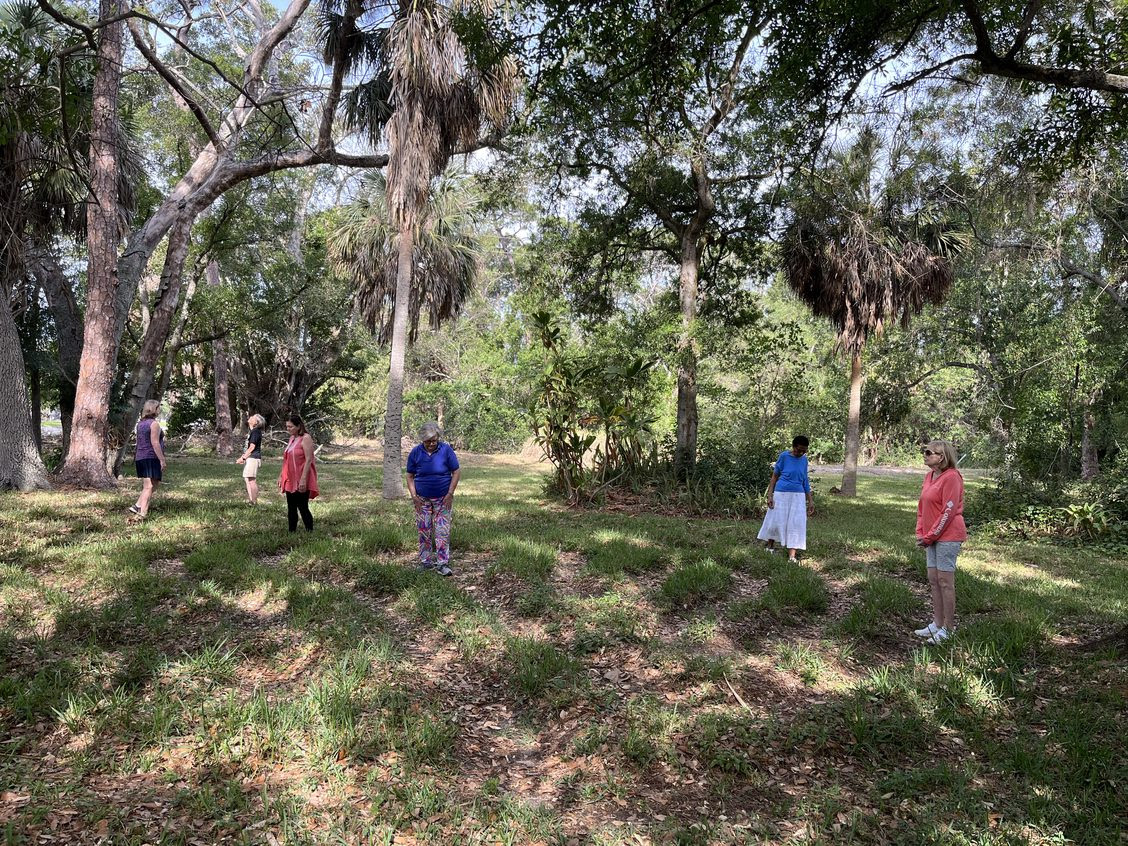 |
 Guided Labyrinth Walks Wednesday Mornings at 9:00 a.m. Guided Labyrinth Walks Wednesday Mornings at 9:00 a.m.Each week there is a guided labyrinth walk on the outdoor labyrinth at the church. It is a time of prayerful faith sharing, and a time to listen more deeply to our spiritual lives. In case of rain, the walks are held on Thursday morning. Also, the readings and prayers used each week at the guided walk are put in the mailbox by the labyrinth for use during the week. The labyrinth is on the church grounds near the southwest corner of the church property. It is available for use at all times. |
 Family Promise NeedsA New List This Week Family Promise NeedsA New List This WeekFamily Promise, a local ministry to houseless families with children, is in need of the following items: Liquid detergentPull Ups size 5 and size 1Baby wipesSmall bottles of waterEasy carry snacks (please no granola bars or mac and cheese cups)Garbage bagsCleaning supplies (Fabuloso, toilet bowl cleaner, Windex, etc.)Women’s deodorantBar soapRazorsShaving creamHand soap Please bring items to church and place them on the shelves behind the curtain in the hallway. |
 Toiletries for Celebrate Outreach Toiletries for Celebrate OutreachCelebrate Outreach is a local ministry with people who are living without shelter in St. Petersburg. An average of 135 people are served each week. LUCC was asked to collect toiletries to be distributed to the community at the meals that are provided on Saturday and Sundays each week. |
| Celebration Outreach has an ongoing need for men’s and women’s underwear.Men sizes 30, 32,34Women’s sizes 5,6, 7,8. Also in high demand are socks of all kinds /sizes for both men & women. Other needed items are Deodorant & disposable razors. Toothbrushes, toothpaste, disposable razors, bar soap, wash cloths, deodorant, feminine hygiene items, travel size creams, shampoo, body wash, individual packets of Kleenex, hand wipes, toilet tissue, and paper towels are always needed as well. Many thanks to Janet Blair and Jim Andrews for taking the donations to Celebrate Outreach. |
 Inkjet Recycling Inkjet RecyclingThe church is continuing to collect used inkjet cartridges. They are sent to a recycler and the church receives payment for the cartridges provided. So, don’t throw out your cartridges. Bring them to church. Not only do they get recycled but they provide income for the ministry of the church. |
 Operation Attack Update Operation Attack UpdateOA needs donations of cereal/oatmeal, mac and cheese, pasta sauce, peanut butter, canned meat, fruit, soup, and vegetables. Donations may be placed on the shelf in the hallway at church. Many thanks to Owen Blair-Catala for seeing that the donations are received by Operation Attack. |
| USEFUL LAKEWOOD LINKS Sermon and Reflection TextsLakewood UCC YouTube ChannelLakewood UCC on TwitterLakewood on FacebookLakewood on Instagram For the above church website links, please note the “Older Posts” button near the bottom of each page. You can stream Hilton’s music and videos for free at http://hiltonkeanjones.com/look-listen/ as well as purchase his CDs and digital albums there. |
 April Birthdays April BirthdaysApril 16 Zachary Blair-Andrews Are any church family birthdays missing? Please contact the Church Office! |
 Circle of Concern Circle of ConcernSamantha Wassmer and familyThe family and loved ones of Lorne PalmerErik JohnsonAnn Quinn is under Hospice careJanet Hall |
| All those suffering from COVID-19 and all healthcare workers, Schools: Students, families, teachers, and staff |
| Weekly Update |
| If you are involved with an activity or event that you would like to share with the LUCC family, please send the information to the Church Office by Wednesday. Please provide the information in paragraph form with pertinent details and links. THANK YOU! |
| RECENT WEBSITE POSTS |
| Easter at Lakewood music playlist April 10, 2023Easter at Lakewood April 10, 2023Sermon 4.2.23 Palm Sunday April 5, 2023Weekly Update 3.31.23 March 31, 2023 |
| Copyright (C) 2023 Lakewood United Church of Christ. All rights reserved. You are receiving this email because you opted in via our website. Our mailing address is:Lakewood United Church of Christ2601 54th Ave S On land originally inhabited by the Tocabaga St Petersburg, FL 33712-4709 Add us to your address book Want to change how you receive these emails? You can update your preferences or unsubscribe |
| Credits: Images of soup, stack of books, birthday cake, and printer from Freepik.com |
 Copyright (C) 2023 Lakewood United Church of Christ. All rights reserved. Copyright (C) 2023 Lakewood United Church of Christ. All rights reserved.You are receiving this email because you opted in via our website. Our mailing address is: Lakewood United Church of Christ2601 54th Ave SOn land originally inhabited by the TocabagaSt Petersburg, FL33712-4709 |

The One City Chorus, which specializes in songs about civil rights and peace, will offer a free concert Sunday April 16 at 4:00 p.m. at Allendale United Methodist Church (3803 Haines Road, St. Petersburg). A free will offering will be collected to support the Woodson Warriors Scholarship Fund to enable African American students to attend college. All are welcome at this uplifting afternoon of music! Jeff Wells from LUCC sings with the One City Chorus.

